Showing posts with label Indian. Show all posts

Saturday, July 3, 2021

The Dwindling Indian Wild Dog

Shahdar Range Sehora

The even-paced stride under the glaring light of the rising Sun in a pristine forest was a spectacle unparalleled. The sightings of a tiger I had experienced many times paled whence compared with the flight of this dainty carnivore. Lustrous golden brown with a black bushy handsome tail dhole as the wild dog is called in Hindi is one of the most charismatic predators on Earth. Lightweight and lithe, the creatures weigh less than twenty kilograms yet carry a punch that could bring down prey bigger than them. 


This was in Shahdar Range in Sehora Tehsil of Jabalpur District. The year was 1990 and we were frequenting ranges in Sehora District on tendu collection drive.  At that time there were 12 tigers reported in Shahdar Range and adjoining ranges. There was a dense population of prey and perhaps bison at that time in these forests under high biotic pressure. The area is now under Bandhavgarh Tiger Reserve? The present status is unknown. Have we lost the forests and wild animals to urbanization or destruction?  I have not been to this erstwhile? tiger landscape since my first visit.   


 The predator's flight path was in opposite direction and we witnessed the spectacle for a long time before the pair vanished into the woods. When we first ventured into this region we were least expecting to encounter wilderness like that which usually exists in the core area of the reserves. Most of the forests outside the protected areas are subject to wood logging, forest fires, poaching, and illegal quarrying by brick manufacturers. Authorities have lax control of such patches because of a lack of dedication in some, political infringement, and inherent corruption among some.   


Surprised by such abundance, I felt like being in ancient India whence wilderness was rife all over. We nearly encountered a tiger whence he killed a cattle belonging to a local sarpanch. But the wild dogs are shy, and we saw them only in less disturbed range of Shahdar Hill.

The Dhole (Cuon Alpinus

Overshadowed by the tiger and the leopard, both endangered in India, the dhole or wild dog is equally threatened.  The location I describe here although under project tiger now, was a commercial wood-logging site. In such areas, a constant protection guarantee in absence of conservation initiatives is much to be concerned about.  

Dhole on Prey - Image Teerath Singh

The focus is on the core or critical tiger habitats in Indian reserves, and neglect of sink areas is palpable. However, I feel the status of wilderness is much weighed down by the core-centric approach for the real conflict in the extended neighborhoods. Animals like the dhole are rarely localized in the core. The populations spread far and wide, they are restricted only by the crown cover since the canid is not an open area or scrub predator. 


During my visits as a naturalist in Kanha National Park - incidentally one of the best managed proactive conservation units - I have been keeping an eye on the population dynamics of this carnivore for a long time and surprisingly have come to the conclusion that the population is paradoxically unstable in the core itself. I am as good as any amateur naturalist and my conclusions are much more based on perception than facts and figures.  But in the case of wild matters observation or seeing is believing. 

Please note, visitors and naturalists have no access to regions outside the tourism area. But regular forays in the tourism areas are enough to gauze the status of predators in a given reserve since the population as a whole is interconnected and subject to constant local migration. In the extreme cases of prey depletion, the population declines naturally, only to recover whence the prey density becomes stable. This is not the case with Kanha.    

The dhole frequent the buffer or outer rings of the reserves, I have seen them often near human habitation in Kanha a number of times. They frequent the buffer zone safari area near Boda Chappri and nearby villages.

Conflict & Conservation 

Of the global population of around 2500 animals, more than sixty percent survive in India. Conservation span as regards Cuon Alpinus is minimal, pan India. Though recent concern augurs hope that the animal may not arrive at the same status as the much-threatened Indian wolf. 

The pack hunter may recover with help of studies and research that may sketch a productive conservation approach. But unfortunately, threatening factors are quite akin to the wolf.  

The conflict paradigm in the case of secondary carnivores that venture much further away from the protected core is far more perplexing than in the case of most of the tertiary carnivores like the tiger that remain confined to dense crown cover and rarely venture near human settlements in the daytime. The rapid decline in wolf populations and the threat posed to the leopards in India stand in parallel to what the dhole is facing.  Such carnivores cross over the manageable limits of our conservation reach. 

The status of the stray population of carnivores is much dependent upon the factors listed below: 

  • 1) Live Stock Predation 
  • 2) Historical Threat Perception 
  • 3) Vicinity to Human Habitation
  • 4) Disease Prevalence  
  • 5) Population of Dogs  
  • 6) Presence of Co-predators 
  • 7) Habitat Destruction 
The canid is extremely agile and shy enough to avoid human habitation but with fast-depleting forests and encroaching settlements, the dreaded encounter is inevitable. The wild dog is the loser and its fast-depleting population is no hearsay. 
'
The animal produces four or five pups at a  time during the onset of winter. There can be multiple breeding females, though the alpha pair hierarchy is well established. The canid is more of a clan hunter and calling it a pack hunter is not correct. 

The clan size I have seen in Kanha and Bandhavgarh was around fourteen adults. But these clans disperse to make it on their own, and that rings alarm bells among wildlife enthusiasts. The animal is loosely territorial, and the dispersal can expose them to conflict regions or areas with less prey which will hinder breeding.    


Dholes are social, and during breeding, they are often seen in pair that has separated. The gestation period of this diurnal hunter is around two months. With natural consent, this dog is a gory hunter and the prey is consumed often by the time the chase ends. 


This dog does not bark like the city-bred but communicates using sounds that resemble whistling. When alarmed the sound emitted is loud, raucous, and continuous it is like somewhere between a bark and long haul. 

Although there are no conservation initiatives, the predator down the line has recently become a subject of curiosity and a number of studies have taken place. A groundbreaking study has been carried out by A.J.T Johnsingh in Bandipur Tiger Reserve. More studies on the ecology of this predator have been done and are being carried out by imminent scientists and researchers.    

India desperately waits for positive outcomes or the canid will be added to the lone wolf story sooner than we expect. 

Wild Dog India - Image Nandita Amin 

=================================================

Uday works as freelance naturalist and loves to write on related issues. He also provides SEO and content writing services. He runs classes on digital marketing in his home town Jabalpur.  

He can be contacted :

pateluday90@hotmailcom

9755089323  

Tuesday, December 8, 2020

Tiger Photo Safari : How to Best Organize?

Tiger is one of the most charismatic and aggressive predators, because of its incomparable beauty it is the cynosure of a photographer’s eye. Well, not only the lens men it is equally coveted by one and all. Some wish to see it in its natural habitat while some wish to catch scintillating images in their camera.

The desire to photograph the big cat is best fulfilled in India. With more than fifty reserves, it is the most coveted destination for wildlife and tiger photography. Well not only that even the filmmakers vie to come here on their mission and many succeed.


Success depends upon a few factors that experience teaches hence; lens men keep in touch with naturalists and tiger experts to decide upon their journey.  The guidance is valuable and most of the expeditions succeed in availing striking images of the predator in its natural habitat.

The prerequisite for tiger photography in India is a suitable camera with a high-quality medium lens and a monopod. This equipment need arises since the work has to be done from an open jeep, and people are not allowed to set foot in the wilderness of the reserves. It is not possible to film or photograph from a hide or a tent keeping the nature of the best in mind as well as associated dangers being charged on being bitten by snakes. Anyway, this requires special permission from the MOEF or Ministry of Forest and Environment through the Chief Wildlife Wardens of the States.


Forget this need if you are a good lensman with experience. In most of the parks experienced naturalists and guides impart valuable advice in order to fulfill your mission.

You have to choose the best place with frequent sightings and a panoramic backdrop to come across a striking image. As far as tiger sighting is concerned there are quite a few places in the country that can deliver if you book more than five safaris. Professional photographers usually organize a week-long program but amateurs do not, so this advice is for them. Some of the best places are mentioned below:

  • Kanha NP
  • Bandhavgarh NP
  • Pench NP
  • Panna NP

All above are in Central India.

  • Ranthambore in Rajasthan
  • Corbett in Uttrakhand
  • Tadoba Andhari in Maharashtra
  • Nagzira in Maharashtra

These are a few places with good sightings and hence accord moments with the big cats you would like to capture. The tourism infrastructure is sound in these destinations and travel is not much of a trouble. But entry to the parks is limited and on a permit. This calls for advance bookings, hence contact the tour operator in India and ask them to book the safari as soon as your dates are set and the program finalized.


The wildlife hotels are situated near the parks and it is good to book the accommodations as soon as the expedition is finalized. Sometimes during the festivals and weekends accommodations are fully booked so take heed. The tour operator will do all these bookings in a package so that’s not much of a hassle. He will also assure the services of a naturalist who will assist you on the photo safari. Most of the naturalists are well-versed in wildlife photography so that is a great help.  The local forest guides that must accompany you on the jeep are also of great help in tracking the big cat.     


For greater space and comfort on the jeep, organize a solo expedition, or else no more than two lensmen accompany you.  Always seek a well-maintained jeep registered with the forest department and avoid canters that seat many tourists. For photo safari in India privacy is a must and the jeep offers this the best in the reserves. The reserves offer a good enough chance to capture images of enchanting mammals and birds as well.   

Before embarking on the tour read books on the tiger and Indian wildlife. Familiarize yourself with your destination and travel in India. The country is remarkably diverse and so is the terrain, I am sure you will enjoy the tour all the way through.       

 Read on... Exciting Tiger Safari          

===========================

Uday Works as Freelance Naturalist and Blogs on conservation, tigers, and environmental issues.

He also provides SEO and Website Content in English. He teaches Digital Marketing in Jabalpur in the summer.

He can be contacted at:

Mail: pateluday90@hotmail.com
 Mob: 09755089323


Monday, September 5, 2016

Indian River Systems & Marine Life

India is rich in biodiversity both terrestrial as well as marine. We have amazing giant creatures swimming in our rivers. The notable ones are the Golden Mahseer, Dolphins, Crocodiles including the Gharial, Ganges Shark, Goonch Cat Fish, Otters, and Huge Turtles.  Among the turtles, the notable ones are Olive Ridley, Flapshell, and Black Turtle.     

Most of these creatures can be seen in the Indus, Gangetic, and Bhramhaputra River Sytems though the mugger is widespread. The large saltwater crocodiles are found in estuaries in Sunderbans and some parts of Orissa.  

The marine life is as diverse and can be seen at Pirtoan Marine Park as well as in the seas for Andaman and Nicobar Islands, Lakshadweep, Goa, Port Blair, and numerous islands.  The vast coastal belts of the Arabian Sea, the Bay of Bengal, and the Indian Ocean are home to millions of sea creatures. 

The marine creatures are the Whales, Elapid snakes, coral reef snakes, Dugong, Mottled eel,  scarlet soldier Fish, giant moray rel, red sponge, sea squirt, sweeper fish, angel fish, spotfin, lionfish, starfish, thorny oyster and numerous species of sharks. 

Reef Life of Andaman Video
Aquatic Life of the Indian Ocean
Our oceans are facing numerous threats because of climate change, pollution, overfishing, and industries on the shores. Nevertheless, marine life is little researched and offers a vast scope of discoveries during explorations.   

Friday, January 30, 2015

Anshuman Singh

Anshuman Singh is a young lawyer based in Jabalpur in Central India. He is also a keen photographer and conservationist. At the forefront of conservation he participates with utmost sincerity in many activities relating to nature. He is active in initiating school children to nature conservation and birding. Here are some of the images by Anshuman Singh
Male Tiger

Pachmarhi Hill Resort

Painted Stork

Painted Stork in Flight

Tigress

Red Eye Tiger

Spectacled Cobra

Male Tiger

Male Tiger Kanha

Tigress

Patiha Female Bandhavgarh

Tree Planting + Indian Army

Umerpani Female Kanha

Verditor Flycatcher
 

Monday, January 20, 2014

Medal from the General at Kanha Tiger Reserve

 After a successful tiger safari, I was presented with a medal by  General  Bakshi along with Mr. Neelesh Agarwal owner of Courtyard House Kanha. It was a very pleasing moment for all of us. 
Uday Patel on the Left in Black Koti  

Thursday, May 2, 2013

Wildlife Images by Tirath Singh

Leopard at Bandhavgarh

Jackal Pair

Male Tiger

Tadoba Cubs
Tiger Cubs

Tiger in Grassland

Wild Dog


Thursday, February 16, 2012

Discovering the Less Seen

The big game seekers look for tigers and leopard in the forests. They seek majestic deer species and other mega fauna. There is much excitement and thrill in watching less seen animals and few birds which are mostly nocturnal.  

Animals like civets, porcupines, fox, four horned deer and barking deer, wolf, hyena, jungle cat, mongoose besides birds like Eurasian Thicknee, Owls, nightjars are quite often missed out. It is not possible to see these creatures in tiger reserves since the night safaris are not permitted. Most of the focus is on mega fauna and in the haste to see them tourists miss out on many wonders of nature.

It takes an extra effort to discover these animals and birds. A walk in the night on jungle roads outside the reserve provides exciting discoveries.  A jeep ride on the paths that lead from one forest village to another can become thrilling. Tigers, leopards, sloth bear reside not only in National Parks but they do so outside in and around forest villages.  Sometimes they come under your headlight he!he!. 

I have visited many areas outside reserves traveling from one place to another in the late hours. On many occasions I have come across these nocturnal animals and birds. It is very difficult to spot these animals in core zones in day safaris. These animals can also be seen near the resorts and hotels that tourists stay in the reserves. 

If you are keen on enjoying nature as whole then you can move around areas which are not restricted for night safaris. A good torch is handy along with lots of patience. 

Tuesday, November 8, 2011

India's Vanishing Wildlife

The connotation in the title means many species in India that are critically endangered.  This is evident from the status of the tiger. The Asiatic Lion in India stands isolated in a small pocket.

All efforts to settle the lion in a new habitat has failed. There seems to be no tangible solution in this imbroglio, and the Asiatic Lion is under threat. Here is an excellent example of human interest counting over other life forms. Another example of political ignorance that often works on parochial sentiments rather than a rational approach. 

Another example is demand for rights in fragile ecosystems, especially the forests which like all are severely limited in extant. What hampers creation of corridors to offer a safe passage to beleaguered migrants.  The passing of genes offer protection from inbreeding. But humans vote other do not. The planners lack a concise effort to offer alternative means to the tribal in a country making leaps and bounds  in economic race. Most of the activists are ignorant of conservation ethos and have utter disregard for wildlife in India. It is for the people, for the people. I am not quoting any instrument mind you it is plain fact.     

The protected areas conserve but the policies are myopic. Why degraded forests are not being reforested the way they should? There are many species that cannot stand human activities in their habitat. Crucial resources are lying strangled in a legal tussle and simple lack of corrective policies.  Restored ecosystems have tremendous potential to inhabit species which have been pushed to extinction.  

Reckless development schemes in order to generate employment are causing great harm and benefiting a few. Rampant industrialization has not benefited the West as is evident in the recent crunch. In constructing  Mega Dams large scale forest are inundated and the rest chopped as about to be. No ecological cost exercise is taken into consideration as no project may be deemed fit in natural places.  

Large scale agriculture lands created by overtaking left over natural places are redundant and innumerable are with shamelessly poor yield. The cost incurred in clearing forests and grassland is phenomenal in terms of damage to the environment.

Humans are capable of creating instruments of survival alternatively, other forms are not, they are dependent on nature. In trillions of years nature has created a fragile and complex web of life supports. Once this is destroyed it is impossible for humans to recreate.

Let us do something as urgency. What is being left for posterity should be an another concern for one and all.     

Thursday, August 25, 2011

Wildlife Photography in India

Extensive travel is a must if you wish to cover a large number of  species during your photographic expedition. Indian wildlife is spread across its various states especially in distant areas with intact ecosystems. The topography is diverse hence a large number of mammalian, avian, reptilian and insect species make India there home. 

Comprehensive photography of nature in this country is a Herculean task. Specific bird or animal photography is bit less expensive and less time consuming. Filming wildlife professionally requires lot of investment and time. Extensive film production in the country's protected areas requires permission from Ministry of Environment and the Chief Wildlife Warden of the state. The is would enable a nature film company much flexibility within the law. As per permission granted filming on ground level, camera trapping and night filming may become possible.     

What facilities and flexibility are granted depends upon the MOEF and CCF hence on first instance the company should contact these offices.  Charges applied have to be paid including hefty gate fee in tiger reserves. One needs to hire local staff with skills sets suitable for the expedition. Professional naturalist guides are a necessity. Persons having experience in obtaining and executing permission or facilitating in accommodations, travel food etc can make the project a big success.    

For amateur shooting with personal video or camera a nominal charge has to be paid every time you enter the park.  Tourists need remember the usage of flash is not allowed in the park and night drives are not permitted. The season with longest day hours is the summer. From after predawn to late evening light is present with good intensity. Many professional camera men prefer this period the heat not withstanding. Rains or monsoon are difficult times for the lens men due to hampered movement, bad light condition and slush. Only those interested in monsoon assignments should time their expedition for June to 1st week of September. Rains are intense during these months.       

One need to know the sighting records of animals in India. Where would you find the target species? One needs to do lots of home work. Popular charismatic animals like tiger, lion, rhino, elephant and others can be filmed in protected areas which are meant to conserve them. Little bit of fact finding will yield lots of information.    

For bird photography the popular birding spots are the best though for rare endemic species distant travel will be required. Most of the nesting takes places in rainy season or monsoon hence greater stress. Due to flooding and slush formation travel to many places becomes very difficult.

Study of Indian wildlife will help you reach the right destination for a particular species. The country has lots of protected areas notified as National Park, Tiger Reserve and Wildlife Sanctuaries where major species are conserved. There many WLS in remote places which are a micro habitat designated for just one or two species. Hence it is good to have as much information on wildlife as possible including travel and accommodation requirements.      

Tuesday, March 22, 2011

Wolf in Seoni Hills - Pench Tiger Reserve

Extremely rare due to persecution everywhere the wolf in India is still considered as vermin. The animal is a livestock killer by circumstances. The wolf in India is an open country scrub animal. It is less found in dense habitats. Most of the protected areas as tiger reserves cover only the forests, the open scrub country in the periphery is neglected. This brings the animal in direct competition/conflict with live stock, dogs and their keepers. There are many myths around the animal which create an impression of being dangerous and a bad omen.     

Indian Wolf (Canis lupus pallipes) is an extremely endangered carnivore. There are about two to three thousand wolves in the country. The animal survives in Madhya Pradesh, Gujarat, Maharastra, Rajasthan, Uttar Pradesh, Haryana and Karnataka. It is known by local name in each state. There have been cases of attack on young children the reason being loss of prey base. Most of the attack has taken place in UP and Bihar where habitat damage has been extensive. 

In MP the carnivore is rare and survives in few areas.  It is found in Pench Tiger Reserve in the periphery. Its known habitat in Kanha was Moccha where a number of resorts flourish now. I have not seen the animal there since a long time. The animal is subject to prosecution everywhere, and hence the animal migrates locally in case of disturbance.     

I have seen the animal in Pench two years back. This was the time my friends hotel in Pench was being built. The luxury accommodation was some distance away from Khawasa and we could see the pack of four on the way. They are not seen anymore but I hope they have shifted habitat and not killed.

Well known Pench in Seoni Hills is an excellent tiger habitat. It is home large diversity of flora and fauna. It is a remarkable birding destination as well. Known as Kipling Country after Rudyard Kipling who penned the World famous "Jungle Book" which portrayed the exploits of the wolf child Mowgli. Mowgli is no more and so would be the wolf pack if conservation measure are not taken immediately. 

Monday, August 16, 2010

Wildlife tourism in India

India is a growing economy and has received lot of accolades for its performance in recent times. Though the boom is more publicized in IT sector the country is progressing in many sectors. Tourism is one such aspect that the country wishes to grow rapidly since comparatively it lags behind many destinations. 

India has lot to offer in tourism thanks to its diversity amazing terrain and amazing society. The Nation changes  every short distance offering a new experience with each step ahead. From picturesque settings to demographic  discoveries of esoteric rites and rituals of changing set of people. Everywhere Incredible India excites with its ever changing facet and mystic.      

Wildlife of India has always attracted naturalists, photographers and in recent times tourists interested in wildlife watching. The tiger safaris are most sought of nowadays much better from hunting safaris in olden times. But the country has much more to offer than just tiger sightings there many more keystone species. 

Apart from tigers, India is home to Asiatic lion, Indian one horned rhino, Indian elephant, Wild ass, Leopard, Bison and many endemic rare species of mammals and reptiles. Birding in India is a growing recreation. The Nationa is home to more than thirteen percent of avian species in the World. Among the reptiles the Gharial and Gengetic dolphin, muggers and slat water crocodile are interesting  animals. The cobra is a legend but the land is home to many interesting species of snakes and turtles. The forests and garden have rich assemblage of butterflies and insects as well. 

All these are hot potatoes for wild life lovers and naturalists not forgetting the ever persistent nature photographers. In India wildlife tours offer much more as the tour operators include historical monuments in the packages. The Taj at Agra and ancient temples of Khajuraho in Madhya Pradesh are the finest destinations. For a discerning traveler, travel in the country is a study of life itself - diverse yet co-existing. 

Blogging for whole life is not enough to open the Pandora's box the country is. One needs to set foot  here to discover the paradise. The tourism infrastructure is rapidly come on par with International standards  to facilitate the tourists. All type of accommodation and means of transportation are available with ease. The internet facilitates travel in the country - Go online and see for yourself.                    

Thursday, April 22, 2010

Indian Wildlife - Photos

Hard Ground Barasingha
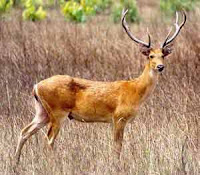
Male Swamp Deer at Kanha


Hard Ground Barasingha


Bison at Kanha National Park 


Indian Roller


Tiger


Chinkara 

                                                       Sambar
Hard Ground Barasingha Kanha

Tuesday, December 29, 2009

Indian wildlife enthusiasts NGOs & Wildlife Lovers

As New Year Greeting!! I mention below NGOs which are doing a lot to protect our wildlife and environment.


Wildlife Lovers


Indian is haven for wildlife and wildlife lovers. More popularly known as nature lovers. These are people who are involved with nature in many ways. Some are nature conservationist and protect wildlife as part of NGO. Many are wildlife photographers and some are like me who sometimes write about nature conservation and work as freelance nature guides. Many just appreciate and respect all forms of life on earth. Some way or other these people also play a part in conserving nature and environment.

Indian wildlife lovers tour extensively in their pursuit to discover and see endemic and rare wild animals, birds and reptiles. Not only India, wildlife enthusiasts from all over the World appreciate and play active role in conservation.  There are many NGOs/Individuals from India and in Europe mainly in USA and UK who work to conserve rare species in India. They are the voice of the people who impress upon the policy makers to take right decisions where in other forms of life get protection and sanctuary in the country.

WWF
plays an active role in nature conservation all over the World. While NGOs like BNHS are active in nature conservation and creating awareness among Indians.  The society publishes a journal which is very informative and scientific in nature. It also publishes and informative magazine.

WPSI
or Wildlife Protection Society of India plays active role in comprehending wildlife criminals and preventing crimes against nature.  The society is active in conservation of tigers, leopards and other wildlife species in India facing threats. Like wise WTI and Ranthambhore Foundation also work for nature conservation.

Even wildlife photographic magazines like Sanctuary Asia offer lot of information on Indian wildlife and conservation measure that are being taken today. The magazine explores niche as well as less popular destinations for its readers.There are many proactive societies which do not find mention here but the list below may have their details.

Thursday, November 12, 2009

Indian wildlife blog posts

Interesting posts on Indian wildlife...read on...

Friday, October 24, 2008

Festival Time at Tiger Parks

Festival times at Indian tiger reserves is an event of mad rush. The National Parks in India are subject to traffic beyond carrying capacity. All over there is a hustling bustling crowd of tourists and tourist mongers. Service providers and seekers. The poor animals suffer!

This is a perfect example of lack of foresight. Number of times forest officials and perhaps tourism managers have been advised to open up infrastructure in other wildlife places. This will, apart from bringing cost down for ecotourism, reduce pressure on major tiger reserves as Kanha National Park in Central India, Pench reserve, Corbett and Bandhavgarh National Park the most popular. Incidentally this is an earning time for wildlife resorts in National Parks. But than this is not responsible tourism.

Good thing that has happened is that number of entries into the park have been restricted in Central Indian National Parks. Similarly other keystone species should be highlight to take pressures off tiger parks. Few good examples are wild elephant safari at Corbett and Rhino tours at Kaziranga National Park in Assam state of India. Lion safari at Gir National Park should be promoted more. The list is endless. Even for birding there are lot other birding spots that need promotion. I have been to Nalsarovar and Thol at Gujarat near Ahmedabad they are prime birding areas but lack development.

There are lot of wildlife sanctuaries that can attract a large number of tourists - even those who cannot afford to visit major reserves due to high travel cost. This will benefit the locals in terms of employment and strengthen conservation effort.

The best that most wildlife sanctuaries in India offer are a rest house for accommodation which is not readily available to general public. The road and tourism infrastructure is in a mess here and organized wildlife safari is impossible here. These places offer good wildlife viewing and may harbor rare exotic wildlife. Tourism here will help in conservation as well as exploration of the forests.

Some ignored parks and sanctuaries are:

Sanjay National Park

Nauradehi Sanctuary

Bori Sanctuary

Satpura National Park

All in Madhya Pradesh

Achanakmar Sanctuary Chhattisgarh

Indravati National Park in Chhattisgarh.

and many many more in India where tourism can be developed.

Thursday, August 21, 2008

Indian wildlife

Wildlife of India

India is gifted with diverse habitats that overwhelms a visitor on each and every visit. The landscape is unique and amazing.

From cold climate of the Himalayas to Hot deserts of Rajasthan. In East there are tropical forests and to the West affinity with Ethiopian zoo geographical region. Hence the lion in Gujarat at Gir famous for it's Asiatic lion safari which have become very popular. And the famous Sunder bans National Park in West Bengal the abode of the Bengal tigers. The plains of Ganges delta differ much fro Indian peninsular region and so does the wilderness.

In the south Wildlife of Kerala the and true tropical forests in Western ghats. Southern culture differs from Western and Northern cultures in India and so does the cultures of the East. The diversity of India compliments in wildlife and biodiversity which changes as fast as the language and culture does after every hundred kilometers.

India has more mammalian species as compared to Africa and so is the number of Indian bird species. the bird species in India amounts to thirteen percent plus of the total species of birds in the World.

The insect and reptilian life is unique and yet to be discovered. From point to point region to region wildlife differs and how it does write to me Uday Patel from India.

Friday, June 27, 2008

Tiger Safari at Barnawapara

Situated in the newly carved state of Chattisgarh in Central India, Barnawapara Sanctuary is one of the popular wildlife destinations in India. Set in the district of Mahasamund, Barnawapara Sanctuary is small wildlife preserve with an area of two hundred and forty five kilometers as compared with area of Kanha National Parkwhich is 1945 sq.kms.

  • Fauna

In terms of wildlife viewing Barnawapara sanctuary is unique and has mammalian population equal to major National Parks and Tiger Reserves of India. Major mammals like tiger, leopard and number of deer species make Barnawapara their home. Flying squirrel, hyena and other lesser seen animals like chinkara and four horned deer are visible here.

The sanctuary has size able numbers of bison and sambar. The chital population is well established to support major carnivora like, tigers, leopards and Indian wild dogs.

  • Flora
The forests are mixed tropical dry deciduous type with prominence of Teak, Sal and Saaj. The undualting terrain supports Bamboo on slope and mixed tree species on plains. Other species of trees found at Barnawapara are Semal, Mahua, Ber and Tendu.

Best time to visit Barnawapara sanctuary is from November to June.

The sanctuary is at a distance of eighty five kilometers from Raipur and sixty kilometers from Mahasamund railway station.

Tuesday, May 13, 2008

White Bengal tiger

The world's most charismatic animal and the rarest is no more found in the wild. The white tiger was discovered in the wild jungles somewhere near the forests of Govindgarh which is near the Bandhavgarh tiger reserve.

It is said that a white tiger cub was found alive in a hunting expedition, the mother and other cubs where killed. The erstwhile Maharaja of Rewa who governed the region decided to capture the cub alive. The white tiger cub was eventually captured by Maharaja' team and kept in Govindgarh palace. The white tiger cub was named as Mohan.

The white tiger is a recessive gene and not an albino or a sub species as it was earlier thought. This animal lacks the yellow pigment completely hence the resultant color of the fur is black and white. The white tiger's habit and habitat is same as normal orange tigers.

The history of white tiger shows that there where other white tigers discovered and shot in India in earlier times. But the white tigers in the zoo are the progeny of Mohan. The white tiger breeds with orange or normal colored tigers naturally and hence the population has grown in the zoos.

There have been no more white tigers discovered in the wild till this date. The fact is the Bengal tiger population and its habitat has come down so drastically that chances of finding a white Bengal tiger in the wild has dimmed.

There are some morphological difference ascribed to white tigers as pink lips, icy blue eyes and larger size, which maybe true but it needs research to verify the facts. When I am on a tiger safari I keep a look out for white tigers. This may seem far fetched but who knows.

Sunday, May 11, 2008

Indian Tiger Reserves

The best tiger reserves are without doubt in the following order. These ratings are for tiger sighting point of view. (Other reserves have their own plus points)

  • Kanha Tiger Reserve

  • Bandhavgarh Tiger Reserve

  • Pench Tiger Reserve

  • Ranthambhore Tiger Reserve

  • Corbett Tiger Reserve

The first two have very high density of tigers while Pench is following suit as new breeds of tiger arrive and survive. The splendor of Kanha comes to life when you visit it. High number of major mammals inhabit Kanha. Bandhavgarh is unique with wildlife and historical relics of the past. It is most scenic and enchanting.

The survival rates of tiger cubs in these National Parks is very high. Recently 14 tiger cubs where sighted at Ranthambhore. Corbett is recently said to have high visibility of tigers but the focus there is on birding and wild elephants.

Wednesday, April 30, 2008

Man eating tigers of India

Every since Jim Corbett published accounts of man eating tigers in Kumaon region, the phenomena of man eating tigers and leopards reached the World.

Tigers are top predators in the food chain. They are tertiary carnivores and hence indicator species of the forest ecosystems. The main prey base of the tigers and leopards are the herbivores albeit the big cats eat anything that walks on four legs. In Indian forests the tigers hunt spotted deer, sambar deer, swamp deer, wild boar, langur monkey and at times bison, elephant calf and porcupine. Tigers are known to predate on leopards but that is more of a territorial conflict than the quest for food.

Tigers are dense forest animals and avoid open or scrub forest. They need cover to hide since they hunt by ambush. They need lot of shade as they cannot bear the heat. Hence good prey base, dense forest cover and water is essential to a tigers habitat.

By nature humans are not included in tiger's food. The reason is that tigers are afraid of humans and avoid them always. The jungles of India once harbored a large number of tigers before deforestation, unchecked hunting and poaching took its toll. Susbsequently it affected the prey base or the population of the herbivores. The scarcity of prey base put the tiger under a major stress and some resorted to man eating by accident in these circumstances. In quest for food, tigers in forests with inadequate prey base wandered near human habitation. In search of food they began to lift cattle. In the conflict with man it sometimes resulted in accidental killing of humans. On discovering the ease with which humans could be killed the tigers emboldened with this finding went on killing spree where lot of humans lost their lives.

Tigers also turned into man eaters when injured by hunters to such an extent that they could not hunt their natural prey since their hunting prowess get affected. Unprofessional adventurous shikaris where the main culprits behind this man killing by tigers.

Once the tiger turns into a man eater it goes after humans with amazing efficiency. A man eating tiger is difficult to track and kill as it moves swiftly from one place to another in order to avoid alerting humans. A man eating tiger can cover a range of as much as hundred kilometers during the period. The incidence of man killing has come down drastically as there are hardly any tigers left outside prime habitats. The incidence of man killing by leopards is still higher as the leopard is more stressed out due to want of space and prey base.

Rarely do tigers kill by intent. There are accidental killings taking place by tigers and these rarely result in tiger turning into a man eater. The accidents happen if humans venture too close to an unaware tiger, a tiger on kill or to a tigress with cubs. The first instinct of tigers is to move away from human beings. But in certain circumstances this is not possible and the animal is forced to attack in self defense.

Tiger is a gentleman and follows the law of the jungle to a tee. Man eating under all circumstances is an aberration as even the most powerful of the tigers are known to fear man.

If tigers are conserved in India and their habitats are kept intact there would be no man killing incidences. The tigers face a road uphill, and their survival seems to be a deep uncertainty.

Labeling tigers as horrible and cruel man killers without understanding the real cause results in hatred being created for the animal. It is labeled of as vermin (as in earlier times) in minds of the human society which further escalates its chances of facing extinction in India and elsewhere.