Showing posts with label nature. Show all posts

Saturday, September 25, 2021

Rewilding for Better Environment & India

Why Rewilding? 

Rabid Urbanization  

As urbanization makes en route to natural ecosystems, the habitats lose ground, and a large number of species comprising local flora and fauna begin to vanish. The first impact is the destruction of the niche with small water bodies and surrounding greenery giving into concretization and unsustainable land use. Wildlife cannot survive in manicured environments and this is one major reason for species extinction on Earth. 

Protect One and All

Like the buffer zones of protected areas, the cornered niches are vital for sustaining species in our neighborhoods in urban and rural localities. The presence of natural elements including diverse life forms sustains the environment in the vicinity and impacts favorable climate patterns. They prevent temperature variations that are not in tandem with the geographical features that have prevailed throughout the ascent of evolution on Earth.  

We have lost swathes of forests, aquatic ecosystems, grasslands, and deserts in wake of economic progression. The major impact has arisen through infrastructure build-up, ingress, and pollution. The deforestation process is continuous and is engulfing or degrading the natural ecosystems. Coupled with uncontrolled emissions due to fossil fuels consumption and irresponsible biotic and abiotic indulgence, climate change due to increasing Co2 generation is warming up the planet rapidly and the impact is being felt all around the globe irrespective of the source of emissions.     

Besides reducing carbon footprints, it has become imperative to recover lost ground but in absence of any rewilding policy, there is a strong need for structural reforms in land use and energy consumption besides tending to the complex systems we dwell in. The use of alternative energy is one solution that will reduce the negative impact of fossil fuels. Another solution that the world is looking forward to is locomotion using electrical or solar energy which is imminent if not on a commercial scale yet. Rewilding is another imperative for tempering greenhouse gases and creating a life-sustaining equilibrium on Earth.    

The answer for tackling these urgencies lies immensely in rewilding giving space to the lost ecosystems with minimal intervention so that they recoup in time to come. This implies that we should demarcate large swathes of land as remedial action or rather for the prevention of global warming and let them regenerate. This is for the planners to act upon. They should place a moratorium on natural lands and make them inviolate perhaps forever. The creation of core areas in PAs in India and elsewhere can be called a good beginning but this is by no means enough.

Unsustainable Land Use

A country hell-bent on keeping up with the dominating economies is developing infrastructure at a rapid pace. There have been plenty of instances of ingression in the ecosystems which still stand preserved today due to a stroke of luck or due to our intervention.  

Development is a prerogative in modern times but if not carried out in a planned manner and thought, it will be disastrous in the long run. Visit any industrial area and you will experience how they have damaged the local ecology, and the areas have become unsustainable in terms of healthy living.

It is our haste that is doing irrevocable damage, we have to be circumspect when using the land. We cannot develop or intrude just anywhere, and large swathes of land should be left completely inviolate. We should take a cue from the destruction of forests in South America and the large-scale production of palm oil as examples. We are following suit by excavating extensively for fossil fuels and mining. We are a diversified economy and there is no pressure on a single resource for sustenance.  

Mapping India

A vast country like India should have large tracts of land inviolate naturally, but this is not the case there is human intervention everywhere. Leaving inaccessible mountainous areas most of the ecosystems like the grasslands and aquatic bodies have been impacted. Talking about the mountainous areas the ecology of most of our hill resorts has been totally ruined due to the encroachment of urban dwellings and commercial establishments. 

In order to sustain an ever-expanding population, there is an immense need to increase productivity from lands we have already taken over for agrarian practices. The impact of the unruly unsustainable livestock industry is in urgent need of modernization and induction of sustainable practices pan India. 

Livestock keeping has become imperative for small-income families in rural confines. However, there is a need for alternatives in order to discourage unproductive unorganized livestock rearing in rural confines. Unorganized livestock keeping enhances deforestation competes with natural inhabitants (wildlife) and impacts the environment thus increasing carbon footprints in the vicinity.  Most of the forests have been taken over for agricultural purposes or degraded by uncontrolled biotic pressures. 

Nature-Based Economy & Depopulation

Most of the reserves are fine examples of the nature-based economy which is a sustainable answer to deforestation and livestock keeping.  

Wildlife tourism should be conducted by enhancing the use of vehicles powered by electricity, the resorts have to strictly comply with responsible practices and the economic opportunities that are tied to nature should be explored further. 

In the case of areas comprising vital ecosystems, local economies will experience a paradigm shift as the educated youth migrate to urban centers for employment. Migration is not because of educated youth alone even those who provide labor in farming and industry are moving to urban centers with a tendency to populate.  

There is a definite depopulation taking place in rural areas, and the impact is noticeable with an unmanageable rise in urban populations. 

Traditional farming and livestock rearing will not be sustainable in the long run due to an aging population, the impact is already evident. The local communities will have to find alternatives that are nature-friendly and sustainable. 

Large-scale commercial projects that impact the local ecology are being banned near the reserves and sanctuaries thus there will be a pressing need for a nature-based economy to take over. This will further increase the migration of youth towards urbanity if an alternative is not in place.

Depopulation though considered something good will lead to frequent economic paradigm shifts and demographic changes and the absence of sustainable solutions can lead to poaching, wood logging, and other practices which are detrimental. 

Rewilding Imperatives

Rewilding is not only declaring the area as inviolate and sacrosanct or resorting to the plantation of endemic species. Nature not only in India is inextricably tied to local economies. If we have to regenerate forests, encourage reintroduction, or the survival of endangered species we need to keep in mind the perspective of the local economy which is imperative for the survival of communities dependent upon local resources. 

While rewilding impacts nature favorably it should sustain the local economy by creating enterprises that are nature friendly and generate finances. It is vital for experts, NGOs, and dispensation to play an active role in finding the right solutions in terms of services generated and help in product marketing. 

=========================

Uday freelances as a naturalist and loves to write about tiger conservation and the environment.

He also provides SEO and Content and teaches  Digital Marketing in his hometown Jabalpur. 

Contact: 

pateluday90@hotmail.com

9755089323

Wednesday, June 23, 2021

A Mini Green Core Dumna in Jabalpur Under Seize

The Onslaught on Oxygen & Water Banks

Nowhere is the onslaught of the developmental spree more apparent than against remaining small green pockets of towns and cities. These are mini-ecosystems that act to preserve and provide fresh air and water, and hence are invaluable assets in preserved form. 

Most such green patches that still survive to this day have been fortunate enough to escape the wrath of concretization due to remote placement or exclusivity. Though much reduced in size and composition these are invaluable assets for rapidly expanding towns and cities of India. 


Easy Acquisition of Invaluable Greens 

It is ironic that even in these times of suffering from imminent ecological failure and climate change, natural places are not being spared. On the contrary, they are under intense scrutiny as lucrative developmental prospects  - ready for concretization perhaps due to ease of acquisition?  Another reason that seems apparent and facilitates concretization is the lack of humanity or rather the ubiquitous public ownership which makes acquisition an easier prospect.  

For developers, the eyes are always on these reclusive patches of vacant lands irrespective of their natural worth to the cities. But this should not apply to green corridors and patches they should be preserved for eternity. It is nigh impossible to regenerate natural forests after destruction.  


Save Dumna Plateau & Ecology 

Take Dumna for example. A much-neglected elevated green plateau of Jabalpur which holds an airport built during the British Era and subsequently expanded, it is now a subject of intense scrutiny.  As a matter of pride, the ecosystem stands as a fine model of urban conservation and displays impressive synergy between man and the surrounding wilderness, all this will be destroyed if urban projects devastate the home of other life forms. 

These forests border the city confines and are home to Dumna Nature Reserve with an enclosed area of 1800 acres. It is well protected and receives a large number of visitors every year. The reserve is home to a large population of spotted deer, wild boars, jungle cats, jackals, foxes, and reptiles including marsh crocodiles, and other small mammals most of which are nocturnal. But please note the forests expand far beyond the reserve and form a corridor. The terrestrial diversity comprises mixed forests, grasslands, herbs, shrubs, and scrub each invaluable on its own, and together, in this fragile ecosystem.  

The crocodiles find shelter in the large catchment of Khandari Reservoir within the reserve that supplies potable water to the city. Few leopards and perhaps hyenas survive within and outside the reserve. The ecological niche spreads out beyond the confines of the Nature Reserve and comprises invaluable species of flora and fauna, it is visited by avian migrants from the Palearctic and the Himalayas as well. 

The forests in Jabalpur's outskirts are interconnected and act as corridors for migration for the diminishing wilderness that still survives. The last remaining patch of green in Jabalpur is least capable of taking on the projects slated, being an ecologically sensitive area with a preservation history that dates back more than 150 years. The forests support a number of water bodies in the surroundings neighboring the villages. 


Planned Projects in A Leopard Habitat

The plan for a man-made tiger safari in the nature park would have wreaked havoc on the floral elements and the fauna in the nature reserve, and the visitor numbers would have been stressful on this ecosystem. Thankfully as it appears, it is nowhere in the picture now perhaps due to litigation that ensued?  A number of PIL have been filed in Jabalpur High Court against the developmental spree in this ecologically sensitive area.

The establishment of IITGM on 100 acres was the first alarm that set in among the nature lovers of Jabalpur, a number of citizens who are sizeable and active in conservation initiatives.  The establishment of IITGM is encroachment into natural land, the barbed wire wall prevents the free movement of wild animals besides enhancing prospects of man-animal conflict.   

Besides IITGM a number of projects are slated here which is not at all desired keeping the nature of the land in consideration. From amusement parks, and public offices to a five-star hotel all bode ill for one of the last remaining pieces of natural land in the town. Wise counsel should prevail to prevent this concretization and the projects should be planned elsewhere since there is no dearth of vacant land on the outskirts.  

Although the reserve was subject to exploitation in earlier times, the status has accorded some much-needed protection. Spread all around the protected area are forests mostly mixed with scattered patches of bamboo, much exploited and ravaged in the past. The network thus forms a greater ecosystem that once flourished in totality but as of now is badly fragmented but still invaluable for climate stability and for humanity.       

Following the establishment of  IITGM at Dumna a large number of projects are slated in this invaluable eco-niche one of the few remaining lungs of the city. The overzealous developmental zeal which is clearly evident in this beleaguered urbanity that is Jabalpur is not leaving this ecosystem a mini patch of green unscathed. 

The article does not target a particular dispensation, but it urges the planners' future and present to avoid places with biodiversity however small that which have ecological importance. Hence the plea is to leave Dumna untouched and prevent the scars that concretization will eventually bring in.     


Dumna Source of Potable Water & Fresh Air

By urbanizing Dumna, one of the last remaining green patches we are sure to lose the green lungs that the city strives for in times of intense pollution and hectic biotic activities. The hills do not have the capacity to bear the reckless establishment of structures that will come up eventually under the projects that are slated to target this valuable eco-niche. 

Khandari Dam is a wetland ecosystem that sustains fast-vanishing terrestrial and aquatic species in and around Jabalpur. It is a valuable source of water for the town, though not under direct threat destruction of the surrounding biome would have a negative impact on the catchment area.  

More on Dumna Nature Reserve

=================================================

Uday works as a freelance naturalist and loves to write on related issues. He also provides SEO and content writing services. He runs classes on digital marketing in his home town Jabalpur.  

He can be contacted :

pateluday90@hotmailcom

9755089323  


Wednesday, November 4, 2020

Conservation : Lets Begin Counting Environmental Assets

Nature Conservation & Infrastructure Development  

This was an area of least concern even during Asoka's reign. He set rules and deep compassion was expressed in order to prevent mis-utilization of our environmental assets may be on ideological grounds but nevertheless. 

Nature worship or the veneration of living and nonliving entities in this country was not because of misplaced logic  - Nature is God's creation. Even Vedas preached nature conservation albeit much on rational grounds, though many fail to recognize these journals based on scientific logic with social and ideological inclinations. These are a gift from our ancestors who explored the correct pathways for our existence on Earth.  


The Vedas set conservation ethos rolling in this country and so did the practice of Hinduism a nature centrist ecosystem of beliefs that is the heart and soul of the believers. The conservation ethos set during earlier times reflects on our character subtly but is most needed now after the devastating ravage that happened in the last few centuries more so in recent times.        

Contingency prevails like never before in India, with the emergence of new socioeconomic order that is hell-bent on relentless infrastructure development a phenomenon that strips natural lands (remaining) till they are barren nonliving entities with scarred faces. Unproductive elements spew venom and are life-threatening. The lost equilibrium could take decades to rejuvenate if so desired. 

For us, the definition of an environmental asset is limited to major chunks of forests in the shape of National Parks, tiger reserves, and wildlife sanctuaries. Paradoxically though created on the right grounds they tend to limit our vision as well. But we must get rid of myopia and consider wastelands, scrub and thorn forests, deserts, wetlands, niche ecosystems, and grasslands all as productive. These too comprise of living and nonliving entities and are extremely valuable assets. The size or span is inconsequential, but we must consider them as valuable units and thus tend to preserve them. Yes, even the wild floral patch and a pool in your confines. 

But staying aloof does not exonerate the common man since we should act as pressure groups or prevent damage to such entities in our confines. Conservation onus should not be seen as that of dispensations alone...we are equally responsible. Urbanization is the greatest threat, and we do not peek into the damage an irresponsible approach does to the land. We are part of these projects directly or indirectly and we can ameliorate them. Voicing your opinion in any form except violence is an imperative that every citizen should follow. Though the legislation is passed in the assemblies we must set the corrective pathways in motion in order to influence proper decisions. In a democracy casting votes is not enough right to speak up and criticize without resorting to sedition is within our legal framework.       


For ruling dispensations that come and go infrastructure development is the key to remaining in power in the guise of easing life, and alleviating poverty thus offering a better standard of living howsoever artificial. Our greatest environmental assets are not limited to protected areas and biosphere reserves they are everywhere big and small. But we fail to recognize them as an entity, and thus weaken pressure to be imposed in order to prevent damage before the axe strikes.   

In this new order much influenced by the Western growth paradigm, we fail to recognize the irreversible instance of loss of nature that has evolved since life became feasible on Earth. We are mired in an irreversible development process that has taken an evolutionary impetus at the behest of man.    

This criticism is difficult to withhold since infrastructure development albeit inimical to nature in most cases is a must for civilizations aiming to achieve economic prosperity and modern living of comfort and haste. 


The world cannot come to a stop and we cannot continue to live in a stone age. But with human evolution, we continue to change for the better, especially in the growth of our mental faculties. Unfortunately, the latter has not helped us much in moving forward without damage to the precious resources and ecosystems on Earth. On the contrary, we are shooting past every yardstick in expressive haste without looking back to notice the spoils left behind. The continuing extinctions on Earth is vindictive. 

Only phenomenon like global warming has put some of us on alert but then who cares besides laying down principals that aim at stopping further disaster. It may have set the ball rolling but do we have to wait for an anomaly to strike before we set systems in motion to prevent further deterioration. This would mean it is too late. This also means catastrophe in making and that Armageddon is real. Our style of functioning has made the threat of major conflicts a reality and we have stored enough nuclear arsenal to blow us all to smithereens. Pandemics are threats that are in existence because of our follies. 


Perhaps we could begin with rationalizing infrastructural development and see obstacles not as imperatives to be removed or stripped but more so as inviolate. We have already implemented this in practice with the initiation of tiger conservation and the setting up of protected areas in the country. We are far ahead of civilizations that are devoid of conservation literature or ideological leaning on the preservation of life and the environment as a whole. 

A Nation that zealously venerates cows not only on grounds of compassion but also for their economic rewards past and present should apply the same logic to all environmental assets and label them as inviolate. Maneuvering will certainly become the tough and quick answers to our development goals may be thwarted but then we will move the right way.  The aim should be to avoid damage to the assets and find ways of forward movement the right way. If we do not future generations are sure to pay the price for our folly. To some especially in the ruling fraternity, this protectionism may sound illogical but if we do take the difficult road to development we will be building structures, not at the cost of our fragile ecosystems, and setting an example for the World to follow.     

Uday Works as Freelance Naturalist and Blogs on conservation, tigers, and environmental issues.

He also provides SEO and Website Content in English.

He can be contacted at:

Mail: pateluday90@hotmail.com
 Mob: 09755089323


Friday, June 21, 2019

Tiger Conservation - Urbanization The Deadly Menace

Minimizing Destruction of Our Natural Lands

It keeps spreading its tentacles all around, and you cannot blame anyone except us. You cannot blame the politicians, planners, and developers. Anyway, they do not plan they just fulfill. It is we who have multiplied like rats and taken over our natural lands which the Earth had nourished for centuries right from the day evolution came into the picture.

Skyscrapers

Traffic congestion
People who read history of civilizations know that towns and cities will come and go but now in their wake they will leave back ravaged lands that may take eons to recover. In order to settle thousands of families, cities, towns, villages keep on spreading without planning and with total disregard for nature. A builder least admires an eco-niche in the neighbourhood nor does he feel guilty of placing concrete structures over them stifling microcosm of life forever. In fact we are so impressed by concrete structures that we concrete everything around us even natural gardens, wild bushes, small jungles, beautiful lakes and ponds where in lot of organisms and avian life depends upon the natural embankments and depth as well. 

Our eyes glow brightly when we see magnificent edifices the concrete structures embracing our towns and cities. That is development! (Sic). When the structures start to decay we continue living there, a stoic and helpless attitude that we have developed as a matter of consequence.

Cities are rotting, there is water shortage, dirt, smog, and pollution living conditions are like hell. Deadly pollution thanks to smoke-belching industries, cars uncountable, congestion, drying lakes and water bodies polluted to the brim, and overall the looming climate change ...there you have it! Slowly you come to understand what is unplanned development that damages the environment and invites disease, mental disorder, and more.

The ill-planned overwhelming urbanization is taking over the remaining natural lands in all settlements now from metros to even small towns. The latter come under the scanner of infrastructure development in the forms of rail lines, highways, and dams. This affects wildlife and can be disastrous for endangered species like the tiger, lion, and elephant to mention a few.

Tiger

Grasslands + Forests


The sharp reduction in the number of tigers in India has been mainly due to the loss of habitat. Tigers need specialized habitats that only dense forests containing untouched wilderness can offer. Unfortunately in India forests have been converted to agricultural fields, and industrial belts, ravaged by mines, and now urbanization is creeping into even small places auguring a dark future. If we do not reduce our carbon footprints global warming can become serious and sustenance of life may not be possible. Hence we humans are also at risk and perhaps face extinction too?

Where will the buck stop nobody knows? Man-animal conflicts, extinction of species, water shortages due to the destruction of rivers, and due to climate change all are a result of man's total disregard for nature conservation.

We should consider the destruction of nature as an impending disaster, and accord importance to its preservation. In governance this should be a major issue there should be debates and discussions on this. But this does not happen people are not aware or simply do not care, and politicians take advantage and do not take environmental issues into consideration except accord some lip service.

What future awaits our gen next? What about climate change knocking at our doorsteps? What are we doing to minimize fossil fuel consumption? What are we doing to stop the production of pollutants, toxins, and hazardous chemicals? All this should be taken into account during the political discourse? Is it being done? Ask yourself, write or raise your voice before it is too late.

=============================
Uday works as a naturalist in India and blogs on environmental and conservation issues.
Contact: pateluday90@hotmail.com

Tuesday, May 28, 2019

Tiger Conservation The Human Conundrum

This period of April and May were months of extreme upheaval in India as the nation was embroiled in a contentious parliamentary poll. The largest democracy naturally conducts the largest exercise at the hustings. The highlight of parliamentary elections in the country was of course the virulent campaigns that began and ended with unending fervor. The aftermath ended in a reverberating but gradually quietening atmosphere as the results were declared and winners took their seats.

For all political parties in India the propaganda revolves around many populist issues, but completely neglects the conservation and environmental issues though as a matter of principle they are ingrained in our policies albeit executed with scant regard.

The first to inculcate the order of nature and wildlife conservation in India where the Vedic literature, but we have conveniently forgotten them, the scientific journals have been relegated to the background as forgotten and inconsequential parts of our history.


The conservation ethos were carried forward by Asoka the Great, and after centuries of continuous destruction, we had a leader in Smt. Indira Gandhi rejuvenated conservation practices by inducting laws that mattered. The tiger and the ecosystem as a whole were the major beneficiaries of steps taken during her governance. Her zealous pursuit of protecting India's heritage was effective in conserving whatever was left. But after her sad demise no one stepped into her shoes. 

In midst of the mind-boggling exercise, one issue as always took a complete back seat for nowhere was there a mention of environment and nature in a country where multitudinous masses live. All through the campaigning, there was the worst kind of slander that included personal jibes, insults, and revelations all at the lowest level possible.

Forget about the environment and our remaining natural heritage no issues of serious nature were ever brought forth or discussed. That is how the prospects irrespective of their drawing treat their subjects - gullible, downtrodden, ignorant, and living in the stone age. The appeal for the vote is more of a tamasha, steeped in loud promises of piquant favors, charismatic chest-thumping, and yes development.   

After the hustings, all promises are forgotten except the development mantra which all parties think will offer a permanent majority in the parliament for decades. All the time the mantra of development was aimed at more than one billion people a promise if rightly fulfilled could lead to betterment of living conditions and emancipation from abject poverty the large populace is steeped in.   

The goggle-eyed voters could understand the mantra of development very well but the related issues were not even in the picture. The emancipation that was promised was all that mattered - a panacea for all that ails society.

Where would the succor come from with deteriorating climatic conditions, abject shortage of water, and a badly polluted environment without the proper mix of air? The water shortage is a serious matter that should concern one and all especially those at the helm of governance.

We are constantly hurting our ecosystems (rivers, forests, deserts, grasslands) that deliver clean and fresh air, large tracts of forests are being decimated for linear development for highways, settlements and infrastructure expansion. Mining woes are not being mitigated at all. Environmental clearances are taking place in a jiffy with no serious thought to impending disasters, industrial belts and deadly polluting mega industries are taking their toll in this country with ever-increasing haste.

Species endangerment is taking place in the blink of an eye. A large number of species have already been lost. Does all this not matter? Aren't the participants of the democratic process the citizens not entitled to enlightenment as to what safeguards are being put in place that would prevent further depredation. Should not they be revealed during the poll propaganda? Who bothers? 

Human-centric development has always been the core practice of ruling polities with abject disregard for nature. This has been a global phenomenon and cuts across the vast spectrum of political establishments everywhere. India is not alone in this disastrous way of governance, we are in tandem with the World.

But ironically this does not alarm us. Nature is our life support system but we have taken it for granted. A denuded patch of forest does not raise eyebrows as it should hence climate change in its worst form is imminent.

A radical shift has to take place among the rulers as to how development and urbanization should be carried out. All the hindrances which are genuine should be respected and alternatives found. You cannot write off a strip of forest just to aid a highway or an industrial area. But this is happening and slowly we are destroying our green lungs and precious habitats which will augur climate change to the extreme.

The effect of our haste will result in an environmental condition that would make species survival  (including man) extremely difficult. The tiger has been the worst sufferer being an indicator species sitting at the top of the food chain we cannot let it go. Proper development policies without damaging the ecosystems, and keeping in mind the environmental consequences are imperative we should change over to.

For every step we take towards so-called development we have to keep its impact on nature all the time. The institutions in India will play a major role in safeguarding our environment in times to come. Provided there is the necessary radical shift in our perspective and a less destructive paradigm sets in. 

The public should play an important role as a watchdog and be conscious about social ills like exponential population growth which has to be brought down. Not only as tourists, but we should also reduce the biotic pressures on our surroundings in day-to-day living with a responsible lifestyle.

===========================
Uday works as a naturalist at Kanha National Park in India.
He often writes on conservation issues as a blogger.
He can be contacted:
pateluday90@hotmail.com
09755089323

Wednesday, January 11, 2017

Wildlife Photos India


I have here a collection of photos of wild animals and birds. These are images belonging to my friends and acquaintances. The intention is to display hard work that goes into the imagery and yes the cost involved.


Striped Hyena - Ghanshyam
Langur Monkey - Dag Larsson


Desert Fox - Ghanshyam Singh
Leopard - Marie & Andrew
Indian Wolf - Monu Dubey

Tiger Teerath Singh 
Bison - Money Dube

Tiger Teerath Singh 
Wild Dog - Nandita Amin

Kanha Tiger  Teerath Singh 
Cinnamon Bittern - Prayut Mandal 

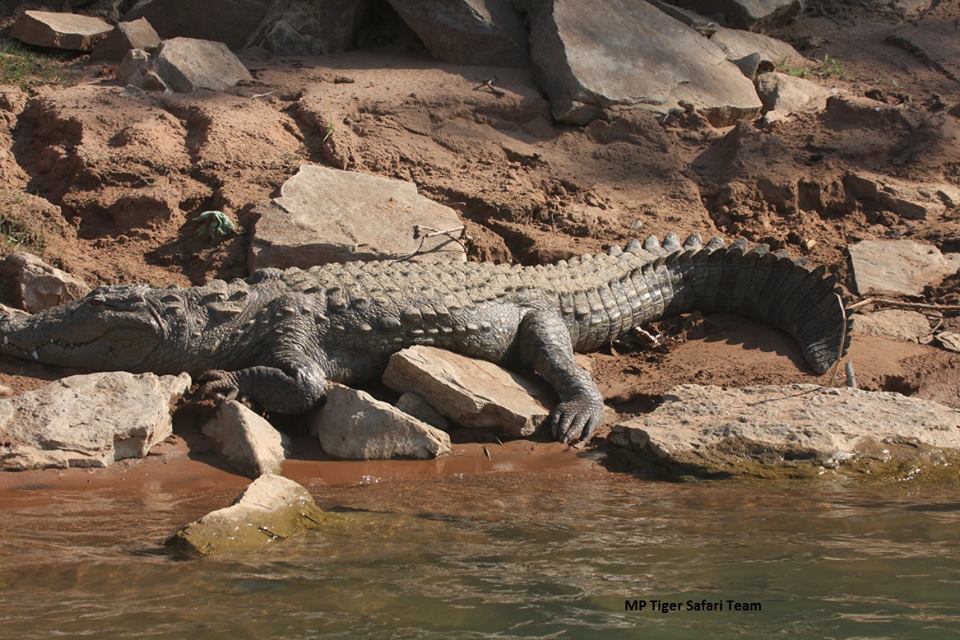
Marsh Crocodile Teerath Singh 
Swamp Deer - Ruchi Patel

Sambar Deer Teerath Singh
Shreyas D - Common Pochard

Friday, December 23, 2016

Does Rise in GDP Absolves us of Environmental Hara-Kiri?

The ongoing destruction of natural places in lieu of development is at the behest of environmental concerns in India. We have already lost large tracts of forests and grasslands to human settlements thanks to burgeoning human populations. Clear felling was another blow that did further damage in earlier times.  

In present times managing our environment is a prerogative of the ruling class. Our policies are populist and marred by ever-growing human needs and concerns. Nature does not understand human inadequacies; it is sensitive, fragile, and perishable.  The long-term consequences of destroying the remaining ecosystems in the country are foreseeable. The unstable climate and plunging health indices are warning us to awaken before it is too late.   

A species lost is lost forever. The sad state of the tiger is an indicator of our environmental health not only that of the ecosystem that it is limited to.  The increase in the population of lions in Gujarat is nothing to be proud of in absence of requisite habitat. The World is losing a huge number of species along with large tracts of precious forests with each passing day.  This should act as an eye-opener for us in India.    

Uncontrolled mining and uncontrolled use of natural resources will certainly lead to disastrous consequences, and its effects could be felt by generations. This is much after the short-term benefit of the materials has come to an end. 

The greenhouse effect and the unstable climate in recent time is as a result of a sum total of our negative approach toward the conservation of nature. Cities reeling under choking smog and pathetic living spaces are a perfect example of resources being over overburdened.  

Economic growth is of utmost importance to the Nation of 1.25 billion people. But that does not negate environmental concerns and absolve us of committing hara-kiri.             


Thursday, May 12, 2016

World in My Camera

Mic Clark 
Wales U.K

Guest Courtyard House at Kanha

Mic Clark is a much-traveled man. And if your travel takes you to wild places then you are lucky as well. Well, it is hard work and much sacrifice. He is a wildlife photographer, as dedicated as one can be. I had the honor of guiding him consequentially for two expeditions at Kanha National Park.    

For naturalists accompanying professional photographers is a learning experience...experienced or amateurs. The discipline and committed approach to tasks offer much to gain from...as I did. 

Mic has been to Gambia, Kenya, and Sri Lanka besides India where he has visited many tiger parks. Though he photographs all things in nature his love for the big cats is evident. 

It is a challenging task to capture images of tigers and leopards elusive as they are. We have been quite successful in the endeavor.  Tigers, sloth bears, leopards, swamp deer, barking deer, sambar, and many birds have come our way in the pristine magnificence that is Kanha. With great care Mic has captured images of the subjects that he chose. I am sure images would be startling.          

Wildlife Photography by Mic Clark: Bengal Tigers - Kanha National Park Madhya Pradesh &emdash; Bengal tiger (Panthera tigris tigris)
As is apparent from his wildlife photography website his images are spell-binding. Years of hard work do pay which is important for young entrants to understand. There is no magic wand that showers these hard-won imageries.    

His wildlife photographs have been sold and widely published on reputable resources. 


Sunday, September 20, 2015

Wildlife Conservation - Why Tourism?

 "Let there be peace in the heavens, the Earth, the atmosphere, the water, the herbs, the vegetation, among the divine beings and in Brahman, the absolute reality. Let everything be at peace and in peace. Only then will we find peace."   - Atharvana Veda

 To many, this form of tourism seems more of a tamasha than an appreciable recreation. No doubt people come here for a holiday and fun. And the prospect of seeing the tiger excites one and all. Even seasoned naturalists like us revel in each and every sighting of wild animals, the tiger being the most cherished.  

Well, the crux of dismay among some, especially a few nongovernment organizations is the sense of exclusion that protected areas create and it is further compounded by a lack of understanding of this delicate web of nature. Some see human rights everywhere. This attitude is also prevalent among a few indolent staff of the conservation units as well who often have to bear managing the burden of tourism as it appears to them. The truth is that all forms of life have inherited the earth equally and they too need inviolate space. Hence almost eighty percent of the protected areas are not open for tourism.  

Just to ban this activity, massive movement of State machinery took place, not to minus the cost and efforts put up by the industry to preserve their precious investment and businesses. The effort to ban tourism may appear futile to people like us who are in favor, but then this whole exercise did result in redefining the activity. This was good for all, the conservation effort, staff, local employees, and of course the industry. Thousands of jobs and income sources were saved by the Honorable Court's decision.   

With the increase in the cost of safaris in the park, the concept appears to be more elitist in nature. But this line of thinking has descended from the shikar days since hunting was the prerogative of the upper class, the royals, and later whosoever powerful with mighty weapons of destruction.

With the legislation in force...fresh from the hunting era the privileged became tourists and photographers. But the prerogative was limited in scope in Independent India. As the industry expanded, the common man entered the arena, without guns but with a camera and a humble profile. The revelation dawned upon the public that they too could enjoy this sport albeit in a non-destructive manner.  

Bengal Tiger - Kanha National Park
This is what brought about a paradigm shift in the way wild animals were perceived. From vermin, they overnight turned into precious jewels of nature. Nature films and photographers also added to the positive change in attitude among the people at the helm and the common man. This changed attitude of the masses accorded further impetus to the nascent conservation efforts of that era. Augmented scientific research furthered preservation.    

Sloth Bear
We should not forget to pay tribute to our PM at that time Smt. Indira Gandhi. Her commitment to preserving dwindling strands of our heritage brought about rich dividends. So it was said, and truly, that tiger conservation was the saving grace of the wilderness as a whole. Habitats were preserved, ecosystems improved, and endangered species on brink of extinction gained ground. Swamp Deer at Kanha National Park is a fine example.


Hard Ground Swamp Deer

Not only did the industry gain from tourism, but the local communities also gained much more. The empowerment through training, skill development, and of course employment augured a better standard of living and access to education.   
Common Kingfisher

The hordes of tourists wiser by experience and hence knowledgeable become sentinels of nature. This brought about a change, initially by pressure but later by a sense of duty towards our environment among the wildlife managers. The recreation had a profound effect on the political setup and industrialists as well - nearly. 

Controlled tourism also garners a lot of funds, crucial for the maintenance and conservation of our precious resources and heritage wealth. By all means, a healthy activity has created equity for all that is wild in India.      

Images by Dinesh Makhija of Motel Chandan at Kanha.

Thursday, February 12, 2015

Ganesha on Tree

Nature takes bizarre shapes sometimes. Here is an image of tree trunk part of which is shaped like Lord Ganesha. See some more images by Ruchi Patel.

Black Stork
Bengal Tiger
Lord Ganesha Impression on Tree Trunk

Thursday, January 1, 2015

Monu Dubey Amazing Lensmen

Once you start looking at the amazing photographs of wild India you cannot relax till the show ends. Young Monu Dubey is a creative photographer who travels to many places in India. 

Indian Wolf
He has a knack for capturing moments, some filled with empathy while many depict action. The work expresses the agility and understanding of his subjects. At a such young age, he has miles to go. Some of his work of art is added here for the viewers.   

CobraPair
Roseringedparakeet


Male Tiger
Leopard in Bush
Monitor Lizard
Tiger Family

Ruddy Mongoose
Wilddogsonkill