Showing posts with label photography. Show all posts

Saturday, March 13, 2021

Wild Photo Tours

With a simple black and white camera, we could get scintillating images of a tigress at Kanha National Park in the year 1972. What followed was a series of photo tours whence wildlife tourism had come of age in the late nineties. As a holidaymaker visiting tiger reserves for some exciting safaris and photoshoots I was in the dark about what was to come. My interest in birding had peaked in the interim period and my interest in the wilderness had become holistic. 

Much before our family business closed, I had begun to freelance as a naturalist in resorts at Kanha, Bandhavgarh, and Pench. With a primary interest in birds and mammals, the tourist found my services appealing. There were thus frequent calls.    


It was during my association with Tigerland Resorts and later with Indiafootprints Adventures that I became fully involved and spent some of my best years traveling as naturalists with foreign groups focused mostly on bird watching and tiger safaris. I also conducted photo tours in Kanha and Bandhavgarh. 


Although the focus on other tours was on bird watching and tiger safari photography was an essential element. The same applied to my five years plus a stint as a naturalist at Courtyard House Kanha National Park in Central India. In between exciting tiger safaris, my indulgence in Digital Marketing especially in SEO and Content Writing was being fortified. This involvement was since the days of Yahoo Geocities and one year of work as SEO Team Leader at Jeenec in Ahmedabad. I had since long started to provide SEO and Content Writing Services to many clients and my freelancing stint allowed this multi-indulgence.


During the tours with Indiafootprints Adventure, I visited North India which included New Delhi, Agra, Bharatpur, Chambal, Sat Tal, Pangot, and Corbett Tiger Reserve. Without a camera, I focused on guidance to enthusiastic overseas visitors on photography along with the search for avians and big cats. This was the learning and giving period, especially photography. I had realized how important a good camera was as a learning tool but due to the paucity of funds, it was not possible to buy a good one.   


Chambal and Corbett Tiger Reserves were as I discovered the most photogenic destinations that carried weight for photo tours in India. Never disappointing in avian species with encounters with gharial, marsh crocodile and Ganges River Dolphins the trips to Chambal were most fruitful and exciting.           


Corbett too never disappointed in avian species and there were some exciting animal encounters for the lensmen at work. Tigers are more elusive at Corbett but nevertheless, you end up photographing the big cats in panoramic surroundings. 

Sat Tal and Pangot visits were entirely focused on avian species frequenting this Himalayan Region. Photography here is possible with fast and long lenses that the many enthusiasts in my group carried along. In those high-altitude cold climes with unstable light, the tours were immensely challenging. The professional birding guides from overseas carried some of the finest equipment for the photo tours and there were lessons to be learned.

Sometime later during freelancing at Courtyard House Kanha, I was able to procure a bride camera and another story begins. With an aim to purchase a sophisticated camera, there will be more exciting challenges in time to come. Kanha and Bandhavgarh Tiger Preservers are in my view the most productive places for photographing tigers in India. The visit also accords the opportunity for capturing images of other mammals and reptiles. 


Factfile Photo Tour Destinations

Bharatpur and Chambal are in close proximity to Agra near New Delhi. A visit to Corbett and Sat Tal, Pangot entails a long drive from New Delhi. Prior permits have to be obtained for tiger safaris in the reserves mentioned here. Excursions on foot are not allowed in the core. In winter cold and snow at higher reaches can be intense, especially at higher reaches. Hence carry warm clothing during winter visits.           


Kanha and Bandhavgarh are at equidistance from Jabalpur Airport in Madhya Pradesh or Central India. They are accessible by road from Jabalpur. Permits have to be booked well in advance. Winters can be cold and summer heat intense so be prepared. 


The best time to visit these destinations is from October to April before the heat takes over. For professional photographers summers with extended light and animal congregation taking place is the best if you can stand the hear. 

Image Courtesy Margret Norah, Teerath Singh, Hari Lama...

================================================

Uday is a blogger and offers Seo + Content For Digital Marketing Services. 

He teaches digital marketing (SEO) in Jabalpur.

He freelances as a naturalist/birder at Kanha National Park. He loves to write about travel. 

He can be contacted at: 

pateluday90@hotmail.com

09755089323

Tuesday, February 2, 2021

Tiger Photography in India Basics

Although a very popular activity, tiger photography is done most by holiday makers using amateur camera and lenses. When the question of photography arises for professionals the tables change. 


The big cat is found in over fifty tiger reserves in the country spread across many states but not all. Being Protected Areas of top order and primary conservation unit the infrastructure for tourism is also good in most of the reserves. Few that lack facilities and amenities are powered by state tourism departments hence accommodation, food and accessibility is no problem at all. 

This subject is not for newbie just into the art of capturing images of wild animals. Photography on jeep safari is all right when it is shoot what comes in sight but serious efforts require lot of hard work and professional efforts. This endeavor may require special permission when the lens men plan to cross the limitation set by the jeep safari. Night time photography, on foot venture and crossing over the zones is definitely not on and if you wish to do this than better seek permission from the PCCF the chief warden of the State concerned. Permission may be required from the ministry as well (MOEF). 


Hence for extensive expeditions as mentioned above, one should go through a tour operator familiar with such liaisons. This can be a time-consuming affair and accreditations may be required. 

An alternative for such extensive efforts is the full-day safari organized by many reserves. This fulfills the needs of the lens men.  On this safari one can enter half an hour earlier than the set time and exit half an hour late when it is nearly dark. This span of time is enough to maximize the opportunity to come across the big cats. There is no zone restriction hence you can quickly check hotspots as the guide informs you. 


For capturing nocturnal images you can book a tour for a night safari in the reserve. These are organized in the buffer or outer ring and do offer an opportunity to come across the big cats. Although sightings are scary the added advantage is coming across nocturnal mammals to photograph if that adds to your portfolio.               

You do not need long lenses for this endeavor a medium-sized one is more than sufficient since the big cats are encountered quite close often. What you need is quality equipment, a monopod, and a sandbag besides good pair of binoculars. Winter clothing is a must unless you plan the expedition in hot summers. 


A team comprising a good driver, forest guide, and naturalist is ideal for trekking tigers in their natural habitats. Experience counts and many have it. Consult the tour organizer regarding the choice of the best reservation. Another option is to consult the hotel you are booked in they will be better able to guide you being local. They will know which routes are productive and will also book your expeditions in the core area of the park.   

Please do not plan a tiger photo tour in India yourself. Take assistance from experts. A lot of planning is required…and the safaris have to be booked much in advance.  An extended stay is a must for this endeavor besides you can travel to other reserves to expand your horizon. India is an interesting country and if the visit is planned well you will love being there.      

===========================

Uday Works as Freelance Naturalist and Blogs on conservation, tigers, and environmental issues.

He also provides SEO and Website Content in English. He teaches Digital Marketing in Jabalpur in the summer.

He can be contacted at:

Mail: pateluday90@hotmail.com
 Mob: 09755089323


Tuesday, December 8, 2020

Tiger Photo Safari : How to Best Organize?

Tiger is one of the most charismatic and aggressive predators, because of its incomparable beauty it is the cynosure of a photographer’s eye. Well, not only the lens men it is equally coveted by one and all. Some wish to see it in its natural habitat while some wish to catch scintillating images in their camera.

The desire to photograph the big cat is best fulfilled in India. With more than fifty reserves, it is the most coveted destination for wildlife and tiger photography. Well not only that even the filmmakers vie to come here on their mission and many succeed.


Success depends upon a few factors that experience teaches hence; lens men keep in touch with naturalists and tiger experts to decide upon their journey.  The guidance is valuable and most of the expeditions succeed in availing striking images of the predator in its natural habitat.

The prerequisite for tiger photography in India is a suitable camera with a high-quality medium lens and a monopod. This equipment need arises since the work has to be done from an open jeep, and people are not allowed to set foot in the wilderness of the reserves. It is not possible to film or photograph from a hide or a tent keeping the nature of the best in mind as well as associated dangers being charged on being bitten by snakes. Anyway, this requires special permission from the MOEF or Ministry of Forest and Environment through the Chief Wildlife Wardens of the States.


Forget this need if you are a good lensman with experience. In most of the parks experienced naturalists and guides impart valuable advice in order to fulfill your mission.

You have to choose the best place with frequent sightings and a panoramic backdrop to come across a striking image. As far as tiger sighting is concerned there are quite a few places in the country that can deliver if you book more than five safaris. Professional photographers usually organize a week-long program but amateurs do not, so this advice is for them. Some of the best places are mentioned below:

  • Kanha NP
  • Bandhavgarh NP
  • Pench NP
  • Panna NP

All above are in Central India.

  • Ranthambore in Rajasthan
  • Corbett in Uttrakhand
  • Tadoba Andhari in Maharashtra
  • Nagzira in Maharashtra

These are a few places with good sightings and hence accord moments with the big cats you would like to capture. The tourism infrastructure is sound in these destinations and travel is not much of a trouble. But entry to the parks is limited and on a permit. This calls for advance bookings, hence contact the tour operator in India and ask them to book the safari as soon as your dates are set and the program finalized.


The wildlife hotels are situated near the parks and it is good to book the accommodations as soon as the expedition is finalized. Sometimes during the festivals and weekends accommodations are fully booked so take heed. The tour operator will do all these bookings in a package so that’s not much of a hassle. He will also assure the services of a naturalist who will assist you on the photo safari. Most of the naturalists are well-versed in wildlife photography so that is a great help.  The local forest guides that must accompany you on the jeep are also of great help in tracking the big cat.     


For greater space and comfort on the jeep, organize a solo expedition, or else no more than two lensmen accompany you.  Always seek a well-maintained jeep registered with the forest department and avoid canters that seat many tourists. For photo safari in India privacy is a must and the jeep offers this the best in the reserves. The reserves offer a good enough chance to capture images of enchanting mammals and birds as well.   

Before embarking on the tour read books on the tiger and Indian wildlife. Familiarize yourself with your destination and travel in India. The country is remarkably diverse and so is the terrain, I am sure you will enjoy the tour all the way through.       

 Read on... Exciting Tiger Safari          

===========================

Uday Works as Freelance Naturalist and Blogs on conservation, tigers, and environmental issues.

He also provides SEO and Website Content in English. He teaches Digital Marketing in Jabalpur in the summer.

He can be contacted at:

Mail: pateluday90@hotmail.com
 Mob: 09755089323


Monday, July 9, 2018

Clive & Ruth's Photographic Expeditions

Clive & Ruth Photographers UK
Tiger Safari
Guests Courtyard House Kanha
Naturalist Uday Patel

Clive is a professional wildlife photographer and keen wildlifer along with Ruth who equals enthusiasm and clicks wonderful images as well. Their enthusiasm for wilderness and local cultures is unmatched. They have visited India many times and are keen travelers from the United Kingdom.

They are our regular guests at Courtyard House Kanha. This season we had some exciting safaris and photographic adventures at Kanha National Park. 

Though the focus was on tigers we came across many other wild animals, and the guests photographed them with vigor. On this tour, they have taken thousands of photographs. They have been kind to send some of their works to Kanha and Panna. 
Changeable Hawk Eagle

Jackal

Tiger

Panther

Sloth Bear

Tiger

More on tiger photo tours with Clive the wildlife photographer.

Wednesday, January 11, 2017

Wildlife Photos India


I have here a collection of photos of wild animals and birds. These are images belonging to my friends and acquaintances. The intention is to display hard work that goes into the imagery and yes the cost involved.


Striped Hyena - Ghanshyam
Langur Monkey - Dag Larsson


Desert Fox - Ghanshyam Singh
Leopard - Marie & Andrew
Indian Wolf - Monu Dubey

Tiger Teerath Singh 
Bison - Money Dube

Tiger Teerath Singh 
Wild Dog - Nandita Amin

Kanha Tiger  Teerath Singh 
Cinnamon Bittern - Prayut Mandal 

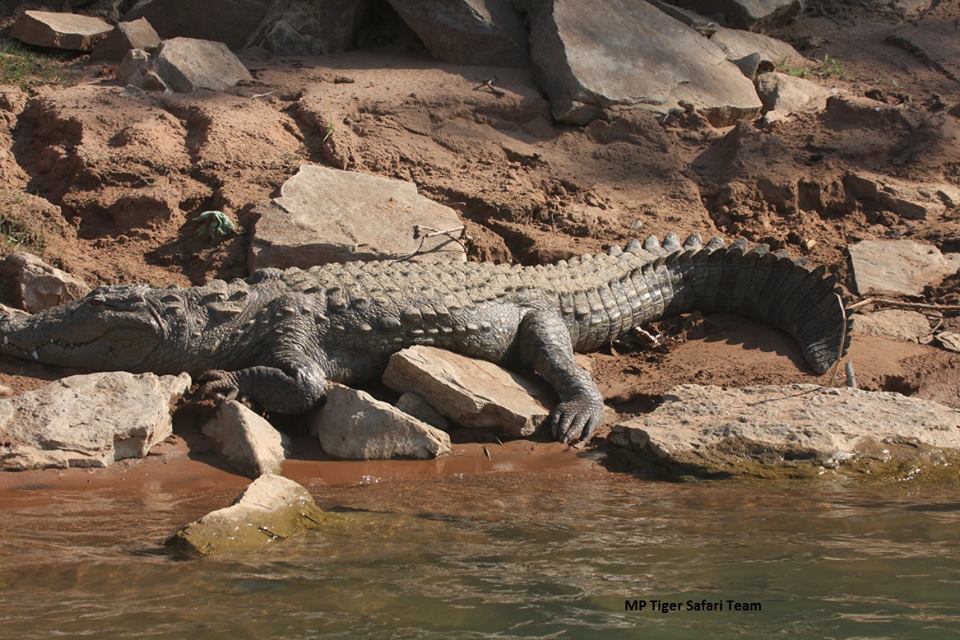
Marsh Crocodile Teerath Singh 
Swamp Deer - Ruchi Patel

Sambar Deer Teerath Singh
Shreyas D - Common Pochard

Thursday, May 12, 2016

World in My Camera

Mic Clark 
Wales U.K

Guest Courtyard House at Kanha

Mic Clark is a much-traveled man. And if your travel takes you to wild places then you are lucky as well. Well, it is hard work and much sacrifice. He is a wildlife photographer, as dedicated as one can be. I had the honor of guiding him consequentially for two expeditions at Kanha National Park.    

For naturalists accompanying professional photographers is a learning experience...experienced or amateurs. The discipline and committed approach to tasks offer much to gain from...as I did. 

Mic has been to Gambia, Kenya, and Sri Lanka besides India where he has visited many tiger parks. Though he photographs all things in nature his love for the big cats is evident. 

It is a challenging task to capture images of tigers and leopards elusive as they are. We have been quite successful in the endeavor.  Tigers, sloth bears, leopards, swamp deer, barking deer, sambar, and many birds have come our way in the pristine magnificence that is Kanha. With great care Mic has captured images of the subjects that he chose. I am sure images would be startling.          

Wildlife Photography by Mic Clark: Bengal Tigers - Kanha National Park Madhya Pradesh &emdash; Bengal tiger (Panthera tigris tigris)
As is apparent from his wildlife photography website his images are spell-binding. Years of hard work do pay which is important for young entrants to understand. There is no magic wand that showers these hard-won imageries.    

His wildlife photographs have been sold and widely published on reputable resources. 


Sunday, April 24, 2016

Amazing Wildlife of Pench - Dharmagiri

As an experienced naturalist he earlier worked in Nepal but since a long time he is looking after Jungle Home Pench at Turia near Pench Tiger Reserve. I met him some years back on my visit to the reserve and was...well his images will complete the sentence. 

Dharmagiri has an eye for photography that is all encompassing with stunning imagery of natural history and rare moments.  As a blogger, wildlife enthusiast and naturalist I present his work below.
Male Tiger at Pench

Collared Tigress

Dhole

Gaur

Langur

Flyingsquirrel

IndianWolf

Jackal

Hunt

JackalonKill

JungleCat

Flehmen

Commonkrait


Leopard


Tigressonrock


rhesusmacaque

Ruddymongoose


Tigeratwaterhole


MaleTiger


Wilddogs at play