Showing posts with label animals. Show all posts

Wednesday, August 5, 2020

Conservation: It's Pay Back Time

Our  Earth: A Saga of Exploitation

Not only extensive farming, poaching, wood logging, and hunting have denuded our wilds we conveniently seek to forgive our sins whence it comes to breakneck industrial revolution and urbanization. Like agriculture, large industries and industrial estates scrap off nature from Earth in long strips along with associated urbanization in our towns and cities. 


In the past few centuries, we have hastened the demise of many invaluable ecosystems to alternate them with nonviable human constructs and the process goes on. The developed countries have been quick to extensively exploit natural resources and strip off ecosystems forests, grasslands, and rivers to name a few in order to develop in material terms without digging deep into ramifications. Most countries are stripped of natural lands and they have virtually exterminated their wilderness. But there is no looking back,  and if there is at places it is weak and without commitment. As a consequence, we are facing climate change and species extinction due to the dismembering of remaining ecosystems, pollution, human intrusions, and alternating natural systems to suit our exigencies.             

Earth is supposed to be shared among trillions of life forms thus maintaining an equilibrium so that life sustenance mechanism remains inviolate. Large chunks of ecosystems have been decimated for crops without any circumspection, and industrialization, and urbanization is taking place with haste. We are turning settlements into cement jungles and urban ghettos. 


All we look at is modern infrastructure and the gleaming societies and lifestyles they generate forgetting the dead that lies beneath. The industrial revolution has been a major disaster and caused wars innumerable, social disparities as well as grave harm to the environment. Global warming is an evident phenomenon among even those who are not erudite or aware, and the suffering is taking a toll in terms of health physical and mental.   

It is difficult to hinder this blitzkrieg because dispensations do not bow down and at the most pay lip service to conservation. Maintaining an equilibrium would require some committed steps for preservation even if the infrastructure buildup is halted. We simply cannot regenerate the complex living systems that nature does. This is rabid development is the trend everywhere, and most vicious in overpopulated countries trying to emerge from ongoing poverty without understanding the route they are adopting. As urban ghettos increase poverty will as well for we see life not as sustainable but gauge impoverished societies keeping the yardstick of measure highlighting disparity with those well developed (sic). There is no limit to the demands of humanity, and we will perish if we fulfill them at the cost of nature. Are we going to need artificial glass bubbles with oxygen supplies to survive on Earth in the future?       

To keep industries alive and the economy booming we continue to exploit natural resources which are already dwindling. In economic haste, we are not using the resources in a judicious manner, and are not at all looking for renewable on a war footing. Development is the mantra of disaster and the infrastructure built up in hinterlands in countries like India is a scourge with no mitigation seemingly possible. Rather than judging the economy by scale, we must peep into the environmental disaster we are leaving in the wake. We need to define our basic needs and stick to them.         

Poverty alleviation should not come about through the industrial revolution, it should come by rational use of renewable energy and a paradigm shift in our lifestyles. Too much energy consumption or unprecedented use of natural resources has wreaked havoc on our planet and we need to stem the rot. The major stress factor is not poverty but our excessive consumption of fossil fuels and other natural resources. Controlling the population is wise but there is no such urgency among various countries and demographics. Population control should be imperative, especially in Asia and Africa.         

Time to Pay Back 

We need reforestation, conservation of wildlife, habitat repair, and preservation of the ecosystem that supports them, and to stop the destruction of tropical forests going on on large scale.  We will have to redefine our lifestyle and consumption pattern and wean out what is unsustainable with vigor and commitment.     

We will have to have a methodology in place as far as industrialization and infrastructure build-up is taking place. We will have to draw out sustainable plans and practices which mitigate damage to natural lands.  Yes a lot more has to be done in order to preserve our  Earth and the efforts should come about not only from institutions but we the public as well.  

We can do it, we are successfully saving the tiger and the lion and many other endangered species and India has also preserved good enough ecosystems. There is hope! 

========================
Uday Works as Freelance Naturalist and Blogs on conservation, tigers, environmental issues.

He also provides SEO and Website Contents in English.

He can be contacted at:

Mail: pateluday90@hotmail.com
 Mob: 09755089323
    

Tuesday, July 14, 2020

Rewildling India an Aid to Heal Nature

Whence Project Tiger was launched the majestic beast came to life for sooner or later it would be a success. It has worked, and the population of tigers in India is rising albeit gradually. But in between lot is happening that is discouraging to the conservationists and the well-wishers of the environment.  

After years of degradation of our ecosystems primarily for resources, a contingency has arisen. The battered systems are being subject to an irrevocable degraded status. The demand for timber, burgeoning settlements, and clearance for agriculture besides the biotic pressure created by ever-growing livestock has wreaked havoc on our ecosystems since population increase has skyrocketed in India. Now as the new paradigm sets in the 21st Century the development mantra of ever-changing ruling dispensations in the Center and State is challenging the stabilization that had taken place in the last few decades.         


The urgency to suddenly become a developed state with an ever-rising and robust economy is throwing caution to the winds. Even in spite of the successful tiger conservation program at the helm, the changing population dynamics of big cats are asking for more land in the tiger reserves. This idea of man-animal coexistence in the buffer is at best chimerical. The rising instances of man-animal conflict narrate a sordid saga of failed land management in the country. 


In an overpopulated country like India with most of the population living under impoverished circumstances, development urgency can be understood. But then what are we going to achieve by subjecting the precious ecosystems to denudation, and ill-planned developmental practices like stripping off land to make way for facilitating linear development that cuts through our forests and changes the flow of our rivers. Without any ecological studies to justify the present and future impact on the environment and the well-being of the ecosystem as a whole we are certainly heading for a disaster.   

Since the turn of this century, development goals are being conceived and shaped keeping the Western Scale as a model. But is this going to work, is the haste sustainable? When it comes to engineering precious natural lands to make way for urbanization, dams, factories, roads, and highways we are throwing caution to the wind, and the warnings by ecologists are shunned as a cry wolf syndrome. The legal framework too somehow bends in favor of allowing the disastrous structural changes on some rationale or another.                


If we look at the long-term scenario not much is going to change irrespective of who is at the helm of governance. The voices promoting caution, rising protests, and warnings eventually drown in the rising crescendo of an economic revolution that the country is seeking since independence.

Before the roar turns into a whimper we should be searching for alternatives that can be promoted as people's initiatives perhaps supported by the NGOs and other concerned organizations.      


In rewilding lies the answer using endemic floral and fauna. This is easier said than done taking into account the pressures on land and the complexities of living systems that support the preservation and conservation of species on Earth. This should come about with the repair of degraded ecosystems by planting endemic floral elements and rejuvenating wildlife by conserving or reintroducing locally extinct life forms. 

As a matter of fact, this is what our PAs or protected areas are doing quite successfully. But as regards Government initiatives there is a limit thanks to the populist nature of our democracy. Initiatives outside the PAs will never take birth or even if they do the half heart implementation will not benefit the degraded and fragile ecosystems. This is not entirely true here the discussion is about enhancing public participation not unduly criticize the Governmental initiatives. 


Plantation has been carried out on large scale in the country and the change from creating mono-cultures like in the past to stress upon endemic species is definitely encouraging. The translocation of wild species from places of reasonable abundance to other destinations in order to reestablish extinct populations or to balance scarce populations in order to boost breeding has been done by the administration quite successfully. These rewilding initiatives have come about as a silver lining in the clouds but much is to desire. How we come out of the stone age and yet retain and sustain our resources is a matter that needs dire attention. This would require the ruling dispensations to be more attentive to public discourse on environmental matters. This would help extricate us from a clueless and disastrous developmental approach that would not be sustainable and harm our environment in totality. I am not talking here about committee members most of whom are yes Sir people in it for name, fame, and associated privileges. India does not lack apolitical, committed conservationists and people conscious of sustainable practices that would preserve our ecosystems for eternity and prevent environmental degradation.         

We will have to curb our commercial instincts which like most Nations are at their peak. Licensing for extreme commercial gains irrationally without any study is against the principle of rational utilization of crucial resources. Unchecked and ill-planned activities like mining, and exploitation of fossil fuels like oil and coal will be disastrous and we are already paying a price due to resultant global warming. 

Public participation is the crux of alternative conservation practices. In India, there are individuals and NGOs who have already laid fine examples of what we as people can do albeit in a limited manner. 

In India, a section of bureaucracy works in complete isolation and even has a discretionary attitude towards the public. This could be described as a colonial approach that long after independence still persists. We as a people should be part of our policies shaping the country and insuring safeguards that would make life much more secure and contended for our future generations.         

India is a wise old country in the last five thousand years or more we have ingrained lot many virtues thanks to Vedic civilization and one of them is conservation ethos. In our blind rush for wealth, we should not sacrifice the principles valued by our sages and wise men. There is hope for there is within every India still present the Vedic ethos.  Earth! Water! Fire! Long Live India!               

=======================================================

Uday Works as Freelance Naturalist and Blogs on conservation, tigers, and environmental issues. 

He also provides SEO and Website Content in English.

Uday Teaches Internet Marketing Classes in his hometown in Jabalpur in Summer.  

He can be contacted at: 


pateluday90@hotmail.com


Tuesday, March 17, 2020

Central India The Land of The Tiger in Images


Waterbody in Indian Jungle
Astounding as it is the complex web of life is a serene picturesque setting that is salubrious and instills calm and peace among the visitors. Time alone knows the origin of this wonderful land of the tigers but in the contemporary era, we can explore and understand what is now Kanha National Park.    

Situated in Central India Kanha is an ecosystem...the last remaining vestige of an erstwhile contiguous forest among the highlands of Madhya Pradesh, Chhattisgarh, and Maharashtra. Nestled between Satpura and Vidnhyan Ranges the fragrant remains are testimony to India of the past where wilderness ruled over scant urbanity and the tigers ruled over the vast kingdoms. 

White Bellied Drongo
Serpent Eagle
Long Tailed Shrike
Dhol
Fig


Well, not all are lost tiger reserves such as Kanha, Panna, Pench, Satpura, Bandhavgarh and Tadobah albeit isolated offer succor to amazing biodiversity that is preserved for posterity. Often called protected areas or PAs these last remaining ecosystems offer hope to the beleaguered tiger and co-inhabitants. 

In the mind-boggling rabid race for urbanization and development campaigns benefiting India's teeming millions, the tiger reserves are facing an uphill task to preserve themselves as humans invade the fragile web of life what we call the forest ecosystem.     

My work as a naturalist accords a chance to photograph the wonderful biodiversity and present it to the blog readers. 
======================================
Black Buck

Lotus

Brown Headed Barbet

Brook

Spotted Deer

Branderi Swamp Deer

Crimson Tailed Marsh Hawk

Grey Headed Fish Eagle

Crested Hawk Eagle

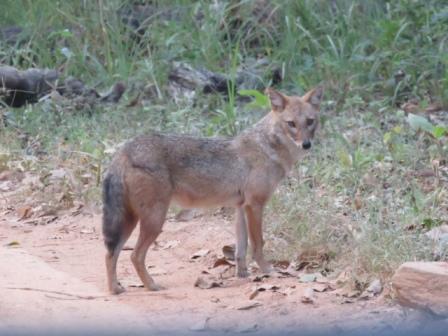
Jackal

Leopard (Andrew)

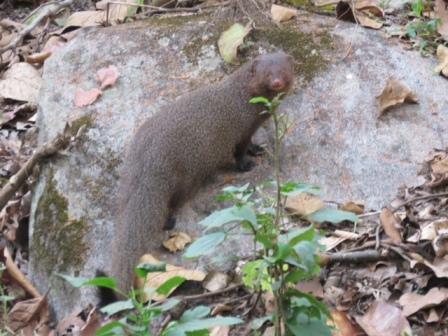
Ruddy Mongoose Pair

Ruddy Mongoose (ANDREW)

scaly breasted munia (Andrew)

Puff ball fungi

India scops owl

Grey breasted munia

rock python

sambar deer stag

Giant Wood Spider

Sunset

Antill
Tiger
Bee Eater


Black Buck

Brown Shrike 

Common Teals


White Eyed Buzzard

Pied Bushchat
Plain Prinia
Pond Heron

Indian Scops Owl

Shikra

Scarlet Minivet

Giant Wood Spider in Web
Sinduri Tree

Lesser Adjutant Stork

Swamp Deer Stag

Tigress

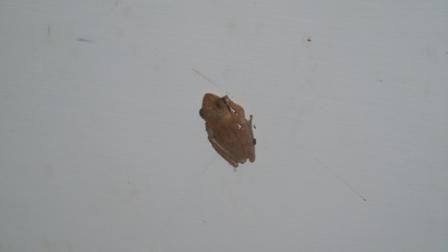
Tree Frog 

Flapshell Turtle

Ultramarine Flycatcher

Grey Capped Pigmy Woodpecker

Wooly Necked Stork

Gadwall
Cotton Pigmy Goose

Langur Monkey

Green Pigeon

Green Sandpiper

Gaur Male

Gray Langur

Crested Hawk Eagle

Jerdon's Baza

Red Jungle Fowl

Common Kingfisher

White Throated Kingfisher

Monitor Lizard

Barking Deer

Monk Vulture

Alexandrine Parakeet

Barred Jungle Owlet

Brown Fish Owl

Richard's Pipit

Through these pictures, I wish to portray a holistic view of our tiger reserves. Under constant human threats, these wonderful islands of hope should be preserved for eternity but an uncertain future remains for the animals, plants, insects, reptiles, flora, and other elements that make up this incredible microcosm of life in India.   
=======================================
Uday works as a naturalist in Central India and also loves to write about tiger reserves and conservation. 
He also provides SEO Services and Website Content in English. He organizes summer classes in Digital Marketing in Jabalpur his hometown. 
Contact: pateluday90@hotmail.com
Mob: 09755089323