Showing posts with label Wild. Show all posts

Sunday, November 20, 2022

Holy Cow Stray Dog Menace & Feeding A Danger to Humans And Wildlife

Stray Dog Menace

Indian Wild Dog 
In Africa, stray dogs, and domesticated ones near major wildlife habitats like Maasai Mara are vaccinated against rabies and other deadly disease. 

Do we take such steps?

"My guess is as good as yours. I guess we do not," Well though it is difficult to say that such vaccination programs are not being carried out by authorities, nevertheless, the dog menace remains a big threat.  Dangers lurk the most in our urban areas and villages where the stray dogs roam free and multiply at will. 

Deer in Danger

They have started to form packs to hunt down the deer that roam in the forests and those that enter human settlements. Among the most threatened species is the chital deer or the spotted deer (axis axis). They are being hunted down by roaming dogs all over India.

Feeding Wild & Stary Animals

Indians have a penchant for feeding animals without discerning whether it is good or bad for them. Some consider feeding stray and wild animals as a sacred act that will reflect positively on health, wealth, and happiness as a result of good Karma. 

We consider the cow holy and that is good, nothing to ridicule. But should we let them survive on throwaways or garbage? Stray cows are a major danger on the roads everywhere, and an International Embarrassment, the owners after milking them leave them on the streets to roam around. The free-roaming cattle are jeopardizing traffic which is leading to a very high number of road accidents and deaths. Is this how we treat our holiest animal? 

Shelters for Stray Animals & Vaccination - Cows & Dogs

There should be proper shelters for street cows, and why not for stray dogs if we cannot sterilize and vaccinate them. For example, in absence of proper vaccination, the dairy industry is under threat from lumpy skin disease. The cattle around the reserves have led to the transmission of rinderpest, and foot and mouth disease killing a large number of bison and swamp deer in our forests.  

What impact disease-carrying stray dogs are having on the dhole has not been studied? Field biologists contend with research on the instincts and behavior of wild animals in natural surroundings. I hope they are including diverse threat factors especially socio-economic, and political impact created by dense humanity around our forests.   

Reason Behind Feeding Wild Animals 

Feeding human fodder to Hanuman Langurs, rhesus macaques, and other wild denizens impact their natural instincts and food consumption habit. I have seen scores of langurs and rhesus macaques lined along highways, tourist places, and busy streets of bazaars awaiting morsels thrown by humans. This unnatural assemblage has created a major threat and nuisance all over India.

Hinduism and many indigenous ideologies are inclined toward nature. The sacred elements it considers worthy of holy status comprise other life forms. This is a good belief since the ideology and religious dogmas teach us to respect all life forms that make up the living planet called Earth. 

Sensitivity towards other life forms is exalting, but there has to be a line drawn somewhere. Offering human food to stray dogs, or wild animals is not a good practice.  Animal adoption as in Zoos, or domesticating a stray dog is the answer. But this does not mean letting them free on the road, they should be offered sanctuary within the house as we do with the pedigree. This is the answer as some NGOs with a court injunction and our own ahimsa does not allow the culling of stray dogs. 

Threat to Dholes or Wild Dogs

The greatest threat is perhaps to the wild dogs or dholes in our reserves, and some nonprotected areas that constitute conventional reserve forests. The frequent human habitats in search of prey.
The wild dog population is vacillating in the reserve, and the forests outside. Even in Kanha, where I was working as a naturalist, the packs usually seen in robust numbers are missing from many traditionally dominated areas. Some of them are losing ground with humanity strangling the remaining crown cover in the buffer beside transmitted diseases. Is the reason behind the dwindling status? 

I think the same stands true for these least studied animals in other reserves and National Parks. 

Will they go down like the Great Indian Bustard, the Indian Wolf, and the Hyena in India?     

Interferences & Conservation Policies 

In India, conservation is impacted by statutory compliance as defined by injunctions, political interventions, and by the pressure of some biased NGOs. Nothing else matters, those Field Managers who do not comply with the limits are literary shown the boot by higher-ups, and the politically powerful lords. Field management practices for the wardens are not a free-hand endeavor, they work under shackles, some are good, while others hinder conservation initiatives.    

Conservation policies are not straight-lined policies as we the common citizen believe. The frameworks depend upon many factors that include the impact on financing bodies, vote banks, religious sensitivities, cost, linear development projects, and precedence to human rights over rights of other life forms. 

Some good work is being done on the conservation front by ruling dispensations. But! We are also responsible! Let us admit that we are selfish, and run after the moolah. And, the other life forms, the amazing biodiversity is entirely at our mercy as has been happening for centuries. Nothing Surprising.

But it is not right to blame everything on the Government we as common citizens should also aid in preserving nature in our vicinity, and help secure remaining natural spots in neighborhoods, villages, farmlands, towns, and cities with fervor. 

In most conservation imbroglios macro solutions work the best. Can we as intelligent voters provide them?   

===========================================================================================================

Uday has worked as a naturalist for a number of years at Kanha National Park in Central India. He is fond of writing on conservation issues and is a storyteller for the common man. 

Uday works as SEO for Digital Marketing and Content Writer. He also teaches digital marketing in Jabalpur. He is closely connected to nature as a naturalist.    

He can be contacted at:

Mob/Wattsapp: 09755089323

pateluday90@hotmail.com

Saturday, July 3, 2021

The Dwindling Indian Wild Dog

Shahdar Range Sehora

The even-paced stride under the glaring light of the rising Sun in a pristine forest was a spectacle unparalleled. The sightings of a tiger I had experienced many times paled whence compared with the flight of this dainty carnivore. Lustrous golden brown with a black bushy handsome tail dhole as the wild dog is called in Hindi is one of the most charismatic predators on Earth. Lightweight and lithe, the creatures weigh less than twenty kilograms yet carry a punch that could bring down prey bigger than them. 


This was in Shahdar Range in Sehora Tehsil of Jabalpur District. The year was 1990 and we were frequenting ranges in Sehora District on tendu collection drive.  At that time there were 12 tigers reported in Shahdar Range and adjoining ranges. There was a dense population of prey and perhaps bison at that time in these forests under high biotic pressure. The area is now under Bandhavgarh Tiger Reserve? The present status is unknown. Have we lost the forests and wild animals to urbanization or destruction?  I have not been to this erstwhile? tiger landscape since my first visit.   


 The predator's flight path was in opposite direction and we witnessed the spectacle for a long time before the pair vanished into the woods. When we first ventured into this region we were least expecting to encounter wilderness like that which usually exists in the core area of the reserves. Most of the forests outside the protected areas are subject to wood logging, forest fires, poaching, and illegal quarrying by brick manufacturers. Authorities have lax control of such patches because of a lack of dedication in some, political infringement, and inherent corruption among some.   


Surprised by such abundance, I felt like being in ancient India whence wilderness was rife all over. We nearly encountered a tiger whence he killed a cattle belonging to a local sarpanch. But the wild dogs are shy, and we saw them only in less disturbed range of Shahdar Hill.

The Dhole (Cuon Alpinus) 

Overshadowed by the tiger and the leopard, both endangered in India, the dhole or wild dog is equally threatened.  The location I describe here although under project tiger now, was a commercial wood-logging site. In such areas, a constant protection guarantee in absence of conservation initiatives is much to be concerned about.  

Dhole on Prey - Image Teerath Singh

The focus is on the core or critical tiger habitats in Indian reserves, and neglect of sink areas is palpable. However, I feel the status of wilderness is much weighed down by the core-centric approach for the real conflict in the extended neighborhoods. Animals like the dhole are rarely localized in the core. The populations spread far and wide, they are restricted only by the crown cover since the canid is not an open area or scrub predator. 


During my visits as a naturalist in Kanha National Park - incidentally one of the best managed proactive conservation units - I have been keeping an eye on the population dynamics of this carnivore for a long time and surprisingly have come to the conclusion that the population is paradoxically unstable in the core itself. I am as good as any amateur naturalist and my conclusions are much more based on perception than facts and figures.  But in the case of wild matters observation or seeing is believing. 

Please note, visitors and naturalists have no access to regions outside the tourism area. But regular forays in the tourism areas are enough to gauze the status of predators in a given reserve since the population as a whole is interconnected and subject to constant local migration. In the extreme cases of prey depletion, the population declines naturally, only to recover whence the prey density becomes stable. This is not the case with Kanha.    

The dhole frequent the buffer or outer rings of the reserves, I have seen them often near human habitation in Kanha a number of times. They frequent the buffer zone safari area near Boda Chappri and nearby villages.

Conflict & Conservation 

Of the global population of around 2500 animals, more than sixty percent survive in India. Conservation span as regards Cuon Alpinus is minimal, pan India. Though recent concern augurs hope that the animal may not arrive at the same status as the much-threatened Indian wolf. 

The pack hunter may recover with help of studies and research that may sketch a productive conservation approach. But unfortunately, threatening factors are quite akin to the wolf.  

The conflict paradigm in the case of secondary carnivores that venture much further away from the protected core is far more perplexing than in the case of most of the tertiary carnivores like the tiger that remain confined to dense crown cover and rarely venture near human settlements in the daytime. The rapid decline in wolf populations and the threat posed to the leopards in India stand in parallel to what the dhole is facing.  Such carnivores cross over the manageable limits of our conservation reach. 

The status of the stray population of carnivores is much dependent upon the factors listed below: 

  • 1) Live Stock Predation 
  • 2) Historical Threat Perception 
  • 3) Vicinity to Human Habitation
  • 4) Disease Prevalence  
  • 5) Population of Dogs  
  • 6) Presence of Co-predators 
  • 7) Habitat Destruction 
The canid is extremely agile and shy enough to avoid human habitation but with fast-depleting forests and encroaching settlements, the dreaded encounter is inevitable. The wild dog is the loser and its fast-depleting population is no hearsay. 
'
The animal produces four or five pups at a  time during the onset of winter. There can be multiple breeding females, though the alpha pair hierarchy is well established. The canid is more of a clan hunter and calling it a pack hunter is not correct. 

The clan size I have seen in Kanha and Bandhavgarh was around fourteen adults. But these clans disperse to make it on their own, and that rings alarm bells among wildlife enthusiasts. The animal is loosely territorial, and the dispersal can expose them to conflict regions or areas with less prey which will hinder breeding.    


Dholes are social, and during breeding, they are often seen in pair that has separated. The gestation period of this diurnal hunter is around two months. With natural consent, this dog is a gory hunter and the prey is consumed often by the time the chase ends. 


This dog does not bark like the city-bred but communicates using sounds that resemble whistling. When alarmed the sound emitted is loud, raucous, and continuous it is like somewhere between a bark and long haul. 

Although there are no conservation initiatives, the predator down the line has recently become a subject of curiosity and a number of studies have taken place. A groundbreaking study has been carried out by A.J.T Johnsingh in Bandipur Tiger Reserve. More studies on the ecology of this predator have been done and are being carried out by imminent scientists and researchers.    

India desperately waits for positive outcomes or the canid will be added to the lone wolf story sooner than we expect. 

Wild Dog India - Image Nandita Amin 

=================================================

Uday works as freelance naturalist and loves to write on related issues. He also provides SEO and content writing services. He runs classes on digital marketing in his home town Jabalpur.  

He can be contacted :

pateluday90@hotmailcom

9755089323  

Tuesday, July 14, 2020

Rewildling India an Aid to Heal Nature

Whence Project Tiger was launched the majestic beast came to life for sooner or later it would be a success. It has worked, and the population of tigers in India is rising albeit gradually. But in between lot is happening that is discouraging to the conservationists and the well-wishers of the environment.  

After years of degradation of our ecosystems primarily for resources, a contingency has arisen. The battered systems are being subject to an irrevocable degraded status. The demand for timber, burgeoning settlements, and clearance for agriculture besides the biotic pressure created by ever-growing livestock has wreaked havoc on our ecosystems since population increase has skyrocketed in India. Now as the new paradigm sets in the 21st Century the development mantra of ever-changing ruling dispensations in the Center and State is challenging the stabilization that had taken place in the last few decades.         


The urgency to suddenly become a developed state with an ever-rising and robust economy is throwing caution to the winds. Even in spite of the successful tiger conservation program at the helm, the changing population dynamics of big cats are asking for more land in the tiger reserves. This idea of man-animal coexistence in the buffer is at best chimerical. The rising instances of man-animal conflict narrate a sordid saga of failed land management in the country. 


In an overpopulated country like India with most of the population living under impoverished circumstances, development urgency can be understood. But then what are we going to achieve by subjecting the precious ecosystems to denudation, and ill-planned developmental practices like stripping off land to make way for facilitating linear development that cuts through our forests and changes the flow of our rivers. Without any ecological studies to justify the present and future impact on the environment and the well-being of the ecosystem as a whole we are certainly heading for a disaster.   

Since the turn of this century, development goals are being conceived and shaped keeping the Western Scale as a model. But is this going to work, is the haste sustainable? When it comes to engineering precious natural lands to make way for urbanization, dams, factories, roads, and highways we are throwing caution to the wind, and the warnings by ecologists are shunned as a cry wolf syndrome. The legal framework too somehow bends in favor of allowing the disastrous structural changes on some rationale or another.                


If we look at the long-term scenario not much is going to change irrespective of who is at the helm of governance. The voices promoting caution, rising protests, and warnings eventually drown in the rising crescendo of an economic revolution that the country is seeking since independence.

Before the roar turns into a whimper we should be searching for alternatives that can be promoted as people's initiatives perhaps supported by the NGOs and other concerned organizations.      


In rewilding lies the answer using endemic floral and fauna. This is easier said than done taking into account the pressures on land and the complexities of living systems that support the preservation and conservation of species on Earth. This should come about with the repair of degraded ecosystems by planting endemic floral elements and rejuvenating wildlife by conserving or reintroducing locally extinct life forms. 

As a matter of fact, this is what our PAs or protected areas are doing quite successfully. But as regards Government initiatives there is a limit thanks to the populist nature of our democracy. Initiatives outside the PAs will never take birth or even if they do the half heart implementation will not benefit the degraded and fragile ecosystems. This is not entirely true here the discussion is about enhancing public participation not unduly criticize the Governmental initiatives. 


Plantation has been carried out on large scale in the country and the change from creating mono-cultures like in the past to stress upon endemic species is definitely encouraging. The translocation of wild species from places of reasonable abundance to other destinations in order to reestablish extinct populations or to balance scarce populations in order to boost breeding has been done by the administration quite successfully. These rewilding initiatives have come about as a silver lining in the clouds but much is to desire. How we come out of the stone age and yet retain and sustain our resources is a matter that needs dire attention. This would require the ruling dispensations to be more attentive to public discourse on environmental matters. This would help extricate us from a clueless and disastrous developmental approach that would not be sustainable and harm our environment in totality. I am not talking here about committee members most of whom are yes Sir people in it for name, fame, and associated privileges. India does not lack apolitical, committed conservationists and people conscious of sustainable practices that would preserve our ecosystems for eternity and prevent environmental degradation.         

We will have to curb our commercial instincts which like most Nations are at their peak. Licensing for extreme commercial gains irrationally without any study is against the principle of rational utilization of crucial resources. Unchecked and ill-planned activities like mining, and exploitation of fossil fuels like oil and coal will be disastrous and we are already paying a price due to resultant global warming. 

Public participation is the crux of alternative conservation practices. In India, there are individuals and NGOs who have already laid fine examples of what we as people can do albeit in a limited manner. 

In India, a section of bureaucracy works in complete isolation and even has a discretionary attitude towards the public. This could be described as a colonial approach that long after independence still persists. We as a people should be part of our policies shaping the country and insuring safeguards that would make life much more secure and contended for our future generations.         

India is a wise old country in the last five thousand years or more we have ingrained lot many virtues thanks to Vedic civilization and one of them is conservation ethos. In our blind rush for wealth, we should not sacrifice the principles valued by our sages and wise men. There is hope for there is within every India still present the Vedic ethos.  Earth! Water! Fire! Long Live India!               

=======================================================

Uday Works as Freelance Naturalist and Blogs on conservation, tigers, and environmental issues. 

He also provides SEO and Website Content in English.

Uday Teaches Internet Marketing Classes in his hometown in Jabalpur in Summer.  

He can be contacted at: 


pateluday90@hotmail.com


Friday, June 5, 2020

An Elephant Brutality Killed

Om Ganesh Namah! 

A perfect ode to a beloved God. For every new startup Ganesha is the first deity to be praised. The almighty sports an elephant head. How and Why? Is it a myth or factual, and that perhaps it is timeless as well? 

Nevertheless Hinduism is a belief that collectively reveres all aspect of nature ... the philosophical aspects are deep and the believers are not animists. More and more...we are realizing that nature's love and preservation is essential for our survival.     


It is the word all-encompassing that describes the World, does not it? So the belief is a holistic science, I wish to inform readers before they began to get trapped in false conjectures. It is simple science that all life forms and elements on Earth are interconnected and by praising the Lord in any form...by this, we acknowledge reverence to his creation. This applies to animals too and hence veneration of the lovely creatures in some form or the other. I do not imply that all should follow, for it is each to his or her own belief. 

Brutal Elephant Killing or Murder?

In a district of Kerala, an Indian State a wild elephant cow hungry and pregnant came into the human abode seeking nourishment. For a wild animal accepting the proximity of humans is because of distress as well as due to trust. All she received was a handful of fruits laden with explosives. Was this accidental? No Way! Fruits do not contain firecrackers they were deliberately placed or rather fed to her with the intention to kill. She stood in the water at a nearby pond suffering pain and unbearable agony due to the heinous deed of the civilized.  With her mouth and perhaps innards badly damaged she was beyond recovery an early death could have saved her from the agonizing pain. 

She stood still in a stupor after the shock of the explosion inside her!        

Of Punitive Measures! 

The uproar was justified and still continues and will continue till the culprits are punished for this gory crime. But this also reminds us of how we treat other life forms on Earth. We are brutal towards wild animals, especially whence threat perception overtakes our sanity. Our legislations ignore wild animals or takes them lightly, there are no punitive measures harsh enough that could discourage these inhuman deeds. The law should be unrelenting over such deeds and yes implemented with vigor. 

Our Fear & Human Insensitivity & Vedas

People feel threatened in the vicinity of these creatures, and our beliefs is shaped by the vermin concept and total disregard for them. This is in spite of the Vedic ethos that was part of our evolving civilization and nurtures us since birth. There is a lot of emphasis in Vedic Literature on conservation and the best way to carry forward this message is to denote life forms and natural elements as holy or worthy of respect and hence should be preserved. Some find this illogical?   

Yes, human sensitivity should not ignore other life forms we care for ourselves. For our threat perception, there is a mechanism in place to deal with any violence that could be a result of a possible or real-time attack.  We are evolving mechanisms to capture the animals alive in case they come to our vicinity. We now have snake handlers, animal catchers, professional vets, tranquilizers, nets, and cages that incarcerate the temporarily till they are released in their homes. And we have the forest department trained to look after the forest and wild animals. But there is a point here too. 

Where Do They Go?

What about the homes of the wild animals we are encroaching with rabid speed... the environs that support other life forms. So where do they go? They are hard-pressed often to enter urban surroundings and then this is the treatment we accord to them. Sic!

Almost every day tigers, bears, snakes, and other animals are becoming victims of human greed and empathy. This seems to be a never-ending phenomenon.  Not only animals...we are destroying our green lungs, the precious ecosystems that support life on Earth.  Unimaginable acreage of forests is being lost to human greed. And then we complain about global warming and pandemics.


Reap As You Sow!
=======================================================

Uday Works as Freelance Naturalist and Blogs on conservation, tigers, and environmental issues. 
He also provides SEO and Website Content in English.
Uday Teaches Internet Marketing Classes in his hometown of Jabalpur in the Summer.  
He can be contacted at: 

pateluday90@hotmail.com

Tuesday, March 17, 2020

Central India The Land of The Tiger in Images


Waterbody in Indian Jungle
Astounding as it is the complex web of life is a serene picturesque setting that is salubrious and instills calm and peace among the visitors. Time alone knows the origin of this wonderful land of the tigers but in the contemporary era, we can explore and understand what is now Kanha National Park.    

Situated in Central India Kanha is an ecosystem...the last remaining vestige of an erstwhile contiguous forest among the highlands of Madhya Pradesh, Chhattisgarh, and Maharashtra. Nestled between Satpura and Vidnhyan Ranges the fragrant remains are testimony to India of the past where wilderness ruled over scant urbanity and the tigers ruled over the vast kingdoms. 

White Bellied Drongo
Serpent Eagle
Long Tailed Shrike
Dhol
Fig


Well, not all are lost tiger reserves such as Kanha, Panna, Pench, Satpura, Bandhavgarh and Tadobah albeit isolated offer succor to amazing biodiversity that is preserved for posterity. Often called protected areas or PAs these last remaining ecosystems offer hope to the beleaguered tiger and co-inhabitants. 

In the mind-boggling rabid race for urbanization and development campaigns benefiting India's teeming millions, the tiger reserves are facing an uphill task to preserve themselves as humans invade the fragile web of life what we call the forest ecosystem.     

My work as a naturalist accords a chance to photograph the wonderful biodiversity and present it to the blog readers. 
======================================
Black Buck

Lotus

Brown Headed Barbet

Brook

Spotted Deer

Branderi Swamp Deer

Crimson Tailed Marsh Hawk

Grey Headed Fish Eagle

Crested Hawk Eagle

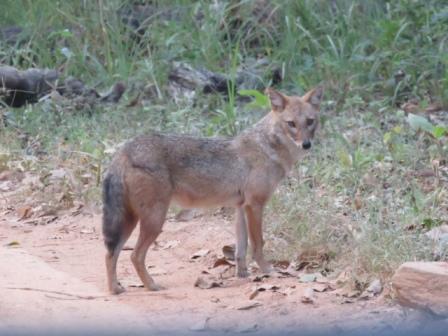
Jackal

Leopard (Andrew)

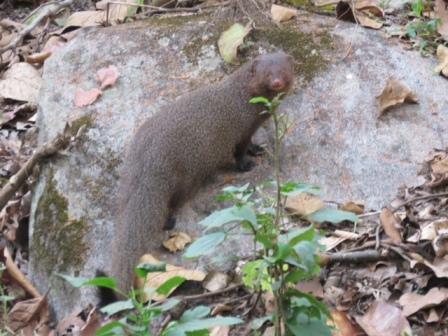
Ruddy Mongoose Pair

Ruddy Mongoose (ANDREW)

scaly breasted munia (Andrew)

Puff ball fungi

India scops owl

Grey breasted munia

rock python

sambar deer stag

Giant Wood Spider

Sunset

Antill
Tiger
Bee Eater


Black Buck

Brown Shrike 

Common Teals


White Eyed Buzzard

Pied Bushchat
Plain Prinia
Pond Heron

Indian Scops Owl

Shikra

Scarlet Minivet

Giant Wood Spider in Web
Sinduri Tree

Lesser Adjutant Stork

Swamp Deer Stag

Tigress

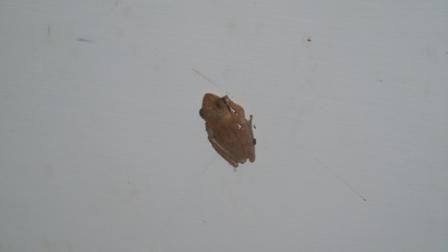
Tree Frog 

Flapshell Turtle

Ultramarine Flycatcher

Grey Capped Pigmy Woodpecker

Wooly Necked Stork

Gadwall
Cotton Pigmy Goose

Langur Monkey

Green Pigeon

Green Sandpiper

Gaur Male

Gray Langur

Crested Hawk Eagle

Jerdon's Baza

Red Jungle Fowl

Common Kingfisher

White Throated Kingfisher

Monitor Lizard

Barking Deer

Monk Vulture

Alexandrine Parakeet

Barred Jungle Owlet

Brown Fish Owl

Richard's Pipit

Through these pictures, I wish to portray a holistic view of our tiger reserves. Under constant human threats, these wonderful islands of hope should be preserved for eternity but an uncertain future remains for the animals, plants, insects, reptiles, flora, and other elements that make up this incredible microcosm of life in India.   
=======================================
Uday works as a naturalist in Central India and also loves to write about tiger reserves and conservation. 
He also provides SEO Services and Website Content in English. He organizes summer classes in Digital Marketing in Jabalpur his hometown. 
Contact: pateluday90@hotmail.com
Mob: 09755089323