Showing posts with label birds. Show all posts

Tuesday, December 8, 2020

Tiger Photo Safari : How to Best Organize?

Tiger is one of the most charismatic and aggressive predators, because of its incomparable beauty it is the cynosure of a photographer’s eye. Well, not only the lens men it is equally coveted by one and all. Some wish to see it in its natural habitat while some wish to catch scintillating images in their camera.

The desire to photograph the big cat is best fulfilled in India. With more than fifty reserves, it is the most coveted destination for wildlife and tiger photography. Well not only that even the filmmakers vie to come here on their mission and many succeed.


Success depends upon a few factors that experience teaches hence; lens men keep in touch with naturalists and tiger experts to decide upon their journey.  The guidance is valuable and most of the expeditions succeed in availing striking images of the predator in its natural habitat.

The prerequisite for tiger photography in India is a suitable camera with a high-quality medium lens and a monopod. This equipment need arises since the work has to be done from an open jeep, and people are not allowed to set foot in the wilderness of the reserves. It is not possible to film or photograph from a hide or a tent keeping the nature of the best in mind as well as associated dangers being charged on being bitten by snakes. Anyway, this requires special permission from the MOEF or Ministry of Forest and Environment through the Chief Wildlife Wardens of the States.


Forget this need if you are a good lensman with experience. In most of the parks experienced naturalists and guides impart valuable advice in order to fulfill your mission.

You have to choose the best place with frequent sightings and a panoramic backdrop to come across a striking image. As far as tiger sighting is concerned there are quite a few places in the country that can deliver if you book more than five safaris. Professional photographers usually organize a week-long program but amateurs do not, so this advice is for them. Some of the best places are mentioned below:

  • Kanha NP
  • Bandhavgarh NP
  • Pench NP
  • Panna NP

All above are in Central India.

  • Ranthambore in Rajasthan
  • Corbett in Uttrakhand
  • Tadoba Andhari in Maharashtra
  • Nagzira in Maharashtra

These are a few places with good sightings and hence accord moments with the big cats you would like to capture. The tourism infrastructure is sound in these destinations and travel is not much of a trouble. But entry to the parks is limited and on a permit. This calls for advance bookings, hence contact the tour operator in India and ask them to book the safari as soon as your dates are set and the program finalized.


The wildlife hotels are situated near the parks and it is good to book the accommodations as soon as the expedition is finalized. Sometimes during the festivals and weekends accommodations are fully booked so take heed. The tour operator will do all these bookings in a package so that’s not much of a hassle. He will also assure the services of a naturalist who will assist you on the photo safari. Most of the naturalists are well-versed in wildlife photography so that is a great help.  The local forest guides that must accompany you on the jeep are also of great help in tracking the big cat.     


For greater space and comfort on the jeep, organize a solo expedition, or else no more than two lensmen accompany you.  Always seek a well-maintained jeep registered with the forest department and avoid canters that seat many tourists. For photo safari in India privacy is a must and the jeep offers this the best in the reserves. The reserves offer a good enough chance to capture images of enchanting mammals and birds as well.   

Before embarking on the tour read books on the tiger and Indian wildlife. Familiarize yourself with your destination and travel in India. The country is remarkably diverse and so is the terrain, I am sure you will enjoy the tour all the way through.       

 Read on... Exciting Tiger Safari          

===========================

Uday Works as Freelance Naturalist and Blogs on conservation, tigers, and environmental issues.

He also provides SEO and Website Content in English. He teaches Digital Marketing in Jabalpur in the summer.

He can be contacted at:

Mail: pateluday90@hotmail.com
 Mob: 09755089323


Tuesday, March 17, 2020

Central India The Land of The Tiger in Images


Waterbody in Indian Jungle
Astounding as it is the complex web of life is a serene picturesque setting that is salubrious and instills calm and peace among the visitors. Time alone knows the origin of this wonderful land of the tigers but in the contemporary era, we can explore and understand what is now Kanha National Park.    

Situated in Central India Kanha is an ecosystem...the last remaining vestige of an erstwhile contiguous forest among the highlands of Madhya Pradesh, Chhattisgarh, and Maharashtra. Nestled between Satpura and Vidnhyan Ranges the fragrant remains are testimony to India of the past where wilderness ruled over scant urbanity and the tigers ruled over the vast kingdoms. 

White Bellied Drongo
Serpent Eagle
Long Tailed Shrike
Dhol
Fig


Well, not all are lost tiger reserves such as Kanha, Panna, Pench, Satpura, Bandhavgarh and Tadobah albeit isolated offer succor to amazing biodiversity that is preserved for posterity. Often called protected areas or PAs these last remaining ecosystems offer hope to the beleaguered tiger and co-inhabitants. 

In the mind-boggling rabid race for urbanization and development campaigns benefiting India's teeming millions, the tiger reserves are facing an uphill task to preserve themselves as humans invade the fragile web of life what we call the forest ecosystem.     

My work as a naturalist accords a chance to photograph the wonderful biodiversity and present it to the blog readers. 
======================================
Black Buck

Lotus

Brown Headed Barbet

Brook

Spotted Deer

Branderi Swamp Deer

Crimson Tailed Marsh Hawk

Grey Headed Fish Eagle

Crested Hawk Eagle

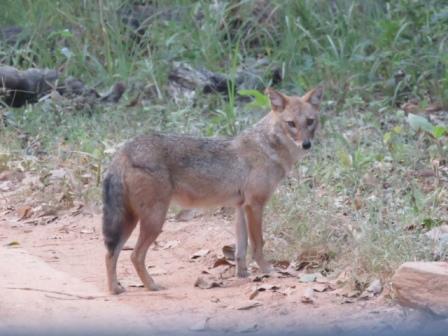
Jackal

Leopard (Andrew)

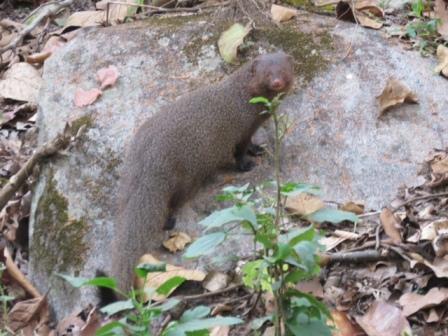
Ruddy Mongoose Pair

Ruddy Mongoose (ANDREW)

scaly breasted munia (Andrew)

Puff ball fungi

India scops owl

Grey breasted munia

rock python

sambar deer stag

Giant Wood Spider

Sunset

Antill
Tiger
Bee Eater


Black Buck

Brown Shrike 

Common Teals


White Eyed Buzzard

Pied Bushchat
Plain Prinia
Pond Heron

Indian Scops Owl

Shikra

Scarlet Minivet

Giant Wood Spider in Web
Sinduri Tree

Lesser Adjutant Stork

Swamp Deer Stag

Tigress

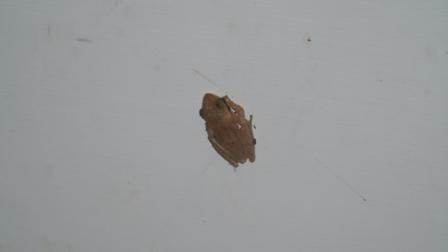
Tree Frog 

Flapshell Turtle

Ultramarine Flycatcher

Grey Capped Pigmy Woodpecker

Wooly Necked Stork

Gadwall
Cotton Pigmy Goose

Langur Monkey

Green Pigeon

Green Sandpiper

Gaur Male

Gray Langur

Crested Hawk Eagle

Jerdon's Baza

Red Jungle Fowl

Common Kingfisher

White Throated Kingfisher

Monitor Lizard

Barking Deer

Monk Vulture

Alexandrine Parakeet

Barred Jungle Owlet

Brown Fish Owl

Richard's Pipit

Through these pictures, I wish to portray a holistic view of our tiger reserves. Under constant human threats, these wonderful islands of hope should be preserved for eternity but an uncertain future remains for the animals, plants, insects, reptiles, flora, and other elements that make up this incredible microcosm of life in India.   
=======================================
Uday works as a naturalist in Central India and also loves to write about tiger reserves and conservation. 
He also provides SEO Services and Website Content in English. He organizes summer classes in Digital Marketing in Jabalpur his hometown. 
Contact: pateluday90@hotmail.com
Mob: 09755089323