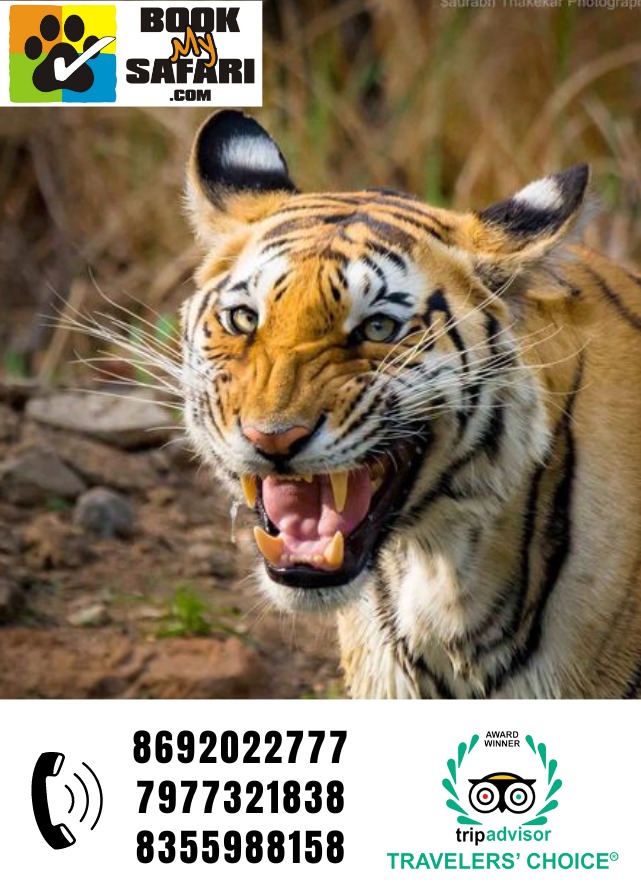
India is the land of the tiger.
It has more than 50 percent of the big cats living in the country. The tiger is
protected species, and it finds sanctuary in more than 50 tiger reserves. The
reserves are known as protected areas, and they are also known as tiger
conservation units. They have been created under the Project Tiger Program. The
Project Tiger Program is governed by NTCA or National Tiger Conservation
Authority in the country.
Among the 50+ tiger reserves,
some are more popular than others. The primary reason is the easy sighting of
tigers in those parks. These parks are home to many other animals besides the
tiger, and they provide an added attraction to tourists. Besides the wildlife,
these reserves are a panoramic delight with magnificent terrain.
Besides conservation initiatives,
the reserves also organize tours in the core area and the buffer zones. They
organize rides in the park in open jeeps and canters. But to enjoy the safaris
you need to book a permit. These permits are issued by the State Governments
for a charge. You have to pay separately for the jeep hire and canter, and the
forest guide that will accompany you.
Tiger Tourism
In the core area, the tiger
safari is organized. There are two safaris organized in one day. One is
organized in the morning another in the evening. To add to the excitement some
reserves organize full-day safaris where you can explore the forests with more
time allotted. You get entry half early than the regular rides and half an hour
late exit. Permits are bound by tourism zones but on a full-day safari, you can
trespass.
Best Tiger Parks
Among more than 50 tiger reserves
few are more popular than the rest. These popular parks offer exciting
sightings of tigers and other games in panoramic surroundings. These popular
parks are known for easier sightings of big cats and that attracts the
tourists. They have a well-developed tourism infrastructure that comprises
luxury hotels and resorts for extended accommodation.
Some of the popular tiger reserves are:
·Ranthambhore
Tiger Reserve
·Corbett
National Park
·Tadoba
Tiger Reserve
·Kanha
National Park
·Bandhavgarh
National Park
·Pench
Tiger Reserve
Tigers are frequently sighted in
these parks. Due to this reason, tourists flock to these reserves in large
numbers. You should thus book tiger safari permits in the parks in advance. You
can book the tiger safari online or at the gate if the limit of jeep entry has
not been exhausted. Always be well prepared before you visit the parks keeping
a note of the climate. Carry essentials as most of these reserves are situated
in remote confines.
Bandhavgarh is a National Park
and a tiger reserve situated in the Umaria District of Madhya Pradesh. It is
located 170 Km from Jabalpur a large city of Madhya Pradesh or MP. The park is
divided into the core zone and buffer zone.
The core zone is inviolate, and
no commercial activity or settlements are permitted. The only habitation is
that of forest guards, and they number more than 150. The core is the main
breeding ground of wild animals and since the place is inviolate wild animals
live and breed in peace.
The buffer zone is a multiple-use
area, and it is a mix of forests, fields, and tribal villages. Tourism in the
buffer is conducted in the remaining forests and movement of humans and
livestock is not permitted. Tourism takes place in these restricted forests in
day time but night safari takes place in some buffer zones.
Tourism Zones in Core
There are three tourism zones in the core where jeeps on
permits are allowed.
The zones are:
·Tala
·Magdhi
·Khitauli
The buffer zones are:
·Dhamokhar
·Panpatha
·Johila
Two-day safaris are organized one
in the early morning and the other in the evening. Some parks also organize
full-day safaris where there is no zone limitation. You can trespass any zone
but meals are allowed in designated places. The entry is half an hour earlier
than regular rides and the exit is half an hour later.
In all the zones safaris are
permitted on a permit, and the entry of jeeps is limited. The permits can be
booked online at MPOnline Portal. You can also book safari permits at the gate
provided it is available. If one of your friends and family does not have their
name on the permit they can still enjoy the ride through add-on policy. Only
six tourists are allowed on one jeep remember? There is also a single-seat
booking facility that can be booked and shared by solo tourists.
Bandhavgarh is home to a tiger,
leopard, bison, and sloth bear. Except for the bison, other animal sightings are
rare. For an exciting wildlife experience book your game rides in advance.
There are more than fifty tiger
reserves in India these are tiger conservation units managed by the State
Government and NTCA. Apart from management of the park and making policies they
set rules for tiger tourism. Tiger tourism in Indian parks is set by rules and
regulations.
Tiger tourism makes it possible
for tourists, naturalists, wildlife photographers, and filmmakers to visit the
park. The excursions are set by rules and regulations, especially in the core
area of the park.
Tiger Parks
The tiger parks are divided into the inner core which is
inviolate, and only forest guards are allowed to enter the whole area. Their
job is to protect and preserve the ecosystem and the wild animals. They also
tend to illegal entries, wood loggers, poachers, and forest fires.
Tourism in Core
Tourists are restricted to 20% of the core which is divided
into zones. Each zone is restricted, and visitors cannot trespass. The
restriction is placed as per the tourist permit. The safaris are constructed
early day and late evening till dusk. A fee is charged for excursions and the
forest guard who accompanies the open jeep is registered with the forest
department. Some parks allow a whole-day safari where there is no restriction
for zones and they can be crossover within the 20% area. Some reserves also
allow nocturnal safaris for two and a half hours.
Tourism in Buffer
Zone
Tourism is also allowed in the buffer zone which is the
outer ring of the park. Areas are marked for buffer safari as the rest of the
ring is inhabited by human settlers. Buffer zone safaris could be interesting
and tigers and bears can be seen by chance. Animals from the core often venture
into the outer ring surprising the tourists. Buffer zone safaris are ideal for
birding as the habitat is usually mixed forests with water holes.
Safari Permit
For tiger safaris in the park a permit is required, this
permit is issued by the State Government. Some permits are issued online like
in the case of the Central Government a site called MPOnline. Other states offer
the facility of booking safaris from the field director's office.
Both for overseas and domestic travelers a permit is a must.
This permit should be booked in advance as entry is limited. You can book a
safari online at MPOnline Portal for reserves in Madhya Pradesh or from the
field director's office at other destinations. You can also book permits
through tour operators in India or the hotel you have reserved.
Traveling for Tiger Safari
Make sure you book the tiger safari permit much in advance.
This is a priority and do this before you make travel arrangements. Tiger
reserves like Tadoba, Kanha, Bandhavgarh, Ranthbhore, and Corbett are booked
much in advance so take care.
Most of the reserves are situated in remote areas so carry
essentials and cash. Carry medicine and beverages and yes camera, wildlife, and
bird books. Book reputed luxury hotels and make firm travel arrangements.
=========
Uday is a naturalist and also provides SEO and SEO Content Writing Services.
He writes for Indiafootprints Wildlife Tour Operator in India. He is a freelancer.
Tiger safaris in India are
organized by National Park and sanctuaries in the core area and the buffer. The
core area is defined as per law where only wild animals have the right to live.
Except for the protection guard, no humans are allowed to venture in. No
commercial activity or intrusion can take place.The area is strictly guarded and
well-protected breeding grounds for wild animals.
The buffer zone is an area
outside the limits of the core area and some commercial activities are allowed
no heavy industries are permitted. Human settlement, few hotels, and
agriculture outside the limits of the reserved forests are permitted.
Safari at Nagzira Navegaon
For tourism purposes, a safari
permit is required from the State Government and the permits can be obtained
online from the State Government Website of Maharashtra.
Nagzira or Navegaon is a
protected area, and it is also a tiger reserve and a wildlife sanctuary
situated near Gondia in the State of Maharashtra. It is well known for its
tigers and black panthers The black panthers are occasionally seen. The destination is named after the temple of
Nag (Cobra Snake) which is right in the middle of the forest. Zira in Marathi
is a perennial source of water that flows down from the mountain of Pomgara,
thus the name Nagzira. A nearby village
called Nangthana also adds up to the name.
It is a picturesque destination
and serves as a virtual outdoor museum for visitors who come here often on
wildlife, tiger safaris, and birding. The wildlife includes megafauna and small
animals some of which are nocturnal. The
wild animals that are found here are:
Tiger Safari and Wildlife
Tiger, leopard, gaur, sambar,
chital, sloth bear, barking deer, mouse deer, wild boar, wild dog. Nearly
30,000 visitors come here on tiger safari. Among the reptiles, those often seen
here are cobra, Russell's Viper, checkered keelback, python, and Bengal
monitor. While most of the visitors are
holidaymakers, nature lovers, wildlife photographers, and filmmakers also make
a beeline for the tiger reserve in Maharashtra.
The safaris are organized in the
early morning and late evening. You must book the safari permit for Nagzire
Tiger Reserve much in advance. Nagzira Sanctuary is 22km from Sakoli on the
Bombay Calcutta Highway. It is 60 km from Gondia.
Ranthambore is one of the most
charismatic parks in India famous for its wildlife and birds. Ranthambore has a
history as well. Long ruled by the Rajput clans that created magnificent
structures some of which still remain intact. While on safari you can see
manmade lakes, a fort, and the famous Ganesh Temple.
Tiger at Ranthambore
The Ranthambore fort is now
devoid of humans and only the tigers inhabit it. On a tiger safari tourists see
tigers sheltered in the ancient structure and ruins which makes the safari not
only exciting but romantic as well.
Ranthambore National Park
The park was first established as
Sawai Madhopur Game century in the year 1955. The former hunting ground of the
Maharaja or Jaipur the last ruler was declared a Tiger Reserve in the year 1973
and a National Park in the year 1980.
Tigers of Ranthambore
The park was made famous by
Machli the tigress who had developed a hunting method in water. She would hide
near the lakes in the bushes to wait for the deer to come to the lake
to browse aquatic plants. At an opportune moment, she would rush into the
waters to kill the panicked deer and drag them into the shores to consume. This
is not the end of the story for many times her prey would be grabbed by the
crocodiles and an exciting tussle would ensue. This made Ranthambore famous all
across the globe and major documentary makers and wildlife photographers
arrived on a filming spree to Ranthambore.
Tiger in Lake
Many documentaries have been made
of Macchli hunting the deer and a tussle with crocodiles has also been filmed.
Ranthambore is famous for its tigers and some of the tigers like Macchli,
Ustad, Sundari, Bina, Romeo, Laila, Dollar, Zalim, have become legendary and
famous for the period of their rule.
Ranthambore National Park is
famous not only for tigers it is host to a number of enchanting mammals. On a
tiger safari, you can find leopards, sloth bears, deer, Nilgai, langur monkeys,
rhesus macaque, wild boar, wild dogs, and more. There are more than two hundred
and fifty avian species that make the park their home.
The park is situated near Sawai
Madhopur township at a distance of 14 km. Sawai Madhopur is 175 km from Jaipur the capital city
of the State of Rajasthan in India. Jaipur is well connected to New Delhi by,
rail, road, and air.
A number of hotels are situated
in Sawai Madhopur for accommodation. Ranthambore National Park is famous not only for tigers but it is hosting a
number of enchanting mammals. On a tiger safari, you can find leopards, sloth
bears, deer, Nilgai, langur monkeys, rhesus macaque, wild boar, wild dogs, and
more. There are more than two hundred and fifty avian species that make the
park their home.
The park is situated near Sawai Madhopur
township at a distance of 14 km. Sawai Madhopur is 175 km from
Jaipur the capital city of the State of Rajasthan in India. Jaipur is well
connected to New Delhi by, rail, road, and air.
A number of hotels are situated
in Sawai Madhopur for accommodation. The hotels range from budget lodges to
high-end hotels. For enjoying a tiger safari at Ranthambore a safari permit is a must. Along with the permit a zone is allotted in the tourism area. You have to keep to the zone.' Remember to book
the permit in advance. The rides are conducted two times a day one in the morning and the other in the evening. The safari excursions are conducted on open jeeps and canters.
Since prehistoric times wildlife or wild animals' meat
consumption was a regular part of the human diet. Animals were meant to be
hunted for food before agrarian practices proliferated. Although human food
also comprised vegetables and fruits that grew naturally animals being in
plenty constituted a major part of the human diet.
In the modern era, hunting became a sport ruthless one at
that and wild animal meat was a regular part of the human diet. Because of this
Europe and the Americas lost most of their wilderness. Even in Asia, this has
happened.
As the civilizations
progressed and guns came into the picture and wildlife persecution in form of
sport and food magnified. With greater progress in society, wealth accumulation
and greed pushed back the ethos of conservation forever.
In many civilizations, most of the wild animals especially
predators were treated as vermin and a bounty was placed on them. They were
trapped, snared, or shot down for a small price. With expanding communities the
ecosystems or habitats began to vanish as widespread clearance started taking
place to grow crops.
Clearance for agriculture and hunting is part of the
torturous passage of history pages. Many wild species have become extinct, and
mass extinction is threatening wilderness everywhere. During British rule, the
Tiger, Lion, Elephant, Cobra, and even small predators were ruthlessly
eliminated all for a small price.
When cognizance dawned we are all interlinked with all forms
of life on Earth it was quite late. The conservation laws came in to stem the
rot albeit quite late. Tigers, lions, rhinos, cheetahs, and leopards are being
poached on a horrendous scale to this date.
Even in independent India, these animals were shot before
the Wildlife Protection Act 1972 for a paltry fee. Shameful. We cannot blame
the British alone for the sad state of affairs that prevails today.It is the protected area concept that has
saved much wilderness in the country. Project Tiger is responsible for saving
the tiger in the reserves in India. There are more than fifty tiger reserves in
the country, and more are being created to save the big cats, wildlife, and the
ecosystem.
Ecotourism
Ecotourism in India has been a saving grace and bringing
crucial revenue for the conservation of our National Parks and reserves.
Organized tiger safaris are playing a major role in conservation. The parks are
managed by State Governments under the aegis of NTCA and the results have been
encouraging. There are more than 3000 tigers in the country and the future
looks bright.
Seooni Hills! Kipling referred to
this mountain range in Satpuras as the abode of human-like creatures he penned
so vividly in his book "The Jungle Book". These hills now comprise
Pench National Park and the tiger reserve. Kipling's esoteric emotions can be
well understood once you experience the panoramic grandeur of these mixed
forests. Hardwood comprising tall trees like teak and its associates dominate
the tiger landscape.Mowgli is no more,
but you see thousands in the villages around living in harmony with the
wilderness around.
Tiger Safari Photo It is here at Seooni Hills that
Mowgli the wolf child was born and reared by the wolves. He was first
discovered by Lt.Moor of the British Army in 1800 AD. The child was reared by
his foster parents - a pair of wolves who led the pack. He virtually existed as
a naked hunting human among the canids.
Elephant Safari
Except for Sher Khan with a
propensity to kill humans, especially Mowgli, the rest of the animals had
become extremely possessive of the human child living among the wolf.Despite all the myths and depictions in
shikar tales, Sher Khan is no more a bloodthirsty human killer in this esoteric
land. He is under the aegis of Project Tiger a program designed to save the big
cats of India. He is the pride of India as the National Animal.
Tiger Conservation Story
A country steeped deep in
conservation ethos since the Vedic Times paradoxically managed to lose 90% of
forest land and the tiger. Although the country lived with roots disabled by
the invaders and foreign rulers still respects all life forms. Nevertheless,
the Royal elites with priestly invocations were also responsible for the
massacre of the tigers in India.
Barely 1400 tigers survived the onslaught of
the hunters and poachers in the seventies whence the Project Tiger was
launched. The merciless onslaught on wildlife was ongoing even after
independence. Fortunately, India managed to stem the rot thanks to The Wildlife
Protection Act of 1972. Fast-spreading
agriculture, an imperative to feed teeming millions ravaged most of the
ecosystems in the country. This impacted the very existence of the tiger in
India but thankfully Project Tiger was launched in the year 1973. The
notification of protected areas happened with the inviolate core. The core was
a blessing in disguise for the beleaguered species as they could breed in
complete privacy devoid of human interference. Only 20% of the core is open to
regulated tourism and the big cats are flourishing in the zones.
Pench National Park
Today you explore Pench
Wilderness by booking a tiger safari on the jeep in this Indian paradise. If
your imagination surpasses Kipling's then you will see living creatures
everywhere. They are like humans perhaps more gentle and kind. Do not forget a
pat on Mowgli's back in the nearby village and say "Hello" to the
wolves as you come across the pack. Remember to book the safari permit in advance. Vehicle entry is limited in the tourism zones. You can book online at MPOnline Portal belong to Madhya Pradesh Government in India.
Uday has worked as a naturalist and loves to write about tigers and other wildlife forms. He also provides SEO Services and Content for Digital Marketing. He can be contacted at :
Hi, have you been charged by a massive tiger? I hope not. It
is a frightening experience and can cost you your life. While working as a
naturalist, I had this horrible experience, I was on an open jeep in the
company of my guest from Ahmedabad. We
were exploring Kisli Zone in Kanha National Park in search of a tigress and her
four little cubs.
That day in summer we decided to wait at Kisli lake, it was a sunny day but the winds near the
lake kept the air cool. After a long wait,
we did not see the tiger family. The tigress and her cubs were nowhere
in sight.
"All the jeeps are gathered here, and the road to Karai
Ghati is empty," I said. "Let's go and check". The driver turned
the car, and we entered Karai Ghat Road.
After a few minutes' drive, we came across a male tiger. He was sitting
in the shade on the edge of the road, and we stopped at a short distance from
him.
My guest was delighted. He was seeing a tiger for the first
time in his life. I was standing on the jeep, and pointing features of the tiger.
But then after some time, I saw the tiger's lips quaver a sign of nervousness.
It soon dawned upon me that we were too close to the beast.
Before we could reverse, the beast charged at us. Well not
exactly at us, he went past the bonnet of the jeep. All I could see was a flash
of yellow as he leaped. He entered the bush and stood snarling at us
viciously. The fear got into me as we
reversed, and went back without making any stop. I was shaky all over, but my
guest kept his cool and was delighted by what we had experienced. He wanted to
go back again!
I will never forget the frightening encounter. From that day
we parked our jeep at a considerable distance from tigers, whenever we
encountered them.
Have you experienced such a close call? I hope not. But I
would love to know about your tiger encounters during the jeep safaris.
=================================================
Uday has worked as a naturalist and loves to write about tigers and other wildlife forms. He also provides SEO Services and Content for Digital Marketing. He can be contacted at :
Have you ever experienced a journey to a wildlife park in
India, and spent all the time in the resort? You do this when you go there
without booking a permit.
Indian tiger parks or reserves are under the aegis of the
State Governments and NTCA (National Tiger Conservation Authority) has a say in
the matter. NTCA is a Central Government body responsible for the project tiger
program. The dispensations and NTCA are doing a yeomen service to the big cats
and their number is steadily increasing year after year.
Tiger Tourism in
Indian Parks
There are more than 50 tiger
reserves in the country, they are protected areas notified to conserve the
tiger species, the ecosystems, and other life forms. Tourism is permissible in
twenty percent of the core area and is also organized in the buffer. The PAs
are divided into an inviolate core and the buffer comprises the outer area of
the park.
Booking A Safari
Permit
Tourism is highly organized and
regulated in tiger parks, and a permit is required for excursions. The permit
is issued by the State Governments, and the purpose is to regulate the safaris.
The vehicles used are registered jeeps and canters. There is an entry charge to
be paid during the permit booking while the guide charge and jeep hire have to
be paid during the visit. Most of the booking is done online but it can also be
done at the gates if available. The
entry permits cost anywhere from Rs.3000 per safari to Rs.5000 per safari. The
guide fee ranges from Rs.300 to Rs. 500 per trip. Jeep hire can cost up to Rs.
5000 per trip. The cost of excursions in the park is substantial hence you
should organize the tours well.
While booking a permit online you
have to pay the entry fee and notify other passengers using their photo Ids.
These ids have to be shown at the gate before entry. A maximum of six tourists
are allowed on the jeep. In the case of a single-seat booking, the cost is
shared by other tourists sharing the jeep. Mostly the jeeps are booked wholly
by family and friends.
Booking Tips
The tourism area is divided into
zones and tourist vehicles are restricted to the zone mentioned in the permit.
While booking a tiger safari at
any reserve you should know which zone is the best. This is important since tiger spotting is
better in some zones in all tiger parks. Thus, booking through tour operators
is advantageous since the staff is familiar with the best zones. Locals know the destination much better than the
visitors hence you can consult the accommodation provider and tour operators
that specialize in wildlife.
Remember tiger safari permit booking is subject to entry limits in each wildlife park. Hence you should book
in advance since there is a cap on the entry of vehicles in each zone. Usually,
tickets are exhausted at the gates by the time you arrive there. Excursions in
the buffer are not that productive. Hence before you finalize the tiger safari
holiday, book the permits and then book other travel essentials. Check the weather, route and travel distance,
and food available and then book accommodation in the park. If you are keen on wildlife experience hire a
naturalist although most hotels and resorts provide the service for free.
In most of the tiger reserves pan
India tourism infrastructure is well appointed. You can find travel services
and accommodations as per your choice. The lodges range from budget to star
resorts with high-end facilities.
Find out more about the reserve
before you visit. Keep guidebooks with you if you are an animal lover or a
birder. These panoramic biodiversity parks are full of wild animals, reptiles,
and birds.
Uday has worked as a naturalist and loves to write about tigers and other wildlife forms. He also provides SEO Services and Content for Digital Marketing. He can be contacted at :
There is a huge assemblage of the tribal at the shrine of Taru, a legendary figure who sacrificed his life fighting a tiger. The assemblage at the shrine takes place during the Hindu month of Pausha. The shrine lies under a large tree at Tadoba Andhari Tiger Reserve (TATR) and is venerated by one and all.
Photo Tadoba Tiger Reserve
The reserve was once ruled by the Gond Tribal worshippers of Lord Shiva and local deities. Like all indigenous people's inclination for nature, nature worship is hence common among the tribal, but it is based on sound logic and promotes nature conservation.
For eons, since humans arrived or evolved on Earth, the locals have been living at Tadoba in perfect harmony with the tigers and other wild inhabitants. Man-animal conflict in tiger habitats of India is minimal and on most occasions accidental or due to rare cases of a mental aberration among wild animals.
Humans are injured or killed but the incidences are far less or negligible when compared with any other cause of death. At Tadoba humanity has engulfed the ecosystem, and there are frequent cases of infringement bringing the animals and man too close for comfort. However, the tourists are completely safe and can enjoy the tiger landscape on safari holidays and go back unscathed. Ha!
Tadoba Tiger Landscape (TATR) in Chaimur Hills
TATR is an amalgamation of the Tadoba and Andhari forests near Chandrapur District in the State of Maharashtra. The Andhari River (Wainganga Basin) is the lifeline of the ecosystem along with many other wetlands. A large Tadoba Lake separates the forests from the farmlands in the southwest acting as a natural wall of protection from human interference.
The National Park is also a tiger reserve under Project Tiger a program to save the endangered big cats. But along with the conservation of the big cats, the ecosystem as a whole and all wild animals in a particular benefit the most. The area of the reserve is 625 sq. km plus, but a large extent of surrounding dense forests and scrub holds incredible wildlife and equally good sighting of tigers and leopards takes place outside the core.
The tropical dry deciduous forests create a magical tapestry of green in the tiger landscape. Unlike Kanha and Bandhavgarh, Sal does not dominate here being a mixed forest, but Saj and its associates are found in abundance in areas with thick crown cover besides bamboo and grasslands. Harwood Teak dominates, but other species found here are semal, dhawa, bija, jamun, tendu, tinsa, ber, pipal, banyan, mahua, hirda, gurar, salai, arjun, palas and karaya gum to name a few.
One of the notable floral elements found here is kach katchauli a climber that grows extensively in the park. It is used for the treatment of Parkinson's disease.
Tiger Biodiversity Jewel at TATR
Tiger! Well, for the uninitiated the mention always slithers down from fables, poems, songs, fictional stories, hunting books, myths, and lore. Projected as an oversized predator with huge claws, deadly long canines, and a nasty roar Grrrrrrr, the animal is also associated with magical power and unmatchable strength. We see it as a deadly man-killer or man-eater always after human blood. Shikaris or hunters always justified the mass killing of this predator on the basis described above.
Nothing stands far from the truth. The tiger is an apex predator part of forest and grassland ecosystems in India. It is a tertial carnivore along with the leopard and at some places like Nauradehi Tiger Reserve with the wolf. It is extremely wary of humans and in my experience frightened to the core.
We are not in the food chain of this apex predator excluded by the fright of the two-legged merciless creature that walks erect for ages. In preserves like Tadoba, a robust prey base is enough for the big cat to subsist on. All reserves in India focus on the prey base so large numbers of these predators can survive and live for eternity.
Tiger at Tadoba
The prey base inhabiting the Tadoba is as follows;
Sambar
Chital
Chausingha
Barking Deer
Wild Boars
Nilgai
Marsh Crocodile
Hanuman or Gray Langur
Rhesus Macaque
Porcupine
Civets
Mongoose
Wild Dog (Co-predator)
Leopard (Co-predator)
Jackal (Co-predator)
Fox (Co-predator)
The last few can hardly be terms as prey base, but the big cats kill all life that moves. I have seen them chewing grass and eating sand probably to aid in digestion or to fulfill mineral deficiency. With such a large prey base being conserved in India, man-killing is accidental or as described a rare instance of mental aberration.
With over a hundred and fifteen tigers, the reserve offers one of the best chances to see the big cats in wild natural surroundings. A trip to Melghat, Pench, and Kanha National Parks can be organized in a package tour for Tadoba Tiger Reserve or TATR. This will accord a greater wildlife experience and offer sightings of the Central Indian landscape.
Birds of Tadoba
More than two hundred species of avian can be found at the National Park. The number includes Pale Arctic Migrants that arrive in the winter.
Some of the noted species are:
Paradise Flycatcher
Peacock Pheasant
Orange-headed thrush,
Golden Backed Woodpecker
Indian pitta,
Crested treeswift,
Shama
Alexandrine Parakeet
White Rumped Vulture
Egyptian Vulture
Honey Buzzard
Crested Serpent Eagle
Crested Hawk Eagle
White Eyed Buzzard
Mottled Wood Owl
Barn Owl
Scops Owl
Jungle Owlet
Stone curlew
Bronze-winged jacana
Black-naped blue flycatcher
Brown Fish Owl
Brown Cheeked Fulvetta
Plum Headed Parakeet
Wire Tailed Swallow
Tickell's Flower Pecker
Thick Billed Flowerpecker
Hume's Warbler
Greenish Warbler
Paddyfield Warbler
Booted Warbler
Pipits
Larks
Nightjars
The list is endless please refer to a hand guide of Indian birds for reference to the region.
How to Explore Tadoba on Tiger Safari?
TATR comes under the jurisdiction of the Maharashtra State Government. A permit is mandatory for excursions in the park. The safari can be booked online at: https://booking.mytadoba.org/safari/
Or you can request your package tour operator for Tadoba for game rides at Tadoba. He will also help organize your travel to the National Park. Please discuss all before making a tour.
It is advisable to book a safari much in advance as entry may be limited. It is also advisable to book accommodations and make travel arrangements after your safari has been booked.
Uday has worked as a naturalist and loves to write about tigers and other wildlife forms. He also provides SEO Services and Content for Digital Marketing. He can be contacted at :
After a long drive from Jabalpur Airport, through one of the finest road experiences we near our destination. The final moments are absolutely stunning, as looming cliffs, and tabletop mountains come into the vision and the pure air begins to enhance the sense of well-being.
Bandhavgarh is one of the finest wild holiday destinations on Earth. Tucked away in the remote corner of Madhya Pradesh (MP), this Central Indian paradise is the land of the tiger. The drive is through quaint hamlets, rustic villages, and dense forests but the experience of reaching the destination is truly enchanting. The sudden surprising emergence of steep cliffs is the most intriguing feature, the first glance captivates, and the holiday has just begun.
In a modern urbanized clutter that the Earth is slowly turning into, experiencing Bandhavgarh is like entering into a dreamy fairy tale World. The central place Tala may be a little disappointing but the surroundings are absolutely stunning and holidaymakers prefer to stay on the outskirts.
The tiger reserve and National Park is a mix of exotic and esoteric with dense forests, swampy meadows, and streams running wild. But the most eye-catching features are the steep cliffs, part sun-scorched and bare, partly enveloped in green, and down below are the glens that enchant. In between the rising cliffs, the sun descends to play hide and seek emitting sobering orange glows. The vivid landscape impacted by sunlight and the halo appears as a bizarre spectrum of striking colors painting the terrain in a romantic mix of shadows and light overpowered by amber glows.
The terrain is rugged and surprises you on a tiger safari as you gain height and then descend down steeply into the meadows. The roller coaster game ride is an absolute thrill, a bit frightening due to the uneven surface, and the initial fear of a sudden encounter with the majestic beast.
Thrill on a Bandhavgarh Safari captivates visitors with amazing eruptions of the torturous terrain, sudden encounter with the big cats, and the sight of ancient artifacts scattered in wild abundance. The latter makes Bandhavgarh unique, a creation of tribal, way back two thousand years ago, perhaps more. These civilized structures are a tribute to Lord Vishnu who resides in zoomorphic forms as a symbol of universal life.
The Lord, the preserver is best revered at Shesh Shaiyya, the amazing fairy tale enclave of a shaded pool created by the mountain River Charanganga that trickles into the assemble mysteriously through the dense vegetation. Visit Sesh Shaiyya or the reclining Vishnu if you believe in fairylands. This is the spot where tired soldiers back from the ravages of internecine wars once rested under the cool shade of the grove. Now the big cats come here to rest. Further up the hill lies the fort and the Ram Temple, out of bounds for visitors but nevertheless a place frozen in time - unique and esoteric.
Safaris at the reserve begin early almost at predawn and last for three hours. It is the thrill of sighting the tiger in the wild that attracts people from far and wide. It is one of the most intriguing sights, a moment to remember for life such is the magical charisma of the Bengal Tiger in India. The search is an experience, and if you go for a large number of safaris then the guides will turn you into an expert tiger tracker.
This wildlife experience is engaging, invigorating, and thrilling. Bandhavgarh is an ecosystem that contains several niches and each as exciting as the other. The amazing wilderness is a floral paradise and home to equally amazing life forms major and minor. It is an explorer’s paradise and a researcher's dream lab. Filmmakers and lensmen come here to capture exciting images of big cats and mammals in the pristine, unspoiled surroundings.
Excitement awaits at every turn in the mysterious green alleys of paradise. One has to keep calm and silent as the guide searches for your favorite animal. The logical end is the sighting of big cats, sloth bears, and huge bison. The birds' delight, and you should have keen eyesight and sharp focus to sight them before they vanish into the foliage.
Earlier you could sight the predators from a close quarter on the elephant's back, but that is not allowed anymore. Nevertheless, open jeep safaris are as exciting and help explore every nook and corner of the paradise.
You should book a jeep safari in advance at Bandhavgarh. The booking is done on MPOnline Portal and directly at the gates if available. Open jeep safaris are limited and available only to permit holders. Six tourists are allowed on one jeep and you can share to cut the cost. Hire a naturalist if, you are keen on the interpretation of the wilderness around you. Carry good quality binoculars, warm clothing in winter, and food and water. Bird hand guides and books on wildlife are handy.
You need to stay for a few days in order to sight and photograph tigers. A longer stay is like a revelation on the mystery of natural Earth, undisturbed and unpolluted. Understand life as you explore.
You should stay at the best resort in Bandhavgarh hence book early. The holiday is a mix of wilderness experience and recreation. Good food, a comfortable stay, and a romantic experience for some, all is possible here. The wildlife resorts organize safaris, bird-watching trips, village tours, and more. Unlike urban hotels, the resorts are inclined towards nature and local surroundings and ambiance which is the experience of countryside living. Though they do not lack luxuries and style the ambiance is bound by local traditions, and peace and serenity prevail.
Experience life in remote India, amidst land that is nearly at a standstill undeterred by urban pursuits. The locals are peaceful and loving and understanding their life is a revelation. Life resonates with the robust nature in the surroundings and it is the best place to spend a few days on an exciting vacation.
You can reach Bandhavgarh from Jabalpur Airport in Central India which is a four-hour drive. Another option is to drive from Kanha National Park which is five-hour drive. You can also connect the ride to the reserve from Khajuraho Temples also in Madhya Pradesh.
=========================
Uday freelances as a naturalist and loves to write about tiger conservation and the environment.
He also provides SEO and Content and teaches Digital Marketing in his hometown Jabalpur.
After a lackluster
stay at Tadoba, my friends joined me at Pench National Park. This was their first trip to Central India, and
their first lag was a disappointment. Their aim was to sight the big cats, and
surprisingly Tadoba was disappointed.
Most tourists to tiger reserves arrive with only one goal in mind, and that is the
sighting of a big cat. This has almost become a prestigious issue a thrilling memory
to take back home. But working for a number of years as a naturalist I have come
to realize that all safaris are not the same and all visits are not the
same. The disappointment is greater whence the visitors are from foreign lands
and may never return. Overseas visits are costly and generally, travelers keep
them to one visit per country.The best way to enjoy the excursions is to
take interest in everything the jungles have to offer the bird and the bees for
sure. Birds, reptiles, insects or butterflies, and mammals should be your goal
to make your wild holiday fulfilling. Not only tigers!
This was not
on job trip, and a leisurely drive from Jabalpur took us to Pench. The Jabalpur
Nagpur Highway is a lovely drive amidst forests, green fields, and quaint
hamlets. From Seoni the landscape becomes not only panoramic, but it is also an esoteric
experience driving through pristine forests as dense as they were during Mowgli’s
time. Seoni is a small town surrounded
by forest-clad hills which Kipling penned as Seoooni Hills!
About two hundred kilometers down the highway there lies a small township called Khawasa,
this is the end of Madhya Pradesh, and across the barrier lies the State of
Maharashtra. Pench forests stretch through Maharashtra as well although the tiger
reserve in that part is managed by Maharashtra Forest Department.
Pench tiger
reserve lies in the forests now notified as Seoni and Chhindwara Districts of
Madhya Pradesh. It is a region well known for its Sal and Teak forests. Both
are top-quality hardwoods and much in demand. Sal forests abound in moist
regions while Teak prefers drier regions. Tigers love to make these forests their
preferred habitats. Other animals that can be seen in Pench are antelopes like
Nilgai, four-horned antelope, and Indian gazelle. Deer abound and you can see
the spotted and barking deer frolicking in the meadows. Besides
the deer which include the Sambar, wild boars, langur monkeys, and peacock
pheasants are a common sight. A leopard or a sloth bear sighting could provide the utmost
thrill. Like the wolf, both animals are sighted rarely. Another good sight is
that of the massive bison or guar which weighs anywhere from 700 kilograms to
over 1000 kilograms. The males are the heaviest and a sight to behold. Reptiles are a rare sight being nocturnal but
you can often see the monitor lizard hanging down the branches or slithering on
the ground. Birds are everywhere and if you are a serious birder this is the place
to be.
Our safaris
were slated in MP or Central India and we were not disappointed. I was looking forward to the trip since we
were to stay at Jungle Home a resort as good as they exist in the remote woods.
We reached early enough for lunch by the time our friends arrived.
From Khawasa visitors
from Jabalpur have to turn left as we did and drive for ten km to reach Turia
where our resort Jungle Home is situated. This drive is through jungles and
full of wilderness, and it offers the best chance to see Indian wolves. They are sighted often in this area which is
outside the National Park.
We had a wonderful bird-watching session that evening and check listed a large number of
species with help of a senior lodge naturalist. A quick dip in the pool and then
a long evening spent on the balcony watching the electric moon surface in the company of twinkling stars. After a long exciting Gupshup full of jungle
lore, we moved in for dinner in the large spacious dining.
We spent one
full day searching for big cats and we could not find them. Two safaris no
tiger see. But at this reserve, birding is exciting and the lodge naturalist did not
disappoint us. Eventually, on the second day, we worked out a plan. Noticing the
rising heat, I suggested that we should score for big cats across the River
Pench which intersects that park. And we did visit the zone on a wild tiger safari to see our first cat at Pench. I have been here earlier when tourism had
not begun and it was an exciting discovery but I returned without sighting any
tiger. That was not the aim of the visit since it was an exploratory trip but
this time, I did not want to disappoint my friends.
We could hear
the alarm cries from bushes very close to us, but we could see not any stripes.
Across the bush, we could see the river beach and the jungle. The alarm
cries continued for a long time and we waited patiently in our jeep. Nothing
happened.
Eventually, the cries dried down and the reduced decibel was disappointing. What could be
the reason I began to conjecture. I had not realized that the tiger in the bush
had moved away towards the beach perhaps disturbed by us. But nevertheless, our
eyes were well set on the beach. It was not futile for soon we could see the
stripes moving towards the sandy beach heading straight for the jungle. That was
a long walk and we wished it was longer well enough so my friends
could get some nice pictures for stored memories to carry back home.
There were
many more trips to come and Jungle Home Pench became our second home. Raju Bhai
the owner of the luxury jungle resort never disappointed us. The place is luxurious and well kept with all modern amenities and grand service. If you visit here in winter
stay in the luxury tents under the starry night sky and watch the electric
moon. Romantic, exciting, and full of new finds that are a holiday at Pench
National Park.
You can reach
from Nagpur Airport a distance being only ninety kilometers or drive two
hundred km from Jabalpur Airport as per your travel plan. From here you can drive to Kanha National Park
another Kipling Country. It is just five hour drive.
=================================================
Uday works as a freelance naturalist and loves to write on related issues. He also provides SEO and content writing services. He runs classes on digital marketing in summers in his home town Jabalpur.
I was not cribbing; it was fear that had
transgressed skin deep and was making my bones rattle. My jaws were wide open
and quivering uncontrollably, I was barely able to form words. It was like I
was hit by a jolt of lightning.If my
memory serves me right, I was incessantly pleading with the mahout to turn
back.
We were at Bandhavgarh National Park in Madhya
Pradesh in India, and this was my first elephant ride in the dense thickets. We
were moving slowly on a narrow track surrounded by marsh and puddles a rarity
in hot summer.Bandhavgarh is also a
tiger reserve, a conservation unit meant to save this critically endangered
species. Tourism although restricted offers tourists an insight into these mysterious
tropical Sal forests and the denizens that live in the ecosystem.
My uncle sat calmly comprehending my unease which
had turned into fear. Being a bidi manufacturer dealing in tendu leaves, he had
on a number of occasions come across the big cats. He had completely lost the fear of
these magnificent creatures but was rather unnerved by my incessant chatter
during the encounter.
“This is a rare sighting”, he said. “Sit back
and enjoy”. The mahout could gauze my discomfort and fear as well and in a few
comforting words, he tried to calm me. “The tiger is in unknown territory and
confused,” he said.
I could see the big cat moving haphazardly. He
would come near us close to a few meters, and then move back a short distance
right on the path that our elephant was on. The elephant stood still with no place to go. This
continued for some nerve-wracking time before the feline took a giant leap over
a large puddle and vanished.
I could see the big cat in flight over the
puddle such a huge body was effortlessly in the air with one giant thrust from his
powerful hind legs. Male tigers weigh around two hundred and fifty kilos in
Central India and this one seemed to tip the scale. It is not only brute
strength and power; paradoxically these cats are one of the most graceful
creatures on Earth. In natural surroundings their beauty is incomparable.
This was my first encounter with the magical
beast who has an equal presence in folklore and myths besides battling for
survival in our reserves.Sighting that
cat barely a few meters from us was a frightening experience although there were
no threatening gestures or a charge meant to drive us away. The huge animal
appeared an expressionless, bearded monster at close quarters but was nevertheless
extremely charismatic and majestic.Words
fail to describe this animal and the encounter in a few phrases but you have to
see it to recall its appearance in your own voice and tone.
The confusion was palpable. My uncle later told
me that these creatures are sure about everything they do, but in this instance,
he had ventured into new territory and probably sighted humans on an elephant
back for the first time. Big cats from non-tourism areas are wary of humans and
their contraptions. But they soon get
acclimatized and then rarely bother the tourist and the staff.
The visit turned me into a nature lover and
many more visits took place to these esoteric lands of India. There are now
more than fifty tiger reserves meant to save the tiger by bringing it back from
the brink of extinction.
The first encounter with the big cat was an
eye-opening moment, and to this date, I am a freelance naturalist due to my fascination with wilderness. I keep myself busy with content writing and search
engine optimization nowadays to keep my bread and butter on the roll. But
whenever time allows, I visit the reserves as a tourist or with some hotel
guests as a guide.
Although I have come across these predators
many times I still yearn for that memorable event. That first sighting of the
tiger confused and vulnerable perhaps feeling as vulnerable as I have found a
permanent place in the convoluted labyrinths of my mind. I was unacclimatized with
jungle life and the surroundings held me mesmerized. How I yearned for a tiger would
emerge from a bush and had straight towards me sitting on the elephant's back. My
respected uncle is no more perhaps his sagacity and experience are not required
now after so many adventures in the wild. But if a moment could be recreated, I
would yearn to go back in time and experience again.
=================================================
Uday works as a freelance naturalist and loves to write on related issues. He also provides SEO and content writing services. He runs classes on digital marketing in summers in his home town Jabalpur.