Showing posts with label national park. Show all posts

Monday, November 21, 2022

Tadoba a Place of Exciting Safaris Where Taru & The Tiger are Worshipped

Of Tribal & Tiger 

There is a huge assemblage of the tribal at the shrine of Taru, a legendary figure who sacrificed his life fighting a tiger. The assemblage at the shrine takes place during the Hindu month of Pausha.  The shrine lies under a large tree at Tadoba Andhari Tiger Reserve (TATR) and is venerated by one and all. 

Photo Tadoba Tiger Reserve

The reserve was once ruled by the Gond Tribal worshippers of Lord Shiva and local deities. Like all indigenous people's inclination for nature, nature worship is hence common among the tribal, but it is based on sound logic and promotes nature conservation. 

For eons, since humans arrived or evolved on Earth, the locals have been living at Tadoba in perfect harmony with the tigers and other wild inhabitants. Man-animal conflict in tiger habitats of India is minimal and on most occasions accidental or due to rare cases of a mental aberration among wild animals. 

Humans are injured or killed but the incidences are far less or negligible when compared with any other cause of death. At Tadoba humanity has engulfed the ecosystem, and there are frequent cases of infringement bringing the animals and man too close for comfort. However, the tourists are completely safe and can enjoy the tiger landscape on safari holidays and go back unscathed. Ha!   

Tadoba Tiger Landscape (TATR) in Chaimur Hills

TATR is an amalgamation of the Tadoba and Andhari forests near Chandrapur District in the State of Maharashtra. The Andhari River (Wainganga Basin) is the lifeline of the ecosystem along with many other wetlands. A large Tadoba Lake separates the forests from the farmlands in the southwest acting as a natural wall of protection from human interference.   

The National Park is also a tiger reserve under Project Tiger a program to save the endangered big cats. But along with the conservation of the big cats, the ecosystem as a whole and all wild animals in a particular benefit the most. The area of the reserve is 625 sq. km plus, but a large extent of surrounding dense forests and scrub holds incredible wildlife and equally good sighting of tigers and leopards takes place outside the core.  

The tropical dry deciduous forests create a magical tapestry of green in the tiger landscape. Unlike Kanha and Bandhavgarh, Sal does not dominate here being a mixed forest, but Saj and its associates are found in abundance in areas with thick crown cover besides bamboo and grasslands.  Harwood Teak dominates, but other species found here are semal, dhawa, bija, jamun, tendu, tinsa, ber, pipal, banyanmahua, hirda, gurar, salai, arjun, palas and karaya gum to name a few.  

One of the notable floral elements found here is kach katchauli a climber that grows extensively in the park. It is used for the treatment of Parkinson's disease. 

Tiger Biodiversity Jewel at TATR 

Tiger! Well, for the uninitiated the mention always slithers down from fables, poems, songs, fictional stories, hunting books, myths, and lore.  Projected as an oversized predator with huge claws, deadly long canines, and a nasty roar Grrrrrrr, the animal is also associated with magical power and unmatchable strength. We see it as a deadly man-killer or man-eater always after human blood. Shikaris or hunters always justified the mass killing of this predator on the basis described above.     

Nothing stands far from the truth. The tiger is an apex predator part of forest and grassland ecosystems in India. It is a tertial carnivore along with the leopard and at some places like Nauradehi Tiger Reserve with the wolf. It is extremely wary of humans and in my experience frightened to the core. 

We are not in the food chain of this apex predator excluded by the fright of the two-legged merciless creature that walks erect for ages.  In preserves like Tadoba, a robust prey base is enough for the big cat to subsist on. All reserves in India focus on the prey base so large numbers of these predators can survive and live for eternity. 

Tiger at Tadoba

The prey base inhabiting the Tadoba is as follows;

  • Sambar
  • Chital
  • Chausingha
  • Barking Deer
  • Wild Boars
  • Nilgai
  • Marsh Crocodile
  • Hanuman or Gray Langur
  • Rhesus Macaque
  • Porcupine
  • Civets
  • Mongoose 
  • Wild Dog (Co-predator)
  • Leopard    (Co-predator)
  • Jackal (Co-predator)
  • Fox (Co-predator)
The last few can hardly be terms as prey base, but the big cats kill all life that moves. I have seen them chewing grass and eating sand probably to aid in digestion or to fulfill mineral deficiency.  With such a large prey base being conserved in India, man-killing is accidental or as described a rare instance of mental aberration. 

With over a hundred and fifteen tigers, the reserve offers one of the best chances to see the big cats in wild natural surroundings. A trip to Melghat, Pench, and Kanha National Parks can be organized in a package tour for Tadoba  Tiger Reserve or TATR. This will accord a greater wildlife experience and offer sightings of the Central Indian landscape. 

Birds of Tadoba

More than two hundred species of avian can be found at the National Park. The number includes Pale Arctic Migrants that arrive in the winter. 

Some of the noted species are:

  • Paradise Flycatcher
  • Peacock Pheasant
  • Orange-headed thrush, 
  • Golden Backed Woodpecker
  •  Indian pitta, 
  • Crested treeswift,
  • Shama
  • Alexandrine Parakeet
  • White Rumped Vulture
  • Egyptian Vulture
  • Honey Buzzard
  • Crested Serpent Eagle
  • Crested Hawk Eagle
  • White Eyed Buzzard
  • Mottled Wood Owl
  • Barn Owl
  • Scops Owl
  • Jungle Owlet
  • Stone curlew
  • Bronze-winged jacana
  • Black-naped blue flycatcher 
  • Brown Fish Owl
  • Brown Cheeked Fulvetta
  • Plum Headed Parakeet
  • Wire Tailed Swallow
  • Tickell's Flower Pecker
  • Thick Billed Flowerpecker
  • Hume's Warbler
  • Greenish Warbler
  • Paddyfield Warbler
  • Booted Warbler
  • Pipits
  • Larks
  • Nightjars 

    The list is endless please refer to a hand guide of Indian birds for reference to the region. 

How to Explore Tadoba on Tiger Safari?

TATR comes under the jurisdiction of the Maharashtra State Government. A permit is mandatory for excursions in the park. The safari can be booked online at: https://booking.mytadoba.org/safari/

Or you can request your package tour operator for Tadoba for game rides at Tadoba. He will also help organize your travel to the National Park. Please discuss all before making a tour.  

It is advisable to book a safari much in advance as entry may be limited. It is also advisable to book accommodations and make travel arrangements after your safari has been booked.  
===========================================================================

Uday has worked as a naturalist and loves to write about tigers and other wildlife forms. He also provides SEO Services and Content for Digital Marketing. He can be contacted at :


pateluday90@hotmail.com

Mob/Watsapp: 9755089323


Tuesday, April 5, 2022

Bandhavgarh Deserves to be a World Heritage Tiger Reserve

Bandhavgarh National Park UNESCO Heritage Probable 

The purpose of designating a reserve as a UNESCO Heritage Site is to highlight the conservation impetus, and sustainable usage of natural resources, and acknowledge the harmonious existence of humanity in the surroundings. 

In the year 2020, one of our tiger reserves at Panna was declared a UNESCO World Heritage Biosphere Reserve. Though rightly placed in the global network of biospheres the buck should not stop here. Another of our amazing tiger reserves Bandhavgarh National Park also situated in Madhya Pradesh is deserving the same status. The 1500 sq. km reserve holds more than eighty tigers and is home to enchanting Central Indian mammalian and reptilian species. More than 250 avian species are found here. 


Under the aegis of Project Tiger, Bandhavgarh as a biodiversity hub has an excellent record of tiger conservation in India. The ecosystem was declared a National Park in the year 1968 and subsequently declared a tiger reserve in the year  1993. The erstwhile hunting reserve of the Maharajahs of Rewa is one of the most popular tiger landscapes in India. Not only famous for the tiger the reserve encapsulates an amazing storehouse of architectural remains that depict Hinduism in India.    

A fragmented corridor exists between Sanjay Dubri National Park and Bandhavgarh. The former is a reserve where the World's first and only white tiger was discovered by the Maharajah of Rewa.  It is one hours drive by road. 


Story of Ancient Tribal Civilization  

The central structure is the fort complex with the main edifice in complete ruins. Yes, the fort has crumbled with the passage of time to naught. Much remains in the complex to intrigue and enchant visitors. Unfortunately, the fort has no archeological status of historical worth since a visit to the fort complex is barred due to rules that govern excursions or safari in the reserve.

No effort has been made to accord the status of a separate entity to the historical fort that is a place of religious significance as well for the Hindus. Visitors are not allowed here but on some religious occasions, Hindus are allowed to trek on foot to the fort's confines. It is a strenuous trek of 11 km on a rugged jungle road inhabited by tigers. 

From the foothill of the Bandhavgarh Mountain (800 MSL), a steep climb takes visitors on a jeep to Sesh Shaiyaa or reclining Vishnu. A reclining idol carved out of igneous rocks situated amongst a fairy pool surrounded by a grove is a mesmerizing spectacle. A place where battle-worn soldiers on horseback came to rest under the cool shade. Even in hot summers, the place remains cool and shady. The fort as the name suggests is a gift by Lord Rama to brother Laxman. A Ram Laxman Janki Temple is situated on the tabletop and is manned by a priest who arrives here almost every day to pray.   

Blue Bull 

From Shesh Shaiyya the climb to the fort complex on Bandhavgarh Hill is steep and exhausting, but thankfully short. Amidst the dense vegetation, a rugged jungle road leads to the top. The access is through a massive wooden gate with a huge metal lock. Hence the name of the range is TALA (Lock).  The arched gateway leads to zoomorphic idols of Lord Vishnu among them most captivating is the one looming tall on the precipice. The time comes to a standstill here and the dazzling drop is mesmerizing, it offers a magnificent view of the panoramic reserve. A number of zoomorphic idols are scattered all around beside remains of small domed chattris, temples, gateways, and small structures. The most prominent are the twelve man-made reservoirs that surround the tribal fort which is in complete ruins. The space all around though engulfed by vegetation is an archeological treasure. The expanse of the tabletop is said to be 4 km square and comprises grasslands that harbor tigers and all wild animals found in the park. In Central India, the Bandhavgarh Hill fort complex is one of the most esoteric places and not to be missed. The National Park is home to a number of historic and religious relics scattered all along with the forests besides man-made caves, stables, courtrooms, and small domed cenotaphs.           

The Land of the Tiger 

The land of the tiger comprises dense SAL, mixed forests, and mountain rivers that snake through marshy grasslands in the plains. The unique feature of the destination is the thirty-two hillocks with bamboo-covered slopes and bare or scarred at places on the descent as well. The maze of inaccessible hillocks and glens has proven to be an ideal place for the big cats to breed.  No wonder the reserve is one of the most picturesque in India and saturated with tigers. Recent conservation measure has been the remarkable comeback of wild cattle gaur by translocation which had become extinct some time back to due disease. 

While the tiger is the apex predator in the food chain, the conservation measures gave a lease of life to all endangered species, and have preserved the ecosystem. For wildlife enthusiasts and botanists the microforms of life dwelling in niche habitats are a matter of intense study. The destination with millions of trees and vegetation creates an environmental equilibrium and helps in minimizing carbon footprint. The reserve is a fine example of sustainable resource management with responsible guidelines being followed by the department, rural habitation, and the hotel industry alike.    

A lot of ecodevelopment work is being carried out by the forest department. Community initiative by some resorts is reducing man-animal conflict besides harmonizing wild animal existence with humans. While the core is completely inviolate the buffer is a fine example of the coexistence of humans with the surrounding wilderness.  

Bandhavgarh is already in the international limelight but a UNESCO status will boost conservation measures, and community initiatives. The status will draw crucial revenue for conservation by attracting a greater number of visitors. 

Visitors to Bandhavgarh

Bandhavgarh receives thousands of overseas and domestic visitors every year. It is one of the preferred destinations for wildlife documentary makers besides photographers., researchers, naturalists, and wildlife enthusiasts. It is a major contributor to foreign exchange as well as receiving money for conservation. 

The core area of the preserve is 716 sq. km and twenty percent is reserved for tourism. Safaris are available only to permit holders in the core and the buffer area. The excursions and the visit to the interpretation centers are the best means of exploring and learning about charismatic biodiversity and how the ecosystem functions.

The best way to reach the park is from Jabalpur Airport which is at four hours drive. Umaria railways station is at a distance of 32 km and is connected to Jabalpur. Road connectivity via bus and car is excellent and the destination can be accessed from Kanha National Park and Khajuraho Temples. 

============================================================
Uday Freelances as Naturalist in Central India. He is an avid birder and tiger enthusiast. He blogs on tigers, wildlife, and birds. He also writes on the environment and conservation.

Uday also provides SEO Services and Website Content in English. He teaches Digital Marketing in Jabalpur in Summer Holidays.--------Contact: pateluday90@hotmail.com09755089323 
====================================================  

Thursday, November 29, 2018

Safari at Satpura Tiger Reserve - Forsyth's Land

Satpura Tiger Reserve 
Forsyth Lodge

Lobby Forsyth 


Forsyth Lodge - Sustainable Hospitality 

Like a swish of fresh air, the place descends upon you. Traveling to an unknown destination is full of surprises and Forsyth Lodge was our first one. The lodge manager's connectivity helped us reach without much trouble.     

The welcoming faces and the warm interiors both did wonders for our sagging spirits after a long trudge of four hours from Jabalpur. Already delayed we managed a sneak peek into the forests of Satpura with Deepankar the lodge manager at helm. 
Dining 

Deer
The lodge encapsulates forty-four acres of natural land with lush green vegetation  - climber, herbs, shrubs, grass, and trees - wild to the core. Leopards, jungle cats, and sloth bears are visitors along with the deer species. If you are a birder or a butterfly enthusiast you will relish going through the land. A trained naturalist is always in sight at this wildlife resort to help you.  

The hospitality at the lodge was reassuring...we were at the right place. The evening was fun besides the pool with wholesome delicious bits and a warm fire to celebrate and chill. Asim and Manna the naturalists regaled us with some startling jungle lore and their knowledge of the diversity of Satpura. There was more in store with a sumptuous dinner to follow. It was the best of Indian cuisine...delicious to the core and tongue-tingling till the last morsel. What more could we wish for ...a sound sleep in a cozy cottage and we fell for it. 

Rooms are spacious with balanced decor, and aesthetic lights and well equipped with soft king-size beds, accessories, peripherals, and a large attached bath. The separate cottages have a sit-out large enough to seat a group overlooking the wild backyard. At Forsyth aesthetics and comfort have been kept in mind while designing, and the staff complements the build with their excellence.   


The safaris are well organized at Forsyth with a trained naturalist accompanying the guests. We were lucky to have Deepanker with us ...an honor. The munch is generous at Forsyth the jungle breakfast was well balanced with a chicken sandwich, eggs, juices, cakes, cookies, tea, coffee, and fruits. "That's enough now ...no lunch," said my guest Poonam. "Wait". I blurted. Lunch and Dinner are gastronomic delights at Forsyth and we did full justice.  

The Jungle! On Safari!

As the sun breaks in soft strands of light fall on the floor highlighting the grass and the fortunate trees woken up with a jolt from slumber. The chirping of birds announces the day and loud raucous alarm cries of langur inform us that some excitement lies in store.  The leopard sulks amidst the grass as light descends unto the depression and we see him moving from one avenue to another. Our hearts thumping as we move on for more is definitely coming.  

We were at a place called Ladda in the park and all around us was typical Satpura terrain...rivulets, pools bursting at seams, rocky outcrops and spurs, grass and dense canopies full of a mixed variety of trees and impressive teak.  

The biodiversity that prevails is astounding, just what James Forsyth had discovered in the heydays of the Raj. If you wish to go back into the past read "The Highlands of Central India". 

With a turbulent landscape comprising verdant hills, fissured rocks, deep glens, rivulets, pools and tall stands, climbers, shrubs, and grass the game drives are anything but enchanting. A big surprise is a tiger, the creature much persecuted is making its stand back here, other thrilling encounters are a leopard, wild dog, and sloth bear. Keep your eyes open for the giant and flying squirrels. 

Denwa 

For those with an eye for birds, the robust winged creatures will be a big surprise for birders coming here for the big cats. More than two hundred species of avian can be sighted here. Migration in winter fetches the bar-headed geese in large flocks and another target species that can be seen is the Indian Skimmer at Denwa River!     
Denwa River
 Denwa River forms a natural boundary of the tiger reserve. Visitors have to cross over on a motor boat to the park. It is inundated throughout the year but the level can recede in summer. Those with a spotting scope will revel in avian discoveries. Plus the sight of marsh crocodiles, turtles, and otters adds to the birding experience at STR.    

Pachmarhi Hill Resort 

The township is under the Cantt which mercifully protects it from rampant urbanization as other hill stations have faced. Most of the wilderness is within the Satpura Tiger Reserve. Towering sandstone mountains clutter the holiday destination's jagged edges, and bare sandstone cliffs and dense canopies carve vivid formations mesmerizing the viewers. This is unique to Pachmarhi and many hills like Chauragarh and Dhoopgarh are named as per the impression they create. You can go wild with imagination as cliffs loom over.   

Dhoopgarh Highest Point in MP State
On the morning birding, we come across tiger pugmarks on the way to Dhoopgarh, the highest point in Madhya Pradesh at 1352 meters MSL. The proximity to the township is startling, but with active conservation measures, the big cats are gaining ground.  Wilderness can be encountered at Pachmarhi which anyway is excellent for bird watching, the target species being Malabar Whistling Thrush. Take precaution
Tiger Footprints Pachmarhi
while birding since the movement of sloth bears and leopards is frequent in this hill station. 

Ancient Remains

Deep inside the hillock are two Shiva Temples built by the tribal at Zhinzhini. The visit takes place on safari and the sight of ancient civilization is as enthralling as that of a tiger. Built perhaps in the 9th or 10th AD or earlier they are now crumbling ruins, scattered around idols and temple structures. Igneous rock formations abound at Satpura Reserve due to intense volcanic activity that took place during the tectonic plate movement.   

Carving in stone 
Tribal Shiva Temples 
The reserve has a core area of 1500 plus sq. km which encompasses the Satpura, Churna, and Pachmarhi forests to form a biosphere reserve called Satpura Biosphere Reserve. Teak dominates but it is present mostly in mixed forests while Sal can be encountered in an around the Pachmarhi regions. Night safari is possible in a buffer area for which a permit is required. Interesting nocturnal species like palm civets, large Indian civets, small Indian civets, porcupines, ratel, leopards, sloth bears, and rusty-spotted cat can be encountered with luck. 

Sehra Buffer Zone

There are around 40 tigers in the region and yes sighting does take place in the tourism zone besides that of plenty of other mammals. With active conservation measures, the big cat species is sure to bounce back after a ravage of more than a century. Interesting species of small cats include the felines like rusty-spotted cats, desert cats, and jungle cats. 

The Lodge at Madai 

Satpura
Soft strands break in through the huge crystal clear glass panel as I read a book on Satpura from the well-stocked library. A warm cup of tea keeps me rejuvenated and cookies crumble inside refreshing me to no end. Naturalist Asim and Manna arrive to give me company, I am astounded by their knowledge and dedication. Thorough indulgence in luxury and adventure has been the highlight of this visit to STR. 

It is our last day at the lodge and an emotional one. The hospitality and service have been without blemish and the jungle rides have been deeply fulfilling. For a naturalist, every visit to the pristine lands is a revelation of facts hidden deep in the folds of nature and the biology of the living. The wonderful living creatures and the surrounding earthly elements. To yearn is to learn I tell everyone - knowledge is the key to discovery.    

Sunday, November 12, 2017

Searching For Tigers - Bandhavgarh National Park

Bandhavgarh National Park 

The Fort of The Gond Kings 

Rising majestically from the tortured terrain is the Bandhavgarh Hillock scaling 800 plus MSL. On the dizzy heights an ancient fort built more than  two thousand years back nestles imposingly amidst long stretch of grassy meadows and dense canopy. In spite of being in ruins the surrounding spectacle is mesmerising. 

Zoomorphic idols of Lord Vishnu the creator are scattered all over among them the Varha Avatar, Matsya Avatar and Kasyap Avatar are engrossing. Large reservoirs are spread all over the premises presumably surrounding the central building which is no more. 

An ancient temple devoted to Lord Rama, Sita and Laxman stands still over looking the expanse of the hilly forests, swampy grasslands and majestic trees. Rivulets snake through, down from the hills into the plains and glens to create a unique ecosystem of low lying swamps filled grass. These are favourite hunting grounds for the tigers. Known as “bohera” they provide food for the herbivores which in turn become a meal for tigers lurking unseen in the grass.     
Fort Entrance - Pic Teerath Singh

Tigers rule the wild kingdom but telltale signs of human intervention are scattered all over amidst the dense Sal forests of Bandhavgarh. Man made caves, idols, stables, shelters, pools lie still in the kingdom of the wild. The assemblage functional long time back housed armies of the rulers. Turbulent past is etched all over bloody conquests that took place time and again repeatedly one after the other. 

The indomitable spirit of the tiger preserved the species throughout the bloody conquests, and later the marauding hunting pogroms. The survival of the dominant species aided in preservation of the whole ecosystems albeit much reduced.        

Sesh Shhaiya      

Reclining Vishnu - Pic Gopal Desai
Somewhere near the ascent to the fort is an esoteric fairy tale like pool dating back many centuries. Ensconced in a groove of flowering trees a pool made of rocks lies listlessly in the centre. A twenty feet long rock idol of reclining Vishnu is the centre of attraction. Revered by the locals the idol is an archaeological wonder deep in the remote confines of Central India.  
Caves - Pic Teerath Singh
Idols - Pic Teerath Singh  

The pool is fed by number of springs that trickle down the edges over grown with moss, lichens and ferns. As the wind blows from between the hillocks a comfort level astoundingly cool enhanced by the shade of the grooves refreshes in parched heat of the intense summer. The fairy tale like  ambience is an esoteric experience for visitors from the contemporary Worlds. Here time stands still, and the panoramic spread amazes and enchants beyond belief.       

The Terrain   

Surrounding Bandhavgarh are a number of hillocks or tabletop mountains with a unique mix of steep edges and gentle slopes. The hills are covered with bamboo wherever fertility prevails else barren stony escarpment jut out like shining daggers creating an intricate tapestry a unique feature among the surrounding wilderness.        
Meadows - Teerath Singh

Rivulets arising from mountain tops snake through crossing through the low lying terrains. Here they form swampy grasslands which support a wide variety of life forms in their niche. Dense Sal, mix forests and bamboo cover the slopes and the deep glens.     
Bandhavgarh - Teerath Singh

The abundant diversity and unique land features enthral the visitors with their beauty and panoramic excellence. Bandhavgarh is amongst the most picturesque tiger reserves in India.  

Saturday, June 13, 2015

Tigeress in the Ethereal Morning

I asked the guide to move through Salghat a low lying mountain with lot of Sal trees hence the name. It was a beautiful morning at Kanha National Park and as usual I was with my foreign guests from Courtyard House. A cool wind blew past us as me moved along the incline.

"Salghat?" 

"Yes', I said.

Driving very slowly we had  reached the cross road, I asked the driver to move towards Badrinath and head straight towards Sarvan Taal at Kanha Zone. We crossed over the striking grasslands of Kanha meadows and then reached a water body called Phuta Taal.  We continued.  

The transformation was electric, before we could see the tigress the drama unfolded. We found monkeys scurrying up the trees and then the hollow alarm cry of the spotted deer began. We knew there was a big cat on the way and rightly so. It emerged from the shadow of the trees neighboring the lake and headed straight towards us.   

The spectacular display of the swamp deer and its raucous cries was a rare event to witness as the tigress cut across the road past us. She continued to walk graceful emerging from thickets accompanied by dulcet roars. She came out in the open and then went into hiding behind the bushes. 

The event unfolded as she continued to move back past Phuta Taal at a graceful place totally ignorant of us and the frantic life all around her. The jeeps started arriving as we signaled them but there was no hurry, the big cat was aiming for a long walk and that it did. 

All the jeeps had rushed towards the Silyari Lake since Munna the male tiger was sighted a day before in the evening. I knew that there would be an undisturbed ground for the tigress to amble free...and so it happened. My guests from UK clicked merrily amazed at the turn of events.  Completely Zapped.
Tigress - Dinesh Makhija

Swamp Deer - Dinesh Makhija
         

Monday, November 3, 2014

KanKata: Male Tiger Kanha

The pugmarks elated me. "We are going to see a tiger," I told Christy a tourist from Indiana State of USA.  She had earlier missed sighting a tigress we had encountered in Kanha. We moved on excited by the prospect of sighting a big male as I made it out from the pugmarks. 

Sure he was there on the road looking at us with some expectation. Though a little less in dimensions than Munna tiger he was nevertheless impressive. I encountered this male on Kanha Ghat some years back. He trudged along quite oblivious of us but nevertheless kept an eye on us. 

Our dear American friend was excited beyond belief as she continuously worked on her camera. The big cat trudged along for about half an hour with many jeeps now following him. We kept a safe distance as he was in no mood to be threatened by us or other jeeps. Though quite tolerant these big cats can charge if the vehicle comes very close. These charges are mock but who likes to take such a chance. 

Kankata moves along the Kisli Zone to Mukki partially and can sometimes be seen on Kanha Ghat. He is not very visible these days and keeps more inaccessible parts of Kanha National Park. He is the one who killed a male frequenting the precincts of Courtyard House where I work as a nature/birding guide as a freelancer. The collar around his neck was in an awkward position but he showed no signs of discomfort.      

After a long distance the tension-ridden but exciting walk, the tiger vanished into the forests before the fire line that leads to Mukki Zone. Many jeeps arrived by then, but unfortunately, they missed the grand spectacle. 

Our guest thrilled to their bones was very happy and satisfied that she had seen a tiger in the wild. Kanha National Park is one of the finest forests in India for sighting big cats. 
Male Tiger by Ruchi Patel
         

Thursday, May 9, 2013

Kanha National Park - Swamp Deer

Kanha National Park known as the land of the tiger is home to many animals besides the big cats. One of the most charismatic animals is the Hard Ground Swamp Deer or the Barasingha. This is a gregarious species of Red Deer and was once found in large herds in and around the Kanha National Park. 

The swamp deer have a proclivity towards swampy grasslands but in the case of Kanha, there is a scarcity of such habitat. Hence the deer has become adapted to the hard ground through the evolution of a morphological change. Unlike other swamp deer species of India, the Cervus Duavcelli Branderi does not have splayed hoofs. The main food is some species of grasses that abound in Kanha Meadows.  

The Branderi Barasingha was brought back from extinction in the sixties. A significant contribution of Dr.Schaller et. el. was active in saving this species. From about sixty-six heads the population is now over three hundred fifty. A very large enclosure was established for additional protection of the deer. In absence of predation, the survival rate of the fawns increased rapidly hence the result. 

The swamp deer in Kanha breed in the Sonf Meadow and some other grasslands. The mating period is in peak winters. Normally one fawn is born after a gestation period of six months. The deer is sensitive to human incursions and hence needs complete isolation. 

These animals avoid human settlements and are rarely found near them. The nearest relative is the sambar deer which is ubiquitous. It can also be seen near the hotels in Kanha in the adjoining forests.  To see the deer one should visit Kanha National Park anytime. Large herds congregate in summers in meadows with abundant water. Kanha Meadow is one of the finest places to see the Hard Ground Swamp Deer. 


Friday, January 11, 2013

Bandhavgarh - Tiger in The BackYard

Muchmucha is a small village located about forty five km from the Tala Gate at Bandhavgarh National Park. It is about 16 km from Barhi. Bandhavgarh lies in the Umaria District of Madhya Pradesh or Central India.  

Muchmucha lies amidst Bandhavgarh forest that is a contiguous belt of the Tiger Reserve.  On one side of the village is the oldlodge that dates back to 1935. The property established by ancestors of Mr. Avinash Pathak is in a perfect state of preservation looked well after by Mr.Pathak and & Mrs.Anjali Pathak Both are avid conservationists and oversee that same attitude dawns over the village folks that their ancestors nurtured with love and care.        

Before the legislation the members were keen hunters as well as philanthropists. They donated land and aided the poor in the area of their influence. 

Muchmucha Kothi or the Lodge is an elegant structure in same state as it was whence built. Now used as accommodation for the guest who arrive here to laze in salubrious climes go birding and enjoy wildlife safaris. The place is well equipped with all amenities that can be integrated in an eco-friendly manner. 

One can enjoy a palanquin ride as well as use it for bird watching and trek in the village forest to look for wild animals including tigers and leopards. For the less adventurous a sound massage on the machaan or the inviting hammock is the best recourse to enjoy the natural surroundings.   

The large expanse of the lodge is complimented by fantastic number of birds. The property lies amidst the true tiger country and offers an ambiance that existed in golden eras of tigers in MP.   

As the story unfolds we land at the lodge on 8th January around 6 pm. Sitting near the fire place I discuss the forests and its denizen with Chandan who is Mr. Pathak's nephew and often visits the place. Jeevan is an old trekker since the days of Mr. Pathak's grand father.   

The Roaring Tiger

In the cold evening the three of us huddle together by the bonfire waiting for the family and the guests to arrive. A cup of tea makes us feel warmer and cheerful. The roar is distinct and Jeevan's trained ears are the first to hear. "It is about 200 yards from the lodge and closing in," he whispers as we rush towards the direction of the roar. I have been to Muchmucha earlier but the evening never started like the way it did today.   

We waited with bated breath as the roar became louder and louder. The tiger was very near to the last hut and was searching for the buffalo that it killed yesterday. "The carcass has been carried away by the owners," whispers Jeevan. The thunderous roar continued  for about fifteen minutes and then there was complete silence. 

When the party arrived we narrated the exciting event and could see disappointment writ large on their continence. Nevertheless the fun filled evening warmed up with many exciting jungle lore narrated evocatively by the shikaris who serviced the family.  

The drive to the village forest yielded many deers but the tiger had vanished into the deeper confines. We went up to the river and managed to see herds of spotted deer, a huge sambar deer, barking deer and a dainty civet cat. After an exhaustive night aided by sumptuous meal and some drinks we knocked off quite late.      

The morning brought in a  greater surprise as the guard woke me up at five o'clock  The bitter cold and tiredness made things difficult nevertheless I walked up to the edge of the lodge. "It is very close," the guard said. "Much closer then yesterday I am sure," I told guard. Much to our surprise a tigress began calling as she walked towards the tiger. Obviously we could not see the pair and decided not to approach them so as not to disturb. After some time there was a brief scuffle and frightening growls and then all was over.

We stood waiting for some more roars but there was complete silence. The party awoke late and heard us again with some disappointment. It was too cold and they were all very tired hence we did not wake them up. For the day and next we heard many alarm cries around the lodge while enjoying the bonfire and delicious snacks. We had an exciting time birding as well sighting wildlife around the village forests.  

The mating tigers were much too busy and secretive to awake us again but the memory bank will teem for life time.     

We enjoyed the gracious hospitality at the lodge. The central structure with its eco-friendly flush-less baths and grand but simple rooms offered us delightful comforts and sound sleep. However a couple of rooms with attached bath are being built for the conventional tourists.      

The tigers and leopards roam around in the confines of the village hunting on cattle as well as deer who come to raid the fields in hoards.  Muchmucha is a true tiger land at Bandhavgarh. The wildlife lodge at Bandhavgarh is managed by the couple and many an esteemed personality like Mr. Sumant Moolgaonkar of Tata were regular visitors.

The diverse habitat offers excellent bird watching opportunity and many birders visit the lodge every year. Wild animal sightings are exciting, the pleasure at the lodge is enhanced by the activities that includes tribal dance and musical performances.  

Reaching Muchmucha: it is about 16 km from Barhi after Katni. One has to take a left turn from Kuan village on the road to Umaria which is 32 km from the National Park. Umaria is about fifty plus km to Kuan Village. One can also approach Muchmucha from Khitauli Range of the reserve.   

Wednesday, December 12, 2012

Another Tiger Killed

A tiger was butchered here about two day back and its part cut off at jungles of Umaria near Bandhavgarh National Park. The tiger poachers were caught by the police while two poachers are still at large.One of the poachers is said to have taken the tigers limb for cooking. Earlier a tiger was electrocuted on this Sunday in the Ghunghuti Forests near Bandhavgarh

Blue Eyed Tiger by Tirath Singh

Bandhavgarh Landscape
This is the said state of tiger conservation in India. There is no proactive stand to prevent the extermination of this majestic cat and few hundred remain. While so much was furor was caused  by the tiger tourism issue no one bothers to bring forth the actual issues. The lacuna in our conservation efforts and absolute disregard for other life forms in India.

Friday, March 16, 2012

Illegal Lion Safari: What Next?

As per recent report by TOI illegal lion shows are being organized by local hotels in Gir National Park in the State of Gujarat. The illegal safaris are being organized in the outer areas of the park. A bait is tied near the road and whence the lions come to kill and feed on it a tamasha is held.

The hoteliers charge up to 10,000 rupees for a lion show. In the photographs, I could see hordes on motor cycle rickshaw and tractor trolley watching the big cat. This practice of baiting goes against the conservation  ethics. Baiting  inhibits the natural hunting instincts of the big cats and also prevents local migration in search of food and water.

In the early stages of tourism this practice was followed by the forest department in Central Indian Reserves. But this was stopped in time whence the negative aspects became clear.   

If illegal baiting continues this will prove to be very harmful. As per the report the collusion of local forest staff is not ruled out. This has to be stopped in time. At Gir the bait killed by the lions is then subject to claims from the forest department.

This practice has to be brought to a halt else it will lead to other illegal activities by emboldened criminals. Gir National Park is the only abode of Asiatic Lion in India. Efforts to find another home at Kuno Palpur WLS  have been stalled so far.As a good conservation measure lion trans-location to Kuno Palpur would be a far reaching step in order to assure species survival.

Wednesday, January 11, 2012

Bandhavgarh Spectacular Mountain Views

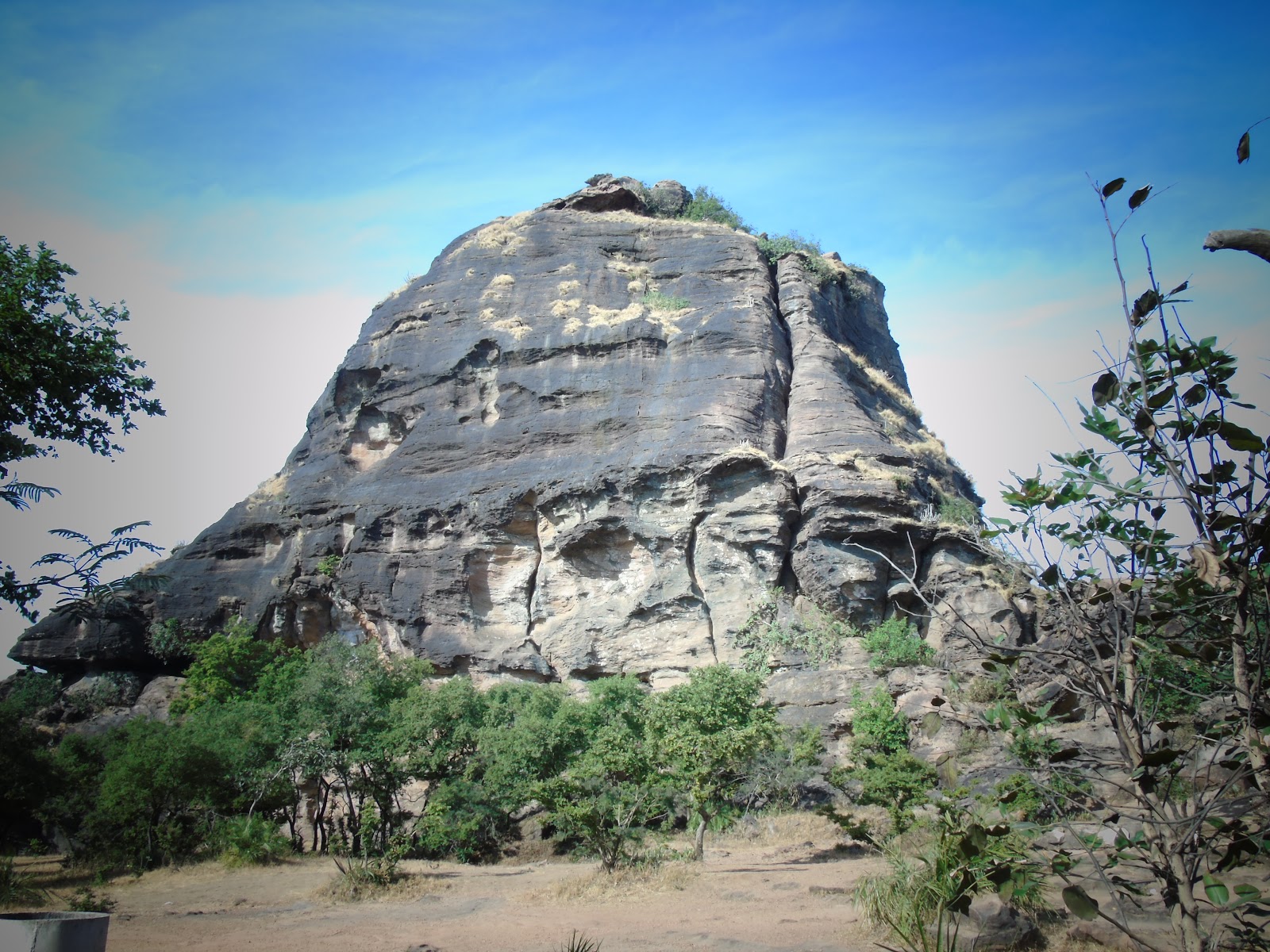
The tiger park has unique topography with high rise mountains, glens and meandering rivers. The Bandhavgarh mountains are table topped with dense forest on easy slopes and rocks, sand and tufts of grass on the cliffs. The table land are always enveloped in serenity  and clam. The esoteric scape send tourists on ruptures of delight. 

The mountains over look the green valleys and rivulets that snake through the grassy meadows. The panoramic grandeur is breathtaking and mesmerizing. Tiger sightings on such scape are enthralling, for many a time the big cat is seen on the plateaus of the mountains.

At that great height when you look around you, you see some barren mountain walls dotted with man made cave and horse stables. The cavities in the bare mountains walls have been further dug up to make these human structures. In ancient days these were used by soldiers and their horses.  You wonder in awe how far humans can reach. With the decline of dynasties that came to rule here these places are empty and only used by tigers. These are excellent resting and breeding grounds for the big cats of the park.   

The panoramic splendor is 360 degrees, breathtaking and awe inspiring. The sight and feel creates a synergy between the tourists and the pristine surroundings. The roads all around are rough and with full of discomforting stones nevertheless you ignore the bump they generate, fully enmeshed with the natural India.  

The tiger safaris at Bandhavgarh yield much more than animal sightings - you are in a different World. A mesmerizing experience in a wildlife heaven and amidst ancient historical architectural masterpieces.    

The highest point in the reserve is Bandhavgarh which sites atop the mountain with the same name. It is at 800 MSL plus and is accessible after a steep climb. The fort now in ruins is an esoteric delight with impressive idols of zoomorphic forms of Lord Vishnu scattered all along the table land.

The highlight of the tour is the reclining Vishnu about twenty feet long sculptured from igneous rock. The statue reclines beside a fairy pool that is surrounded by dense vegetation of ferns, climbers and moss. The small springs which feed the pool make Shesh Shaiyya and enchanting place. It used to shelter weary soldiers on the way up now tigers inhabit this place.   

You can see all the idols on the trip plus visit the huge man made reservoirs besides many artifacts of archeological importance. The religious minded can pay obeisance at the ancient Ram Janki Temple facing the park.         

A visit to the Fort is not possible on regular park safari. Special arrangement has to be made in advance. A  permit is required which the resort in Bandhavgarh that offers you the accommodation can arrange. You need to carry packed lunch and lot of water for the trip. 


The plateaus are heaven for wildlife an you can expect to see animals in the grassy meadows and the forests. They are excellent for  birding as difference in habitat yields new species. For exploring Bandhavgarh one needs a stay of at east three nights. A long stay is bound to result in exciting discoveries. 

Thursday, December 29, 2011

Ramganga Tigers

When you visit Corbett from the Dhangarhi Gate you get a breathtaking view of Ramganga River. Unpolluted and crystal clear the waters appear blue surrounded by glistening white stones. The pristine river flows between low lying hills of the foothills and accords panoramic glamor to the landscape. 

The river flows adjacent as you drive on towards Dhikala Complex through the dense Corbett canopy. It plays hide and seek as it appears besides you and then vanishes behind a curtain of Sal and mixed forest trees. The forests are home to magnificent tigers who hunt beside the river thanks to a good prey base. Like all animals tigers are attracted to water especially in the summers.    

The sight at High Bank and Crocodile Pool is stunning, Ramganga and its sandy beach along side forest clad mountains.  You can see crocodiles and gharials basking in the sandy beach, the river is full of Golden Mahseer and Turtles some very big. From the dizzy height you peep right into the belly of the enchanting river.

The riverside canopy is very dense and hides wild elephants that start descending from November onwards. Tigers can be seen here crossing the road and one can track them from the alarm cries of the prey. The most striking spectacle I once witnessed was a tiger crossing the river in bright sunlight - Golden Stripes.

At the riverside Champion Road and Sambar Road are the best places to look for tigers. Dhikala Chaud, Thandi Sadak and near by places yield good tiger sightings for the lucky ones. The land of Corbett is last remaining patch of wonderful forests of Terai. Here Jim Corbett killed many man eating tigers and leopards.

But sadly the big cats are loosing ground until we do not do something the species may be lost for ever in the wild.     

*Note: You can enter Dhangarhi Gate on jeep safari only if you are staying at the RH inside the park.  

Saturday, November 26, 2011

Mating Time Kanha


The male and female tigers kept calling each other in broad daylight. We sat in our jeep waiting in expectation as the ethereal sound waves collided in our ears. The effect was magical in those serene surroundings of dense jungles of Kanha National Park.   

We were listening the mating calls of the pair hidden in the deep confines of the jungles. The pair did not emerge from the bush but nevertheless we enjoyed understanding the mating behavior of tigers. The call ceased after some time and the pair moved uphill away from us in to undisturbed area to mate in complete privacy.    

In protected areas like Kanha only the dominant male is able to mate with tigress in estrous. The competition is fierce and weaklings are pushed into subjugation. The dominance ensures transfer of best genetic trait much required for survival in wild terrain that the preserve is.   

In our tiger safari we found lot of evidence of tigers mating, some lucky one's may have witnessed this solemn event. Field biologists have understood much about breeding biology of big cats and more has to be discovered. This is required for tiger conservation in India for mating ensures arrival of new generation of big cats and hence augment numbers.      

Kanha National Park is situated in the Central Indian State of Madhya Pradesh in India. It is habitat of long lit of mammals, birds, reptiles and insects. The floral diversity is bewildering and requires training in advance botany to understand.  

Understanding our wilderness is not reserved for researchers alone, each and everyone can make a valuable contribution to save the tiger and its home. The mating increases in Kanha during the winters to some extent since the predators breed throughout the year.   

We were lucky to witness a young tigress searching for male tiger near the Kanha Meadow. The chemical communication is highly developed in big cats and they find others from scent in the urine sprayed on the trees. They also use scat and sprays on bushes to communicate. Using a process called flehmen they discover tigress in estrous or scent of the male nearby.   

The tigress sucked the effervescence of fresh urine on a Salai tree and grimaced with her tongue hanging out. The flehmen enables air to be sent to the vomeronasal or Jackobsons' organ situated in the roof of the mouth. The processing lets the big cats to discover other tigers especially females in estrous. 

My group was able to photograph this event from close. There were more tigers to be seen later besides the enchanting wildlife and avian species. 

People come from far and wide to experience this magical mystical land called Kanha. Tourism benefits wildlife and local communities in a positive manner. The preserve is the best managed in India and tourism is controlled such that it remains friendly to the ecosystem and its wild denizens. Large scale employment is generated by the hotels in Kanha which follow responsible tourism guide lines. The resorts depend upon the tourists to survive which arrive here in plenty every year.    

Best time to visit is anytime whence the park is open (16th Oct.- 31st June). Depending upon weather preference you can organize your trip. It is cold till the month of February and the heat increases after words. Avoid holidays and weekends. The park is closed for evening safaris on all Wednesdays.    

Thursday, November 24, 2011

Enclosure Therapy - Kanha

After the success of Swamp Deer conservation at Kanha National Park it is the black bucks turn. The former program aimed at conserving the highly endangered hard ground barasingha or swamp deer the only of its kind on the World.   The species have adapted to inhabit hard ground with evolutionary change in its hooves. Unlike other Barasinghas in India these are not as splayed and hence work well on hard ground.     

At Kanha the animals recovered from a lowly sixty to more than 300 hundred now. Once these animals thrived in thousands in this region but due to habitat conversion and over hunting the number is pathetically low.  A small population was unable to cope with predation and hence was kept in a large enclosure devoid off all predators including tiger and pythons. This was to prevent predation and increase the survival rate of the fawns. The plan was a  success and the human intervention brought name and fame to the conservation unit.  

The enclosure worked well and may have been used often. Recently about 4 black bucks where introduced in the enclosure at Kanha Tiger Reserve.  About 32 heads of this antelope survived at the preserve during the sixties. It is obvious that the animal did not belong to the ecosystem since open scrub and extensive grasslands do not exist here. The black buck survives on grass and crops in India. After the relocation of human populace from the core the agriculture fields became redundant and turned into edaphic grasslands. Stiff competition for endemic herbivores pushed the antelope to extinction.     

The exercise to reintroduce this animal in the wilds of Kanha is ill conceived since the habitat is not suitable. A high population here would mean increased competition between the deer population in the grasslands. The foreign element could affect the population and breeding of the highly endangered swamp deer.

One reason that can come to mind regarding introduction of black buck at Kanha is to increase tourist attraction. This is a highly myopic exercise and a damaging step. The tiger reserve is a conservation unit and offers scope for tourism which support hundreds of local populace. Besides tourism delivers a positive impact on tourists who come on tiger safaris and birding. People understand the value of conservation by observing the complex web of life at work. Kanha has enough species of deer and does not need an exotic species that could have a negative impact on the fragile web of life which is natural. The animal could survive on the periphery but that would lead to already severe man animal conflict. 

The program should be brought to halt with immediate effect. Species like the Indian wolf and hyena have lost ground  here due to colonization in the buffer zone. These animal should be brought back to status that the National Park can support. The crucial resources should be spent on these beleaguered animals.       

Friday, September 23, 2011

Corbett - Incredible - Unforgettable

It is not on tiger safaris that I got to know this wildlife heaven better. I visited Corbet Tiger Reserve many years back and the destination surprised me no end. But I got to know the tiger heaven better on my birding trips in last few years.   

The keystone species are tiger, leopard, wild elephant and among the reptiles it is the endangered Gharial and Mugger. The latter two are easily sighted at crocodile pond but the foremost two are bit difficult to sight. I have sighted tigers on many occasions but the leopard none. Only leopard sighting I had was on way up to Sat Tal in Naini Tal District. 

Though tourism still has a free hand in this park with private vehicles creating the greatest nuisance. Nevertheless wildlife has increased in this National Park with a large number of tigers inhabiting the wonderful reserve. Of late the big cats are seen more and more than earlier. Another great attraction is the wild elephant whose numbers increase with the onset of summers.  Hundred of pachyderms gather around the the Kalagarh Dam and Dhikala Chaur the most coveted for accommodations, wildlife watching and birding.   
Other mammals seen here are leopard, spotted deer, barking deer, Goral, sambar deer, sloth bear,  rhesus macaque, Hanuman Langur, hog deer, yellow throated martins, otters, Himalayan Black Bear, jungle cat, leopard cat and fishing cat.

Birders know that for them this is a paradise with more than five hundred bird species inhabiting the reserve.  In Northern India this is the most coveted destination for bird watching besides Bharatpur and Sattal. The attractions are many: Great Hornbill, Great Slatyheaded Woodpecker, Siberian ruby throat, wall creeper, Ibisbill, red breasted parakeet, plum headed parakeet, Alexandrine Parakeet, Himalyan Bubul, White cheeked bulbul, Streak throated woodpecker, grey faced woodpecker, greater and lesser racket tailed drongo, white bellied drongo, white rumped shama. commom magpie  and Himalayan Flameback
At Corbett I have seen both Scarlet and Long Tailed Minivets besides Rosy Minivets and small minivet. Paradise flycatchers can be seen  with onset of summer. The list can go on and on. 
The park is one of the most picturesque thanks to the enchanting river Ramganga that flows through the finest forests within the reserve. The white sandstone on the banks and crystal clear blue waters are a mesmerizing spectacle to experience. The forest are most enchanting with exciting safaris to thrill you down to the bones. There are long trails of forests around the buffer zones but not intact. Places like Choti Haldwani and near by places where Jim Corbett used to hunt man eaters are bustling townships with very little natural land left. Only at Corbett National Park do you experience true wilderness.        

Best way to reach Corbett is via Ramnager which is about 11 km from the Dhangari Gate. In order to visit the Dhikala Zone one should be staying at accommodations or Rest House within the zone. Sarapduli and Dhikala are the preferred accommodations in terms of what they have to offer. Other entrances are the Aam Danda Gate, Durga Devi Gate and Kalagarh Gate (Jhirna).