Showing posts with label lodge. Show all posts

Thursday, November 29, 2018

Safari at Satpura Tiger Reserve - Forsyth's Land

Satpura Tiger Reserve 
Forsyth Lodge

Lobby Forsyth 


Forsyth Lodge - Sustainable Hospitality 

Like a swish of fresh air, the place descends upon you. Traveling to an unknown destination is full of surprises and Forsyth Lodge was our first one. The lodge manager's connectivity helped us reach without much trouble.     

The welcoming faces and the warm interiors both did wonders for our sagging spirits after a long trudge of four hours from Jabalpur. Already delayed we managed a sneak peek into the forests of Satpura with Deepankar the lodge manager at helm. 
Dining 

Deer
The lodge encapsulates forty-four acres of natural land with lush green vegetation  - climber, herbs, shrubs, grass, and trees - wild to the core. Leopards, jungle cats, and sloth bears are visitors along with the deer species. If you are a birder or a butterfly enthusiast you will relish going through the land. A trained naturalist is always in sight at this wildlife resort to help you.  

The hospitality at the lodge was reassuring...we were at the right place. The evening was fun besides the pool with wholesome delicious bits and a warm fire to celebrate and chill. Asim and Manna the naturalists regaled us with some startling jungle lore and their knowledge of the diversity of Satpura. There was more in store with a sumptuous dinner to follow. It was the best of Indian cuisine...delicious to the core and tongue-tingling till the last morsel. What more could we wish for ...a sound sleep in a cozy cottage and we fell for it. 

Rooms are spacious with balanced decor, and aesthetic lights and well equipped with soft king-size beds, accessories, peripherals, and a large attached bath. The separate cottages have a sit-out large enough to seat a group overlooking the wild backyard. At Forsyth aesthetics and comfort have been kept in mind while designing, and the staff complements the build with their excellence.   


The safaris are well organized at Forsyth with a trained naturalist accompanying the guests. We were lucky to have Deepanker with us ...an honor. The munch is generous at Forsyth the jungle breakfast was well balanced with a chicken sandwich, eggs, juices, cakes, cookies, tea, coffee, and fruits. "That's enough now ...no lunch," said my guest Poonam. "Wait". I blurted. Lunch and Dinner are gastronomic delights at Forsyth and we did full justice.  

The Jungle! On Safari!

As the sun breaks in soft strands of light fall on the floor highlighting the grass and the fortunate trees woken up with a jolt from slumber. The chirping of birds announces the day and loud raucous alarm cries of langur inform us that some excitement lies in store.  The leopard sulks amidst the grass as light descends unto the depression and we see him moving from one avenue to another. Our hearts thumping as we move on for more is definitely coming.  

We were at a place called Ladda in the park and all around us was typical Satpura terrain...rivulets, pools bursting at seams, rocky outcrops and spurs, grass and dense canopies full of a mixed variety of trees and impressive teak.  

The biodiversity that prevails is astounding, just what James Forsyth had discovered in the heydays of the Raj. If you wish to go back into the past read "The Highlands of Central India". 

With a turbulent landscape comprising verdant hills, fissured rocks, deep glens, rivulets, pools and tall stands, climbers, shrubs, and grass the game drives are anything but enchanting. A big surprise is a tiger, the creature much persecuted is making its stand back here, other thrilling encounters are a leopard, wild dog, and sloth bear. Keep your eyes open for the giant and flying squirrels. 

Denwa 

For those with an eye for birds, the robust winged creatures will be a big surprise for birders coming here for the big cats. More than two hundred species of avian can be sighted here. Migration in winter fetches the bar-headed geese in large flocks and another target species that can be seen is the Indian Skimmer at Denwa River!     
Denwa River
 Denwa River forms a natural boundary of the tiger reserve. Visitors have to cross over on a motor boat to the park. It is inundated throughout the year but the level can recede in summer. Those with a spotting scope will revel in avian discoveries. Plus the sight of marsh crocodiles, turtles, and otters adds to the birding experience at STR.    

Pachmarhi Hill Resort 

The township is under the Cantt which mercifully protects it from rampant urbanization as other hill stations have faced. Most of the wilderness is within the Satpura Tiger Reserve. Towering sandstone mountains clutter the holiday destination's jagged edges, and bare sandstone cliffs and dense canopies carve vivid formations mesmerizing the viewers. This is unique to Pachmarhi and many hills like Chauragarh and Dhoopgarh are named as per the impression they create. You can go wild with imagination as cliffs loom over.   
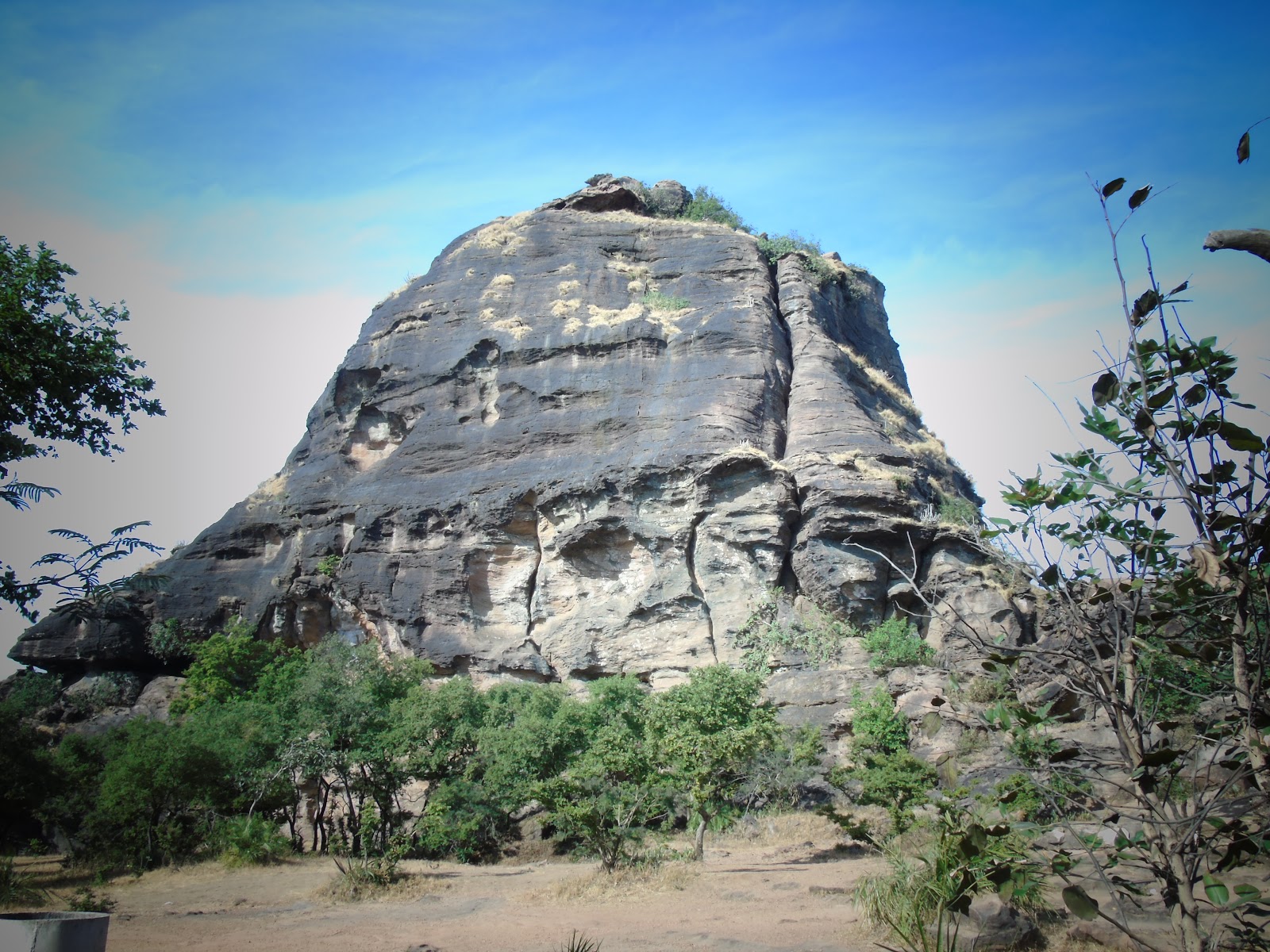
Dhoopgarh Highest Point in MP State
On the morning birding, we come across tiger pugmarks on the way to Dhoopgarh, the highest point in Madhya Pradesh at 1352 meters MSL. The proximity to the township is startling, but with active conservation measures, the big cats are gaining ground.  Wilderness can be encountered at Pachmarhi which anyway is excellent for bird watching, the target species being Malabar Whistling Thrush. Take precaution
Tiger Footprints Pachmarhi
while birding since the movement of sloth bears and leopards is frequent in this hill station. 

Ancient Remains

Deep inside the hillock are two Shiva Temples built by the tribal at Zhinzhini. The visit takes place on safari and the sight of ancient civilization is as enthralling as that of a tiger. Built perhaps in the 9th or 10th AD or earlier they are now crumbling ruins, scattered around idols and temple structures. Igneous rock formations abound at Satpura Reserve due to intense volcanic activity that took place during the tectonic plate movement.   

Carving in stone 
Tribal Shiva Temples 
The reserve has a core area of 1500 plus sq. km which encompasses the Satpura, Churna, and Pachmarhi forests to form a biosphere reserve called Satpura Biosphere Reserve. Teak dominates but it is present mostly in mixed forests while Sal can be encountered in an around the Pachmarhi regions. Night safari is possible in a buffer area for which a permit is required. Interesting nocturnal species like palm civets, large Indian civets, small Indian civets, porcupines, ratel, leopards, sloth bears, and rusty-spotted cat can be encountered with luck. 

Sehra Buffer Zone

There are around 40 tigers in the region and yes sighting does take place in the tourism zone besides that of plenty of other mammals. With active conservation measures, the big cat species is sure to bounce back after a ravage of more than a century. Interesting species of small cats include the felines like rusty-spotted cats, desert cats, and jungle cats. 

The Lodge at Madai 

Satpura
Soft strands break in through the huge crystal clear glass panel as I read a book on Satpura from the well-stocked library. A warm cup of tea keeps me rejuvenated and cookies crumble inside refreshing me to no end. Naturalist Asim and Manna arrive to give me company, I am astounded by their knowledge and dedication. Thorough indulgence in luxury and adventure has been the highlight of this visit to STR. 

It is our last day at the lodge and an emotional one. The hospitality and service have been without blemish and the jungle rides have been deeply fulfilling. For a naturalist, every visit to the pristine lands is a revelation of facts hidden deep in the folds of nature and the biology of the living. The wonderful living creatures and the surrounding earthly elements. To yearn is to learn I tell everyone - knowledge is the key to discovery.    

Monday, October 1, 2018

TOFT Tiger 2018 An Award That Matters

TOFT Tiger Lodge Naturalist Award 2018
Runner Up - Uday Patel

RUNNER UP: Uday Patel, Courtyard House, Kanha Tiger Reserve, Madhya Pradesh

Uday Patel, Courtyard House, Kanha Tiger Reserve, Madhya Pradesh
Uday Patel has been an active naturalist and writer for more than two decades. His knowledge of birds and mammals is second to none in Kanha; he is also a superb wildlife tracker. In his spare time and during the monsoons, he motivates school and college students to conserve nature through lectures and nature trips. He is also associated with the forest department in Jabalpur and with the CFN Society.
It is exhilarating to receive award from TOFT Tigers based in UK. The award function was superbly organised with speeches given by

Bittu Sahgal - Conservationist and Publisher of Sanctuary Asia Magazine
Dr. Chandawat - Conservationist, Tiger Specialist
Julian Matthews - Chairman TOFT


I work as Naturalist at Courtyard House Kanha in Central India.
My mail: pateluday90@hotmail.com
My Mail
Mobile: 9755089323

Friday, January 11, 2013

Bandhavgarh - Tiger in The BackYard

Muchmucha is a small village located about forty five km from the Tala Gate at Bandhavgarh National Park. It is about 16 km from Barhi. Bandhavgarh lies in the Umaria District of Madhya Pradesh or Central India.  

Muchmucha lies amidst Bandhavgarh forest that is a contiguous belt of the Tiger Reserve.  On one side of the village is the oldlodge that dates back to 1935. The property established by ancestors of Mr. Avinash Pathak is in a perfect state of preservation looked well after by Mr.Pathak and & Mrs.Anjali Pathak Both are avid conservationists and oversee that same attitude dawns over the village folks that their ancestors nurtured with love and care.        

Before the legislation the members were keen hunters as well as philanthropists. They donated land and aided the poor in the area of their influence. 

Muchmucha Kothi or the Lodge is an elegant structure in same state as it was whence built. Now used as accommodation for the guest who arrive here to laze in salubrious climes go birding and enjoy wildlife safaris. The place is well equipped with all amenities that can be integrated in an eco-friendly manner. 

One can enjoy a palanquin ride as well as use it for bird watching and trek in the village forest to look for wild animals including tigers and leopards. For the less adventurous a sound massage on the machaan or the inviting hammock is the best recourse to enjoy the natural surroundings.   

The large expanse of the lodge is complimented by fantastic number of birds. The property lies amidst the true tiger country and offers an ambiance that existed in golden eras of tigers in MP.   

As the story unfolds we land at the lodge on 8th January around 6 pm. Sitting near the fire place I discuss the forests and its denizen with Chandan who is Mr. Pathak's nephew and often visits the place. Jeevan is an old trekker since the days of Mr. Pathak's grand father.   

The Roaring Tiger

In the cold evening the three of us huddle together by the bonfire waiting for the family and the guests to arrive. A cup of tea makes us feel warmer and cheerful. The roar is distinct and Jeevan's trained ears are the first to hear. "It is about 200 yards from the lodge and closing in," he whispers as we rush towards the direction of the roar. I have been to Muchmucha earlier but the evening never started like the way it did today.   

We waited with bated breath as the roar became louder and louder. The tiger was very near to the last hut and was searching for the buffalo that it killed yesterday. "The carcass has been carried away by the owners," whispers Jeevan. The thunderous roar continued  for about fifteen minutes and then there was complete silence. 

When the party arrived we narrated the exciting event and could see disappointment writ large on their continence. Nevertheless the fun filled evening warmed up with many exciting jungle lore narrated evocatively by the shikaris who serviced the family.  

The drive to the village forest yielded many deers but the tiger had vanished into the deeper confines. We went up to the river and managed to see herds of spotted deer, a huge sambar deer, barking deer and a dainty civet cat. After an exhaustive night aided by sumptuous meal and some drinks we knocked off quite late.      

The morning brought in a  greater surprise as the guard woke me up at five o'clock  The bitter cold and tiredness made things difficult nevertheless I walked up to the edge of the lodge. "It is very close," the guard said. "Much closer then yesterday I am sure," I told guard. Much to our surprise a tigress began calling as she walked towards the tiger. Obviously we could not see the pair and decided not to approach them so as not to disturb. After some time there was a brief scuffle and frightening growls and then all was over.

We stood waiting for some more roars but there was complete silence. The party awoke late and heard us again with some disappointment. It was too cold and they were all very tired hence we did not wake them up. For the day and next we heard many alarm cries around the lodge while enjoying the bonfire and delicious snacks. We had an exciting time birding as well sighting wildlife around the village forests.  

The mating tigers were much too busy and secretive to awake us again but the memory bank will teem for life time.     

We enjoyed the gracious hospitality at the lodge. The central structure with its eco-friendly flush-less baths and grand but simple rooms offered us delightful comforts and sound sleep. However a couple of rooms with attached bath are being built for the conventional tourists.      

The tigers and leopards roam around in the confines of the village hunting on cattle as well as deer who come to raid the fields in hoards.  Muchmucha is a true tiger land at Bandhavgarh. The wildlife lodge at Bandhavgarh is managed by the couple and many an esteemed personality like Mr. Sumant Moolgaonkar of Tata were regular visitors.

The diverse habitat offers excellent bird watching opportunity and many birders visit the lodge every year. Wild animal sightings are exciting, the pleasure at the lodge is enhanced by the activities that includes tribal dance and musical performances.  

Reaching Muchmucha: it is about 16 km from Barhi after Katni. One has to take a left turn from Kuan village on the road to Umaria which is 32 km from the National Park. Umaria is about fifty plus km to Kuan Village. One can also approach Muchmucha from Khitauli Range of the reserve.   

Sunday, February 22, 2009

Of River and Ravines

Chambal River Safari

I work as a group leader and naturalist with Indian package tour operator "India Footprints". The company provides tailor-made package tours in India.

The company operates package tours to several destinations in India. My involvement is in wildlife & birding tours as a group leader and birder.

My recent visit to Chambal River Sanctuary was in one such package which included destinations like Sattal, Pangot, Bharatpur, and Corbett National Park. The focus was on bird watching as it was a birding tour. The tour members were from Germany and keen birders.

Chambal river sanctuary stretches 400 miles and is a unique destination not so popular yet. It is an amazing river, pure and unscathed by the pollutants of modern civilization. The river flows amidst ravines once famous for deadly dacoits - now dwindling. The dacoits are still there and so are the tourists who come to no harm from these insidious creatures.

The ravines impart exquisite charm to the river which offers the finest boating experience ever. As one cruise along the river, the hosts are none other than crocodiles and gharials with a pair of river dolphins occasionally popping up - it is an ethereal sight.

The boating excursions are organized by the Chambal Safari Lodge owned by Mr. R.P.Singh a wonderful host and charming person. The boat excursion covers a long stretch of the river with basking crocodiles and gharials - the fish-eating cousin. Alongside loom large the sun burnt ravines and steep mountains. Amidst occasional splashes of cool waters, boating transcends into an incredible safari for the visitors. The river safari offers good birding, sightseeing, and river exploration to tourists.

This rugged land and the river retain the pristine glory and charm of old India - glorified as a personification of incredible beauty and wonder.

The Chambal lodge compliments the surroundings and the hospitality is warm and the service is par excellence. The accommodation retains the old-world charm of landlords and their luxurious lifestyle. It is worth being here believe me!

Wednesday, December 24, 2008

Kanha Kisli

The name brings nostalgic memories of Kanha of old. I remember when I first visited Kanha in early seventies. That time the National Park was popularly known as Kanha Kisli.

The reason for the park being called Kanha Kisli was due to villages in what is now the core area of the park. When you enter the park from Khatia gate you first reach Kisli, here the village has been shifted out of the park and only the British period rest houses remain. Besides the two rest houses and canteen an MPTDC hotel and a dormitory has come up and a day center for the forest staff. The petrol pump is also functioning at Kisli.

Outside the park in the periphery of the buffer zone the lodges at Kanha have far overtaken the rest house which now caters to VIPs and Government officers of top ranking. At that time the rest houses where in near dilapidated condition and you had to cook your own food. At the time of my visit the village at Kisli was still there but shifted soon after.

Tigers prowled the vicinity of the rest house we stayed in, and one could hear the roars at night time. Thankfully tigers still prowl there and roars can be heard even now. Villages at Kanha where shifted earlier and the rest house is now a museum. At hill top at Kanha the Field Director’s residence is enveloped by forest canopy and is one of most enviable object for a tiger lover like me.

Kanha museum is worth visiting informative and entertaining as it is. For those on tiger safari Kanha is a resting stop where one is allowed to consume eatables prohibited elsewhere in the park. If you are not carrying food then visit the canteen for some hot tea and spicy samosas.

On that trip I spotted a tigress and large herds of Bison or gaur as they are called in Hindi. The gaur population was depleted in 1976 due to rinderpest attack. The swamp deer or hard ground barasingha where struggling to survive and were penned in a large enclosure. This assured of an increasing population in times to come and conservation of this rare animal is history.
The road to Kanha was lined with pristine forests and small but quaint tribal villages. Now a whole community of retailers, small business men, hoteliers and what not has added to the population. The urbanization forces you to find succor within the National Park.