Showing posts with label birding. Show all posts

Monday, January 30, 2017

Phen Wildlife Sanctuary - A Diminished Tail Light

Phen WLS - Micro Core (KTR)

Courtyard House Guests (Kanha) - Sudhir Pawar & Family

The bright sparkling sun hits us as we emerge from the dusty Raipur Highway and enter Phen Wildlife Sanctuary a verdant paradise and heaven.  Albeit smaller than its neighboring core Kanha Tiger Reserve, the forests are connected to some degree by buffers Motinala Supkhar Range, & Garhi Forests.  The natural corridor (Kanha Achanakmar) formation is reminiscent of the era whence the Central Indian Highlands was one large tract of forests teeming with wildlife.   

We are greeted at the Gate by the forest staff who gave us a much-required brief on the forests and their wildlife. A pair of gold-mantled chlorosis welcome us alongside. Filled with exuberance we leave for the safari after a short repast.    
Phen Ecosystem

This was my first visit to Phen, and the scope of making new discoveries was exciting. Barely one hundred and eleven square kilometers in the area the conservation unit is full of promise.    

"A good place to sight leopard, sloth bear and wild dog". The staff informs us. 

"And the tiger?" I butt in needlessly. 

"We can make a presence of two from roars and pug marks."  Sure enough, we come across generous lay of pug marks of a tigress on the game round.   

The guardians of the ecosystem number only two or four if you add vagrant or un-traced tigers. Anyway, that did not dampen our excitement as we believe in a holistic experience. The tigers, like at many places in India have lost ground here, but a more promising future can be accorded with the right conservation efforts.  

Phen WaterBody
Hilly, and packed with dense canopy, the topography is a turbulent terrain with hills, grasslands, and deep valleys. The forest comprises tropical moist deciduous mixed, Sal and bamboo. Intermittent water bodies in form of Phen River, smaller rivulets, water holes, and moist grounds are the lifeline of the ecosystem.  

While relocation of some villages has already taken place some are yet to be trans-located. 
  
The park is vital for tiger conservation in Central India. The health of the ecosystem and minimal disturbance is suggestive of a perfect tiger landscape, albeit the prey base is poor - probably due to extensive hunting and poaching in the past.  With an improvement in the prey base, the big cats will get more space for survival. Large herds of spotted deer have already been trans-located from Kanha. 

Phen Canopy
Phen Wildlife offers excellent scope for birding besides safaris. The trip can be accommodated along with a tiger safari at Kanha National Park. The distance is two and a half hours of drive from KTR along the Bicchia, Motinala Raipur Highway. The micro core is at a distance of 15 km from Motinala.  
Phen Images 
Bamboo

Directors Picturesque Cabin


Forest

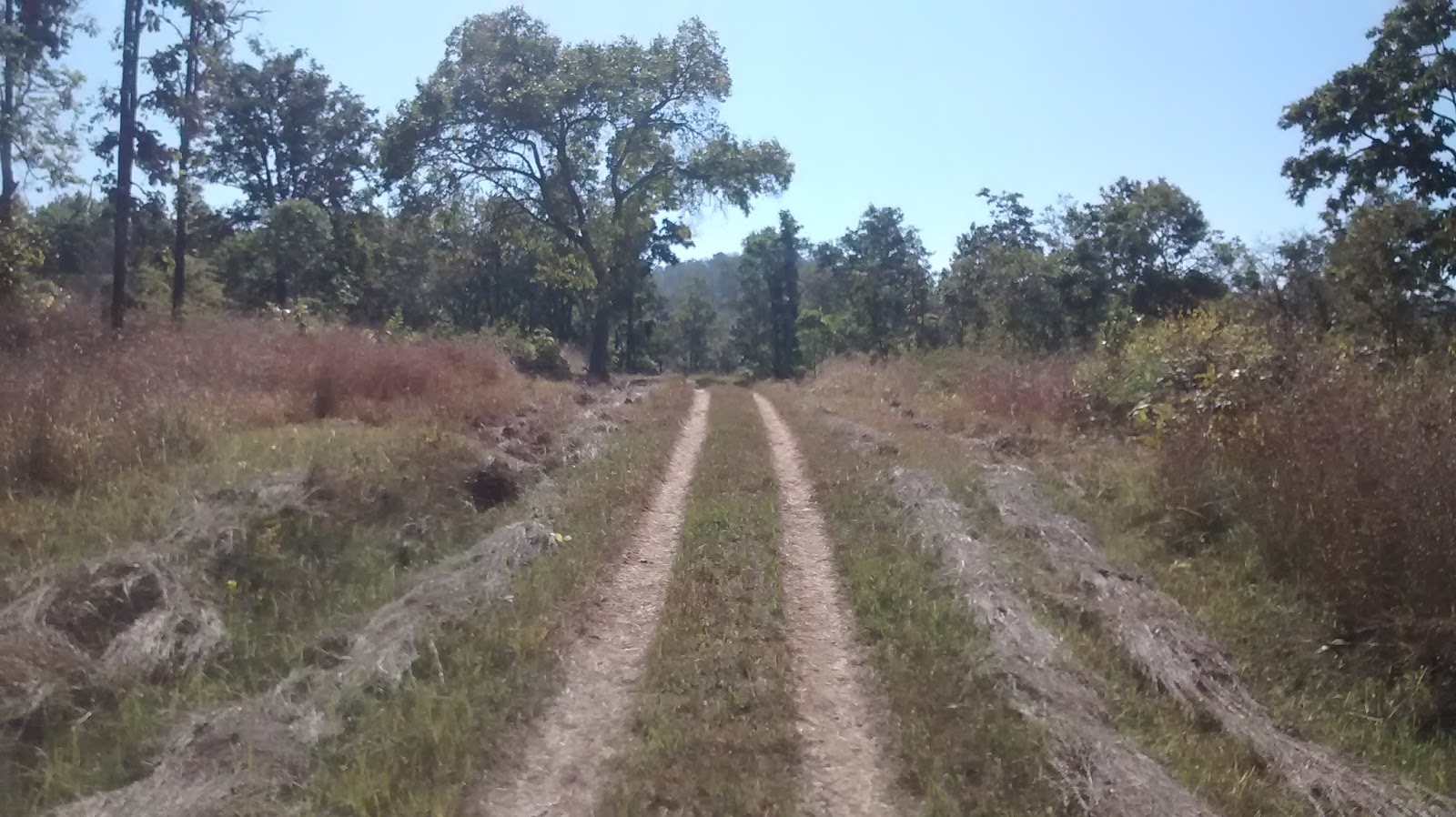
Jungle Road


Grassland

Rest House View

Water Body
Trip &  Accommodation

Highly recommended for leopards, sloth bears, and wild dogs alongside great birding. There is no accommodation at Phen, but a rest house at Motinala can be availed.

Accessible from Kanha Tiger Reserve this is a good way to spend a day off from a hectic safari routine. Also, visitors without entry pass at Kanha can make a day here. Full-day and half-day safaris are available at less cost.  Please contact Kanha FD Office at Mandla.    

Please carry all eatable that can be consumed at the rest house and at the Gate. Jeep availability can be made from Kanha. 

More Information Phen  Micro Core

Monday, October 14, 2013

Misssssssssssed the cat! By a whisker!

Brown Hawk Owl
Leaf Bird - Tirath Singh

Langur - Tirath Singh
The discovery of the Brown Hawk Owl (Ninox scutulata) a Northern Taxa was exciting. We were on the spot at Dumna Nature Reserve in Jabalpur on the usual Sunday birding. We could not see the owl that day but were satisfied by images taken by Prayut and Aishwarya Mandal. These two young guys have a knack for locating birds not checked listed earlier in Jabalpur in MP State. They have discovered Bar-headed Geese, Whimbrel, and a group of Ruff(?) besides this owl.   

Leopard - Tirath Singh
We spent a lot of time searching for avian species in the nature reserve. Dumna Nature Reserve is named after the Dumna Airport since it is on the way. The nature reserve encompasses 200 hundred hectares of mixed forest along with the Khandari Reservoir. The water body is large and is meant to supply water to some areas of Jabalpur City. But there are forests and small water bodies all around. 

The Khandari Reservoir is home to freshwater crocodiles, turtles, and various species of fish. In winter it is visited by many wintering and resident waterfowl. About five hundred Gray Lag Geese can be seen here alongside, wigeon, red-crested pochard, lesser whistling teal, nakta, northern pintail, common pochard, garganey, spot bill duck, and Eurasian wigeon. 

The surrounding forests are natural and once formed an intact ecosystem that was home to leopards and tigers. These forests formed a contiguous patch around the extant of the city. This is no more the case since the forests are badly denuded. The Dumna forests are subject to rapid construction hence another protected area for deer park has been earmarked for conservation. The fate of the forests now resides upon humans with greed for the land. The creation of triple IT or IIIT has denuded a lot of lands and continues to do so. There is a five-star hotel proposed for development by MPTDC? If true then it will be a further blow to the wildlife in the area. An immediate stop to all construction activity is a must in all green patches of Jabalpur.     

This is a stretch of about ten km and leads to the Dumna Aiport. There are some water bodies surrounding the airport as well as the reserve forests. This area is in the news for the regular sighting of leopards. A leopard has been filmed on the airport road by some enthusiasts. On numerous occasions, we have seen crocodiles in tanks, barking deer, wild boar, spotted deer, langurs, and rhesus macaque. In spite of regularly frequenting the area, we had not come across the big cat. A few years back I had seen a leopard with three cubs at Imzhar Ghati Forests near Pariyat Reservoir. 
     
Our birding trip led us to these forest tracts after we had a good look at the greenish warblers and a Eurasian Oriole family.  We came across several birds like shikra, white-eyed buzzard, white eye, rufous treepie, gray hornbill, and long-tailed shrike. It was a dull birding day on eve of Dusshera and we were busy discussing things besides birding. On our way back we noticed a group of people standing near the restaurant being built for IIIT.  Ignoring the crowd we moved on till Prayut called us back using the mobile. " Some guys have seen a leopard pair nearby" he informed excitedly. So we drove back to the spot but the big cats were nowhere in sight by then. 

The group was chattering excitedly and we could make out that they had seen the spots. "Just here, whence you passed us by. Look near the pole about hundred yards that were where the pair was idling," one of the guys informed us with baited breadth. Other people joined him in the confused chorus pointing to various directions where the big cats could have vanished. "You should have stopped upon seeing us," he spoke. "Your binoculars could have fetched them close."                          

We searched the canopy for some time and then gave up. We could not see the spots that day but there will be endless visits hence better luck awaits us I am sure. As we drove back in silence we traversed through huge buildings that are changing the landscape of these once pristine forests. Total disregard for our natural places is causing havoc and endangering prime forest animals in India. 

Monday, December 3, 2012

Nauradehi - Wild India

My eyes begin to scour the jungle as soon as we enter the sanctuary. From the gate it is a short ride to the Rest House at Mohali Range. We unpack and settle down for a hot cup of chai. Me and Peter both relish the chai, me without milk and Peter makes his own concoction with milk. Peter Gould (UK) my guest is an avid wild-lifer and birding enthusiast with years of experience.   

Having made many stops for birding on the way to Nauradehi from Jabalpur we could not reach in the early morning hours. Anyway there was much in store as we reached the Khapra Kedha Lake. We were greeted by the Black Storks, Wooly Necked Storks and Lesser Adjutant Storks besides Great Cormorant and vast assortment of avian species. A lone raptor Crested Hawk Eagle sat silently on a dead tree trunk at the top.   

From here we moved on to Jamna Rashi water body and on the way we saw a Chinkara. At the reservoir we saw Little Cormorants, Common Chiff Chaff, Tailor Bird, Plain Prinia, Wryneck and Little Grebe. We then returned to the RH via the Mohali Village where we saw a Striated Grassbird ?  Peter did not agree...but we had little time to watch the avian.

At the Mohuli Rest House we saw Honey Buzzard, White Eyes, White Browed Fantail, Short Toed Snake Eagle in Flight.   

The evening at Cheola Lake was little interesting as few heads of Sambar, Axis Deer and Nilgai Rolled by. We saw Northern Pintail and Lesser Whistling Teals and some wagtails. We shook hands with a baby Chinkara in captivity before moving back to the RH. On the way back we saw a Black Naped Hare in the settling dusk. That was all for the day no wolf in store. 

At RH we meet with the young energetic DFO Mr. Devakaran. He is busy with work but does take out time to exchange views. He is dedicated to the chore and enthusiastic, he shows us a photograph of Indian Wolf he has taken and that of many birds. With young dedicated people at helm the Sanctuary has a brighter future. He has a tough task at hand...he does not seem to dither     

Next day we move out a bit late as our guide wishes us to see the Mugger. We visit some other places and Khapra Taloa before reaching the Chakai Pond on River Bamner. At Khapra Lake we saw a Bonelli's Eagle besides Grey Heron and Lesser Adjutant Storks.

At Chakai Backwater we saw about four mugger crocodiles and some birds. An Indian Eagle Owl was chased away by Large Billed Crow before we can photograph it. We saw White Browed Fantail, White Bellied Drongo, Sulphur Bellied Warbler, Gray Headed Canary Flycatcher and Crested Serpent Eagle.

We than move on to another water body and find six seven muggers basking in the Sun on the rock at the bank. On return we see  White Eyed Buzzard and Bay Backed Shrike fly past. NWLS is always buzzing with life.   

In the evening we went to the highest spot at Nauradehi Wildlife Sanctuary. On the top we spotted tiger scat I mean something that looked like it. We picked it for analysis at the Veterinary College in Jabalpur.  This would be a major find if it belongs to the tiger. We wait for some time and enjoy the antics of Plain Billed Flower Pecker on the teak tree. 

As we roll down we see some Indian Gazelle on the banks of a large water body. Much to our surprise the pug marks of leopard show a hurried pace as if it resulted in a chase. We see more Chinkara as we drive down to the RH.   

The safari has come to an end Peter has mixed feeling,"Too  much for too little. I do not feel so since I did have to shelve a penny from my pocket. He!He! The package cost is high keeping the accommodation, arrangements and gate fees etc into consideration. The forest department staff has been good to us both in terms of hospitality and jungle exploration. The team is active in conserving the forests and its denizens.  

Anyway Noradehi is a must visit sanctuary since you get a different ecosystem to see and many less seen animals are often seen here. The Crocodiles number more than 200 hundred in Vyarama and Bamner River. The Sloth Bear population also seems to be high and so does that of the Wolf...as I am informed. The Tiger and the Leopard are elusive by all means in this once robust tiger country. This is a good place for birding and much more discoveries await you.   

With greater conservation measures in place, the sanctuary has a promising future. 

Reaching Noradehi : Jabalpur to Patan - TenduKheda - Jhalon to Jhapan Gate. Mr. Avinash Pathak organizes wild safaris at Nauradehi through his company Indiana Safari based in Jabalpur, MP.

Accommodation : The visitors usually make a day trip from Jabalpur, Bhopal or Sagar in MP. For those who wish to stay overnight the Mohali Rest House has to be booked from DFO Office at Sagar. The RH is well maintained but one should take supplements like ration and warm coverings.  
The best season is the winters. But summer safari/birding could also yield exciting surprises.    

Thursday, March 29, 2012

Untamed India: In search of the elusive wolf

I have developed a great liking for discovering new wildlife or birding heavens. The visit to Nauradehi Wildlife Sanctuary was my fourth. Two of the visits where a short survey one was on a birding trip. The recent one was as a nature guide for our esteemed guest a fellow wild lifer, birder and a photographer of repute Mr. Ujjal Ghosh. 

Though much publicized as a wolf sanctuary which it is, the sightings are difficult perhaps at times. It is yet too early to comment as an extensive survey is required. The forest guards seem to come across the wolves frequently especially along the Cheola Lake. This is a small lake but large enough to support the prey base and water birds. But the animal is encountered all around the sanctuary as informed.

We spent little time, only a day and a half which is not enough for searching carnivores like wolf. The animal is  local migratory by habit and sometimes forced by circumstance. It's persecution continues as it is misconstrued as a vermin all over India. 

Most of our excursions took place in the neighborhood of Mohali Rest House in Mohli Range. The mixed forest zones are a unique habitat for the Blue Bull, Fox, Black Buck and Chinkara or the Indian Gazelle. The crocodiles are found aplenty though we could not see one thanks to the approaching summer. From the rivers they have spread to lakes small and big. The forest department has done commendable work in the up keep of the water bodies in the wildlife refuge.

Our focus was the wolf and the sloth bear and the bird life. We could not see the sloth bear as well but came across ample evidence in the sanctuary. The forest are mostly mixed type with dense cover prevailing in undisturbed areas on the hill ranges. The sanctuary encompasses diverse habitats in an area of 1197 sq.km.  The two major river systems are Vyarma and Bamner besides other rivulets.

The reserve is slotted to house Cheetahs in India thanks to extensive grasslands and ideal prey base. Nuaradehi is an interesting wildlife refuge and offers good wildlife watching and birding opportunity. The ecosystem differs much from tiger safari destinations like Kanha and Bandhavgarh National Park in MP. The prevalence of open scrub, dry deciduous forests, grasslands etc makes it an ideal habitat for open country animals like chinkara, wolf and hyena. The reserves has a good population of Chital, Sambar and Nilgai, of which the latter is widespread. Wild Boars, Jackal, Gray Langur and Rhesus Macaque are seen often.   

Bird life is interesting and for more information visit: Indian Birding Blog  

If you wish to travel to Nauradehi, Indiana Safari an MP tour package service organizes the trip. You can visit Nauradehi for wildlife watching and birding. The sanctuary is open from Mid October to June end. Climate wise the best period is up to March end but one can visit in all seasons depending upon the time available. The distance to the Gate is approximately 86 km from Jabalpur and about 56 km from Sagar.    

Friday, September 23, 2011

Corbett - Incredible - Unforgettable

It is not on tiger safaris that I got to know this wildlife heaven better. I visited Corbet Tiger Reserve many years back and the destination surprised me no end. But I got to know the tiger heaven better on my birding trips in last few years.   

The keystone species are tiger, leopard, wild elephant and among the reptiles it is the endangered Gharial and Mugger. The latter two are easily sighted at crocodile pond but the foremost two are bit difficult to sight. I have sighted tigers on many occasions but the leopard none. Only leopard sighting I had was on way up to Sat Tal in Naini Tal District. 

Though tourism still has a free hand in this park with private vehicles creating the greatest nuisance. Nevertheless wildlife has increased in this National Park with a large number of tigers inhabiting the wonderful reserve. Of late the big cats are seen more and more than earlier. Another great attraction is the wild elephant whose numbers increase with the onset of summers.  Hundred of pachyderms gather around the the Kalagarh Dam and Dhikala Chaur the most coveted for accommodations, wildlife watching and birding.   
Other mammals seen here are leopard, spotted deer, barking deer, Goral, sambar deer, sloth bear,  rhesus macaque, Hanuman Langur, hog deer, yellow throated martins, otters, Himalayan Black Bear, jungle cat, leopard cat and fishing cat.

Birders know that for them this is a paradise with more than five hundred bird species inhabiting the reserve.  In Northern India this is the most coveted destination for bird watching besides Bharatpur and Sattal. The attractions are many: Great Hornbill, Great Slatyheaded Woodpecker, Siberian ruby throat, wall creeper, Ibisbill, red breasted parakeet, plum headed parakeet, Alexandrine Parakeet, Himalyan Bubul, White cheeked bulbul, Streak throated woodpecker, grey faced woodpecker, greater and lesser racket tailed drongo, white bellied drongo, white rumped shama. commom magpie  and Himalayan Flameback
At Corbett I have seen both Scarlet and Long Tailed Minivets besides Rosy Minivets and small minivet. Paradise flycatchers can be seen  with onset of summer. The list can go on and on. 
The park is one of the most picturesque thanks to the enchanting river Ramganga that flows through the finest forests within the reserve. The white sandstone on the banks and crystal clear blue waters are a mesmerizing spectacle to experience. The forest are most enchanting with exciting safaris to thrill you down to the bones. There are long trails of forests around the buffer zones but not intact. Places like Choti Haldwani and near by places where Jim Corbett used to hunt man eaters are bustling townships with very little natural land left. Only at Corbett National Park do you experience true wilderness.        

Best way to reach Corbett is via Ramnager which is about 11 km from the Dhangari Gate. In order to visit the Dhikala Zone one should be staying at accommodations or Rest House within the zone. Sarapduli and Dhikala are the preferred accommodations in terms of what they have to offer. Other entrances are the Aam Danda Gate, Durga Devi Gate and Kalagarh Gate (Jhirna).  

Tuesday, August 9, 2011

Bandhavgarh - More of it

After the notification of Bandhavgarh as Tiger Reserve the area was increased to more than 100 hundred sq km. This constitutes both the core zone as well as the periphery.  The neighboring Panpatha Wildlife Sanctuary was also brought under the aegis of BTR.

The enlarged area is meant to accord greater protection to Bengal tigers and co-inhabitants as well as the ecosystem. A number settlements exist in the tiger preserve. Panpatha has hitherto become and entrance especially for tourism- Pan Patha Zone. This patch of forest was till now unexplored

Another interesting part of BTR is Marzad Garh where few tourist visit. The bamboo bridge on River Umrar is a sight to behold...the jungle road leads to a watch tower at the top of the mountain. The vantage point offers a breathtaking panoramic view of Bandhavgarh terrain. Marzad Garh is a less visited place and worth a visit.    

Tigers and leopards are reported in these forest which is home to impressive wildlife and bird life. The main road after leaving the forests leads to Barhi Highway from where one can reach to Muchmucha via Kuan Village. One has to take a turn towards Kuan Village about 12 km From Khitauli on Barhi Road. 

Muchmucha is a small village on the periphery of the reserve. It is an agricultural settlement of tribal and mixed communities. The surrounding forests, wetlands and open fields constitute an ideal birding destination. The tigers and leopards often kill livestock here and the bold ones lift them right out of the cowshed. The incidence happened whence I was on a birding trip here. I stayed in Muchmucha Kothi a quaint accommodation which was once a hunting lodge during the British Raj. The property belongs to Mr. Avinash Pathak -conservationist,  landlord and hotelier. He also runs a package tour company in MP.

The Kothi is enchanting with simple services and few modern amenities. It is spacious, well furnished with old time paraphernalia and exudes class. Many industrialists and businessmen have visited the place on holidays. I had good birding time here, and saw much wildlife though missed the tigers due to preoccupation with the avian species.

Muchmucha is about 30 km from Tala but offers peace and serenity away from the mad tiger rush. It is more for the niche traveler interested in birding and safaris in unexplored quarters. It is also for those in quest of peaceful hang about in a village living in old times. A ride to Tala Gate from here offers exciting wildlife watching at many places with little disturbance. A part of the drive is through villages while most of it is through the buffer zone.  

The Kothi is a unique experience and unlike the luxury hotels in Bandhavgarh the lodge is not crowded. The accommodation is more of a farm resort in picturesque surroundings. In winters as you sit under the camp fire the starry night sky enlivens your spirit and augurs hope. The food is classic with lot of local touch, enhanced by the enchanting little dining room with mahogany table and chairs. Candles flicker wild in expectation as you dine in cozy ambiance created by the candlelight.     

The Khitauli Zone offers the best in wildlife safaris and birding. Apart from Marzad Garh other interesting places are: Chakri Dongri, Kumbhi Kacchhar, Garhpuri Dam, Tedka Munara and Nigahi Nala. The extensive forest cover, perennial streams and grasslands offer ideal habitat to the herbivores, tigers and leopards. Nilgai and Sloth bear are often seen in this zone in BTR. 

Sunday, April 10, 2011

Muchmucha Tigers

A Wildlife Safari at Muchmucha

Night had set in by the time we reached Kuan village on road to Barhi and turned in for Muchmucha. It was going to be a tiring night and exciting as well, I could feel the coming in my bones. As we moved on I saw a pair of Chinkara then a Jackal and Spotted deer...things had started to happen. 

After negotiating a rough road with  lots of bends and turns we finally reached the Old Hunting Lodge at Muchmucha. The lodge belongs to Avinash Pathak landlords of Katni District in Madhya Pradesh, India. The lodge as I had imagined was a colonial style structure with touch of class. Modernity only exists as electricity for some hours, antique, appealing furniture and stylish cutlery. But refurnish exercise is being planned for travelers. The hunting lodge stands out imposingly amidst the rustic dwelling of the tribal.  

The folks hang around the lodge whenever Avinash Bhai is there. They come to pay their obeisance to a family that has nurtured them since ages.
Jeep Safari

I finally settled down for a brief rest in the bedroom. Till this day the grand lodge is as it was built. Neat clean and spacious with old style bathrooms in the vicinity. The hunting lodge has been host to large number of top brass who came here for hunt and to enjoy the family's gracious hospitality.   

There are no trophies anymore, but photographs of wild animals adorn the whitewashed walls. Steeped deep into nature conservation the owners now work for preservation of local wilderness. 

While sitting by the fireside we decided to explore the surroundings. Our night safari began at two o'clock and it had become cold Brrrrrr! We traversed a short distance from the village and soon entered the confines of dense forest. I was expecting a scanty denuded forest but was surprised by dense canopy all around. We crisscrossed through the rough jungle road on the old Willys Jeep in expectation. Soon we were greeted by a small gathering of barking deer foraging in grass amidst tall stands.   

The night safari went on, and in the halo of the starry night we came across nocturnal animals like civets, porcupines and fox. Night jars and Eurasian Thicknee were in plentiful. The eyes of Nilgai and Samabar shone like sparkling diamonds in the darkness.  After an exciting safari we finally headed for the lodge, happy and contended. 

No tigers here eh?

Avinash Bhai gave a benign smile and beckoned me to retire..it was four thirty AM. I received the answer next morning as locals who came to greet the landlord informed us about two cattle kills. One about four hundred meters from the lodge and the other near neighboring Barmani village.   

The kills were made by the young adult tigers, recently separated from the mother, the herdsmen informed us.  Much earlier a tigress with cubs was spotted near the village often. Strips of forest make in roads into the surroundings near the village. Or rather the expanding human habitation has stripped the dense forests on village border. Fields intrude in what was once a dense patch of woodland.

Part of dense Bandhavgarh canopy small belts of the forest encircle the village. Muchmucha is about 25 km as the crow flies from the park and about 30 km of drive.   

On closure inspection the surmise came out to be true. The cattle was much larger than we had expected. It was a clean kill with canine punctures on throat that ruptured the arteries. There was no messing around as leopard do with kills larger than they are made for. The pugmarks around seemed to be that of a young tigress and we followed them till the water hole. We came here again in that night but could not see the tiger. The animal had eaten more of the hind part and had probably slipped into the darkness on hearing the jeep. In order not to disturb the animal at kill, we stopped crossing through this area and hoped that we will sight it in the neighborhood.       

Being so close to human habitation the shy behavior was evident and there was no movement during the daytime. We heard alarm cries often, but by the time we reached the spots the animal moved into the forest. The other kill was probably the work of a male since it was made right in the cowshed of a large dwelling and dragged into to the neighboring forest for consumption. The kill at Muchmucha was made by a tigress and she was not big enough to drag it into the canopy. Hence she could consume only at night that to with great difficulty as it lay near an open field. After a two days of feasting she probably moved into the dense forests some distance away?   

We stayed at Muchmucha and explored the surroundings for safaris and bird watching which was our purpose. The old hunting lodge is to be turned into an ethnic accommodation for night/day safaris and birding. It is highly suited for niche travelers nature lovers and birders. Those interested in ethnic stay and rural experience alongside exciting wildlife safaris in India. The plan is to offer a combined holiday experience of local culture, day and night safaris and bird watching. A trip to Bandhavgarh tourism zone is possible on request. This will be good for those interested in exploring the tiger reserves neighborhood and visit to Bamera Tank, Umrar River, Marzad Garh and Muchmucha forests. This part of the tiger reserve has not been explored yet for tourism and is much exciting. The tour is being promoted online on Indiana Safari Website. 

It was a fun stay at Muchmucha and I could get the feel of old days. The lodge is a grand affair of simplicity that makes life possible in remote areas. The offerings though simple have a touch if class in colonial style - the days of the British Raj.   

The Muchmucha village of 400 is on the way to progress. But I am sure it will retain its wilderness in the surroundings though not in immediate confines as it is now. The animals we could see suggested of good population of spotted deer, samabar, wild boar, langurs, barking deer and Nilgai the desired prey of the tigers. There are many leopard sightings taking place where ever the forest exists. One can come across sloth bear, wild dog and perhaps Hyena and Wolf? Highly endangered animals beside the tigers find shelter here. The prime example is the Chinkara which has lost large grounds in Madhya Pradesh. A proper population estimate of animals especially the Chinkara would require subsequent time to be spent here. The place is rich in forest birds and combined with expeditions at near by wetlands, scrub and fields the birding is exciting. 

The cattle kills though suggestive of the vanishing tiger augurs threat to the big cat. Humans think of themselves firsts and more incidence like these would lead to the cleansing syndrome.   

Friday, June 18, 2010

Pench National Park

Seoni the famous little township in Madhya Pradesh near Jabalpur is surrounded by dense forests that are referred as Seoni Hills. Rudyard Kipling in "Jungle Book"  describes the escapade of child reared by wolf pack. It is said that Lt.Moor a British first sighted Mowgli near the village of Sant Vavadi. Capt. Sleeman wrote an account of Mowgli in his book "Rambles and Recollections". 

Kipling is said to have visited Seoni Hills which were then contiguous with what is now Kanha National Park. The British writer made Mowgli the wolf child immortal by writing "Jungle Book". The Seoni Hills are part of Central Indian Highlands that Capt Forsyth accounted for in his book "The Highlands of Central India". 

The British loved to explore and what better scape than that of "Jewel in the Crown". The exploratory zeal contributed a lot to understanding the natural history of India. The taxonomic classification of  Indian wild animals and birds was efficiently carried out by wild life lovers and English ornithologist during the British Raj.

Pench National Park a tiger reserve is part of Seoni Hills and tigers survive here. A wolf pack was seen on road to Turia Gate from Khawasa few years back. But the expanding humanity is driving peripheral wildlife out of their preferred habitats all over in the tiger reserve.


Pench biodiversity is impressive. A dry deciduous mixed forest, the preserve supports wide variety of Central Indian mammals. The terrain is undulating with low lying hills, grassy valleys and dense forest canopies. It is home to tigers, leopards, wolf, wild dog, bison, sambar deer and four horned deer. Barking deers are sen often while squirrel, jungle cat, nilgai, spotted deer, langur, rhesus macaque, wild boar and jackals are commonly seen. Fox, ratel, civet cats,  hyena, and porcupine are by nature nocturnal. Sloth bear and leopard are seen with luck. Recent leopard sightings have been surprisingly frequent.  

Pench has more than seven hundred bison or gaur. The coarse feeders are a prominent feature of the park with large herds sighted often. The wolf once common is a rare sight suggesting an endangered status. Like is all tiger reserve of Central India hyena is not sighted often. This is due to occupation of open country and scrub forest habitats by villages and resorts in the immediate periphery.

The bird life is rich but requires more work to be done by ornithologists. Raptors are very visible and so are many other birds. Along with Kanha, Bandhavgarh, Nauradehi WLS, Pench is ideal for forest birding.  The latter two offer wetland bird sightings as well. Though very popular for tiger safari birding in the tiger reserves is on increase. Pench offers exciting potential for bird watching tours in Madhya pradesh in India.

Tree line is mix with scattered patches of bamboo perhaps planted . Neither Teak nor Sal dominates here the latter appears to be very scarce.  Lyndia, Saja, Kullu, Harra, Bahera, Dhak, Tendu, Kosum, Salai, Haldu, Bija are common floral elements along with dazzling mix of herbs and shrubs. Grassland and edaphic meadows are feeding grounds of herbivores.       

Pench River is the life line of this ecosystem but dries out to a large extant in summers. The Totlah Doh Hydroelectric Dam has a submergence are of more than fifty square km of what was once the finest forest zone in the reserve. Water holes are scattered but support wildlife in the park. 

Tiger conservation has been successful in the reserve but the danger of poaching are evident as few year back tiger and other animals were electrocuted right next to the Karmajhiri RH. In case of lack of vigilance the National Park could face poaching incidences that could endanger the tiger and other animals.

Pench is accessible from Nagpur airport a good eighty km of drive while it is approx 200 km from Jabalpur which is connected by air service from New Delhi. It is six to seven hours drive to Kanha National Park from here.

Accommodation is in plenty with many jungle resorts available along with luxury hotels and many jungle camps.  Accommodation ranges from budget to super luxurious. During holiday rush one needs to book rooms or jungle plans in advance. The entry to the park is limited an safari should be booked much in advance.

All seasons are good for wildlife watching but winters are best for birding as migrants add up the numbers of species. Combining your tiger safari tour with a visit to Kanha National Park would add to your experience of wildlife safaris in Central India.        

Sunday, May 2, 2010

Lost tigers of Nauradehi

Sanctuary 

Nauradehi or Noradehi WLS lies in Sagar, Damoh & Narsignhpur Districts in Vindhya Hills with affinity to Narmada Valley dry deciduous forest. The forest are Southern tropical dry deciduous mix type. The approach to the sanctuary is from Jabalpur, Sagar and Damoh in MP. The Jabalpur Sagar Highway goes through the WLS and is a great source of disturbance to wildlife.

Nauradehi was declared a wildlife sanctuary in the year 1977 and encompasses an area of 1187 sq.km. It is among one of the largest sanctuaries in India. The sanctuary is home to many mammals that suggests good prey base for the  carnivores. The wolf is the prime predator while few tigers and leopards are living in this WLS. 

Villages - Relocation

None of the villages have been shifted so far but relocation plans are in process. There are some difficulties being faced by the administration one of them is the need of requisite funds from the State Government.   There is an urgent need to shift villages to areas out of the sanctuary but the enormity of the tasks is obvious.  The expanding villages and urbanization of life style has put all our forests under pressure.

Animals - Tigers

Nauradehi and surrounding forests were once high density tiger heavens. One could come across tigers on all approach roads to Sagar, Damoh and Narsinghpur. The forest that constitute Noradehi WLS are the best tiger habitats but the big cat lost ground during the British Raj and the time whence hunting was open in Independent India.

Recently on month of May 2018 a tiger pair has been trans-located from Bandhavgarh and Kanha National Park in Central India. Hopefully tigers will be repopulated in their erstwhile home once again. A sighting of a tigress with cubs took place few years back and much earlier an old tigress was found dead in the park. 

The forest have suffered habitat degradation in the past and most of the trees I could see are young. But great care is being taken to fetch the earlier status. The sanctuary contains excellent niches that support the large mammal base and many crocodiles. No wonder the Cheetah Relocation Project plans to initiate the program here. 

The keystone specie presently is the Indian wolf which on my subsequent visits I could not see but it is frequently seen by many others..  The reserve is home to Chinkara and Black Buck the latter confined to forest area in Damoh district. Nilgais are conspicuous by their relative abundance, spotted deer and sambar deer can be seen occasionally in day time. The sanctuary is home to fresh water crocodiles and smooth otters seen on the banks of the river especially at crocodile point.  Many species of small mammals, reptiles and insect are waiting to be discovered. The sanctuary is home to sloth bear as well.

Birds

I could checklist more than eighty resident species here and am waiting to come across spotted grey creeper. Raptors to appear to be abundant. Nauradehi is one of the few pockets where white backed vulture survives and breeds. King vulture and Egyptian vulture are often seen and the habitat is suggestive of the presence of  long billed vulture as well.  I saw a juvenile at Cheola Lake and an adult in flight.  The region around Cheola Lake is best for wildlife safaris and birding.  The water body is home to interesting wetland birds and one can see  resident whistling teal, little grebe, painted storks, lesser adjutant storks, gray heron and many more.          

Tourism

The WLS has tremendous scope for wildlife watching and birding tours in India. Like all preserves there is a criss cross of  motor able jungle roads in the sanctuary. A guide can be arranged at Mohali forest rest house. It would be advisable to take assistance from the DFO who sits at Sagar.   

Tourism is in the nascent stage and very few tourists visit the sanctuary. But the place has great tourism potential as the eco region and keystone mammalian species seen are much different from Kanha, Bandhavgarh National Park and Pench tiger reserves in MP.

The people behind the management and the local forest staff are committed to conservation. The  conservation measures will increase wildlife in coming years and improve the habitat further. The tigers and leopards will flourish once again.         

For more information on wildlife safaris and birding at Noradehi please contact The Penthouse. Privately owned hotel accommodation The Penthouse in Jabalpur organises package tours for birding and safaris at Noradehi. 

Winters up to March is the best time to be at this WLS in Madhya Pradesh in India. But summertime is good for resident birdas well as wildlife wtaching which gathers around the few water holes with enough supply. Rani Durgavati Wildlife Sanctuary is about fifty km from Noradehi.     

Sunday, February 22, 2009

Of River and Ravines

Chambal River Safari

I work as a group leader and naturalist with Indian package tour operator "India Footprints". The company provides tailor-made package tours in India.

The company operates package tours to several destinations in India. My involvement is in wildlife & birding tours as a group leader and birder.

My recent visit to Chambal River Sanctuary was in one such package which included destinations like Sattal, Pangot, Bharatpur, and Corbett National Park. The focus was on bird watching as it was a birding tour. The tour members were from Germany and keen birders.

Chambal river sanctuary stretches 400 miles and is a unique destination not so popular yet. It is an amazing river, pure and unscathed by the pollutants of modern civilization. The river flows amidst ravines once famous for deadly dacoits - now dwindling. The dacoits are still there and so are the tourists who come to no harm from these insidious creatures.

The ravines impart exquisite charm to the river which offers the finest boating experience ever. As one cruise along the river, the hosts are none other than crocodiles and gharials with a pair of river dolphins occasionally popping up - it is an ethereal sight.

The boating excursions are organized by the Chambal Safari Lodge owned by Mr. R.P.Singh a wonderful host and charming person. The boat excursion covers a long stretch of the river with basking crocodiles and gharials - the fish-eating cousin. Alongside loom large the sun burnt ravines and steep mountains. Amidst occasional splashes of cool waters, boating transcends into an incredible safari for the visitors. The river safari offers good birding, sightseeing, and river exploration to tourists.

This rugged land and the river retain the pristine glory and charm of old India - glorified as a personification of incredible beauty and wonder.

The Chambal lodge compliments the surroundings and the hospitality is warm and the service is par excellence. The accommodation retains the old-world charm of landlords and their luxurious lifestyle. It is worth being here believe me!