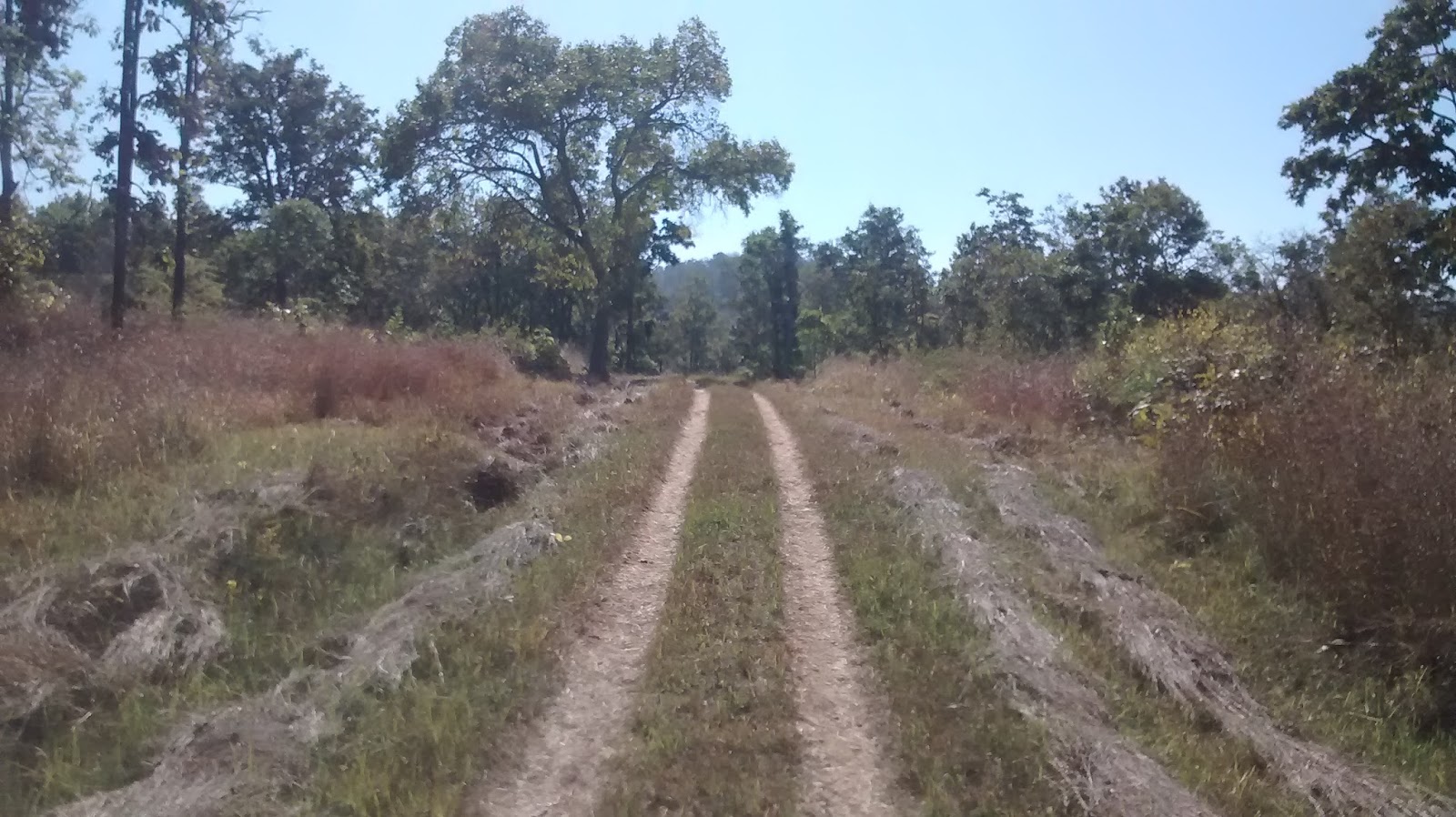
Tiger reserves or National Parks everywhere are complex ecosystems with a simple overview. Writers or wild lifers in India describe the reserves as comprising of types of forests, grasslands, dominating Sal or teak, and the water formations in form of water holes, streams, and rivulets all woven together.
This is a simple overview that makes us look through these writers' prism forgetting the immense complexity of ecosystems which include niche habitats or rather microhabitats. The neglect would mean a loss of biodiversity both in flora and fauna.
Hence the ecosystems also comprise uncommon niches with an abundance of special floral elements and contain a unique geography that comprises a catchment, rivulets, streams, ponds, swamps, sand, minerals, plain or scattered rocks, unique grass, micro life forms, more. The appearance of vegetation and geological formation is unique but they can also pass off as a dense patch of forest. To make out a niche one need not be a biologist or a geologist etc. A close look is enough.
 |
| Pandanus or Kewra Break at Bandhavgarh |
Thus in a small spot or place, a complex ecosystem exists which sustains unique life forms, water in the dry season, shelter, food, and often climate control, tigers and other mammals, reptiles, insects, and birds find succor or life sustenance environment during the time of stress and even on regular basis.
These are important and fragile components of life support systems that if damaged or broken can have a disastrous impact on the ecosystem as a whole. The absence of this niche which is often due to obliteration or neglect is not a good sign and will eventually lead to the disintegration of the reserve or National Park in time to come.
A similar life-supporting effect or preservation could be brought about by the presence or grouping of insects, birds, reptiles, and mammals in a reserve.
A similar life-supporting effect or preservation could be brought about by the presence or grouping of insects, birds, reptiles, and mammals in a reserve.
To make it clearer even within the large confines of your house, garden, office, or factory premises such a niche can exist. Whence destroyed you would discover the absence or diminishing of a species of flora or insects like butterflies and birds if you are a nature lover with a keen sense of observation. This is precisely how unplanned urbanization destroys biodiversity in our towns and cities. This is another reason why linear development is often criticized or cautioned in India by acclaimed conservationists.
In case of violent intrusions by humans and livestock in areas not protected as inviolate or out of bounds the diversity diminishes. Many species become extinct and the environment as a whole suffers. Though well preserved in the core of our tiger reserves they are conspicuous by their absence in the buffer. This is due to constant biotic pressure especially caused by livestock, denudation, logging, and many other factors.
Any visitor if vigilant during the safaris in our tiger reserves would make out such spots albeit they are often presented as picturesque or described as places containing water etc. That is why it is important to be observant during safaris and not only chase tigers and another megafauna.
Thankfully our wildlife managers and field staff of the reserve are in the know of these niche or microhabitats and their ecological value. That incidentally makes habitat preservation extremely complex ...it is not only saving the trees or grassland.
This is another reason why indicator species like the tiger have become extremely important. The presence of an animal at the top of the food chain is an indication of a healthy ecosystem and a certain proof of the presence and well-being of these niches or microhabitats.
We are the worst whence it comes to the preservation of our ecosystems because of our unmindfullness, greed and a hording mentality.
Though I am only a naturalist, I always advocate that tourists must visit tiger reserves with an inclination to learn sincerely so that we can better shape our surroundings and the environment as a whole. Children should be encouraged in this endeavor more and more for they will be the policymakers of tomorrow. Wildlife managers or field biologists in our country should organize camps to educate our masses. This is how the greater benefit will accrue out of eco-tourism globally especially whence there is an unrelenting onslaught on our diminishing ecosystems.
Micro Habitats
=============
Find descriptions and photographs of microhabitats in Bandhavgarh National Park in Central India.
http://www.tigersafaribandhavgarh.com/ZoneinBandhavgarh.html
=================================
Uday is a naturalist and is passionate about the conservation and well-being of tigers in India. He loves to write on these issues on his blog and elsewhere.
Contact: pateluday90@hotmail.com
09755089323
http://www.tigersafaribandhavgarh.com/ZoneinBandhavgarh.html
=================================
Uday is a naturalist and is passionate about the conservation and well-being of tigers in India. He loves to write on these issues on his blog and elsewhere.
Contact: pateluday90@hotmail.com
09755089323