Monday, November 12, 2018

Who Shot The Tiger?


AVNI!

The gun silenced her. The deadly bloodthirsty weapon that is responsible for the death of millions of wild animals. The weapon-yielding Sahib stood proud after having killed Avni. He was the master of all he surveyed not the tiger! A nongovernment actor did he have the legal powers to kill? If not, is this the way we wish to be governed? None of the gazetted could shoot??? More hunters will be born.

The deed has been done and precious human lives have been saved. But there emerges a question mark(?) - Our conservation ethos and policies that govern wildlife in India. Another fact emerges that our administrators are helpless whence mass agitation takes place for an event that requires deeper initiative and careful handling. Exigency could be unjustified.   

A few signatures, paperwork, administrative proceedings, and the ground were cleared for extermination. No court!No Judge!No protests! No recourse to her life! Animal!

It is all populist. It is for votes. No, it is for saving precious human lives...there you have it kill the tiger. We will take care of the cubs later or let them perish.   

Did Avni deserve to die? 

Don't know the answer?

Well here is the clue. 

She was allegedly responsible for the death of thirteen humans who had intruded into her land now usurped. She was intruding into land slated for development and was moving in between sensitive human habitats. 

With cubs in tow, she was aiming to increase her lot and claim back the land where her ancestors once roamed free. 

It is tigers versus development! Was it a happening land...under development - highways, factories, cities, storehouses, markets, shops, restaurants, and whatnot? The way to go! Usurp all the land in the country. We are the masters. 

She was an impediment to our way of life and of course, our fast-changing habitat filled with the suffocating warmth of carbon dioxide, rich particles, and ever-pervasive foul smell that we attribute to pollution, garbage, road shit, and dense human settlements.         

In India, the die has been cast a long time back. It is development unhindered, unplanned and a ruthless march to economic progression. We the rulers of the Earth have defined a way of life no other life form can challenge or act as an impediment. 

Peace, justice, security, prosperity, and development are not possible for us amidst marauding carnivores in the vicinity. They should be shot. No Hearing! No Appeal! No Redress! After all, tigers are animals, not humans.

History!

The erstwhile British rulers were ruthless whence it came to exterminating the tiger and other wild species in India designated as vermin. The hunters took guns they brought, and the Maharajahs, elites, sahibs, and their satraps indulged in ruthless orgy all contributing to cleansing the Earth of vermin so that humans could plow and live in eternal peace. They were brutal, irrational, devoid of compassion, and had no understanding of nature and the diversity upon which our lives are so dependent. 

We are worse!

We follow a creed that inculcates nature worship and teaches us the value and sanctity of all life forms and precious elements. We live in the land of Vedas!

But we have acted worse! Why blame the masters! We have killed more animals, we have extensively ravaged forests, grasslands, deserts, mountains, waterways, river systems, and other habitats for our greed and we continue to do so. Ha! We have been comprehensive.  

In contemporary India we are denotifying protected areas, we are denuding forests if not by intent then by pure negligence and greed, we are dissecting forests for highways, granting leases for mining in remaining natural lands, and even small pockets of wilderness are being allocated for construction. 

Why because we certainly do not care. In my hometown an institution came up on a patch of forest with wildlife whence there was plenty of completely denuded land around. This is our state of planning. 

Let us understand one thing the large section of administrators and politicians are unaware of regarding nature conservation and many cares little for our wildlife. Do not expect much from governance to take care of the remaining habitats in India. The inviolate protected areas are a must but the rot does not stem at that since there is plenty of wilderness all around the country and that has to be guarded with zeal and utmost sincerity.  

We do not want the whole country to turn into urbanity comprising of highways, malls, smoke-emitting factories, and unplanned settlements. All this should constitute a small portion and the greater expanse should be that of natural lands untouched by humanity. Stay away from our forests, rivers, deserts, mountains, and grasslands, Do not kill our animals, not a tiger and not even a deer. 

Tiger Conservation

Incidences like the extermination of AVANI are a cause of consternation. Are we moving in the right direction in order to save the big cat from extinction? Tiger conservation is a comprehensive program and it is a National imperative.  

As a Nation are we capable of saving the tiger? We may not lack the ability and resources but do we have the will and concern? For example, can we allocate more inviolate land to the tigers and other life forms for their survival or let them suffocate in fractured land.     

Will we keep losing AVNI time and again! Saving the tiger is a matter of National Pride for all of us and we should overcome it.  
Tiger - Teerath Singh

Monday, November 5, 2018

Killing The Tigers Are We Living in Stone Age?

Indian Tiger


News

The recent incidences of killings of tigers and leopards at the hand of humans is alarming and is suggestive of extreme loathing of these earthly creature. It is also suggestive of continued intrusion into wilderness - that which remains.  

Why? 

For those living in the periphery of forests an incidence of man eating could be unnerving, but the chain extends much longer for there are vested interests that are keen to exploit the situation.   

Let us be honest, in case of man eating menace the locals are the target and an extreme fear and insecurity develops. When humans are killed the sentiments rise and the immediate instinct/solution is to exterminate. This in spite of technological means that could avoid killing.    

From the killing of the tigress Avni it is evident that we do not resort to measures to stem the rot at the very beginning in order to avoid human deaths including that of the predator. Satkosia could be another impending disaster. We have to stress more on the proactive methodologies and safeguards to prevent the big cats turning aberrant. I think our institutes are doing commendable research and there is hope.  

For the politicians, bureaucrats and local leaders - the singularly powerful people - elimination of problem animal is the only solution...for them it is also a populist goal. These are the people who can pressurise the local administration into an unholy act? 

But the question remains are we in India willing to do more than just providing physical protection to the cats in protected areas? The animal survives in non designated areas as well, and the stray population is as important for the gene pool and conservation. 

Tiger conservation is a comprehensive act and it involves the whole nation. Frequent incidence of man animal conflicts indicate that there are still grey areas that remain unplugged in species management in India. The lacunae is further compounded by utter disregard towards conservation among some of the ruling coteries, bureaucrats and NGOs.  The public besides few are equally to blame for being unconcerned and ill informed. 

We live in Human First Era!

A developmental imperative accords low priority to conservation which could prove disastrous in the long run. We are destroying remaining natural habitats helter skelter in our zeal to develop commercially, urbanize and create unnatural wealth by destroying the crucial natural resources. Rabid development is not the solution for myriads of problems facing the society, and sooner or later there should be a paradigm shift. Will it be too late then?     

Man eating is not an aberration as most people believe, it could be a natural recourse in absence of prey base, since long time back we could have been a part of the food chain. An accidental encounter, stress, self defense whence in proximity all could lead to man killing and could initiate consumption of humans. The repeated act leads to the big cat being termed as man eater. 

The reason for aberrant behaviour as we term is the scarcity of prey base, destruction of its home and intrusion into its domain. All this is rampant in the present circumstances.    

It is circumstances that have pulled the species apart and we no longer are deemed as prey. But it is always in the capacity of the predator to kill us. That it does not leads to justification that the species kills only for food. Energy in the wild is crucial and a specie cannot indulge in wanton killing. The fear of humans also contribute to the big cats maintaining distance from. All life forms on Earth fear us since we have amply demonstrated our ability to kill wantonly.   

Much more is required to understand the beasts that stalk the Earth. Tigers, lions, leopards are predators along with the lesser carnivores. Their role is to limit the populations of herbivores and maintain an equilibrium. Although hunting and consumption could have been an act of natural selection or an opportunistic food preference. The specie is at the top of the food chain in most ecosystems and is crucial in maintaining the delicate balances. 

The forests which nurture the predators for example are the source of food, water security and fresh air. None of the elements that constitute this ecosystem can be removed or damaged beyond repair if the productivity has to be continued. This means the tiger is as valuable as any element in the crucial web of life that shapes our environment.    

Selfish Humans!

Humans are a selfish breed albeit they have been nurtured by the same ecosystem that was shared by other life forms. We were once part of the same food chain that now works in the remaining ecosystems all over the Earth. We constituted the tiger's prey base, and perhaps humans targeted the predators as competitors. The stone age could reveal a saga of bitter animosity between the carnivore and homo sapiens if we could peek back. But nature works in such a manner that there is no room for wanton killing.   

Saving the tiger is crucial for our environment as well as for our survival. Species extinction is like a catastrophe which we also call an Armageddon.   

The Tiger is a matter of National Pride for a diverse India. Save It! 

Tuesday, October 2, 2018

TOFT Awards-2018 - Celebration Visuals

Tourism for Tigers - TOFT Tigers India & Nepal 

To be at the residence of the British High Commissioner was simply exhilarating and speeches by Dr. Raghu Chundawat, Bittu Sehgal (Sanctuary Asia), and Julian Matthews Chairman TOFT doubled up the pleasure. The Award Ceremony began with a brief note by the organizers followed by the keynote speakers. Informative and meaningful the speakers were right up to the mark.  

Award Ceremonies are fun-filled occasions but with erudite speakers, they are immensely informative. The well-organized function was graced by His Excellency British High Commissioner Sir Dominic & Lady Louise Asquith members of the High Commission and TOFT staff members.  

The award distribution was thrilling as winners and runners-up were announced. The evening culminated in a fine dinner and meeting of the guests. 

Visuals TOFT Ceremony 
Audience
TOFT Ceremony
Runners Up With Chairman TOFT 
Winners

British High Commissioner - Lady - Julian 


Julian Matthews + Winner Jatayu Restaurant 

Guests + Richard Morris

Bittu Sahgal & Julian Matthews 


Dr.Chundawat
Bittu Sahgal - Keynote Speaker 

Chairman TOFT India & Nepal 

Awards & Winners 

FD Kanha + Winner 

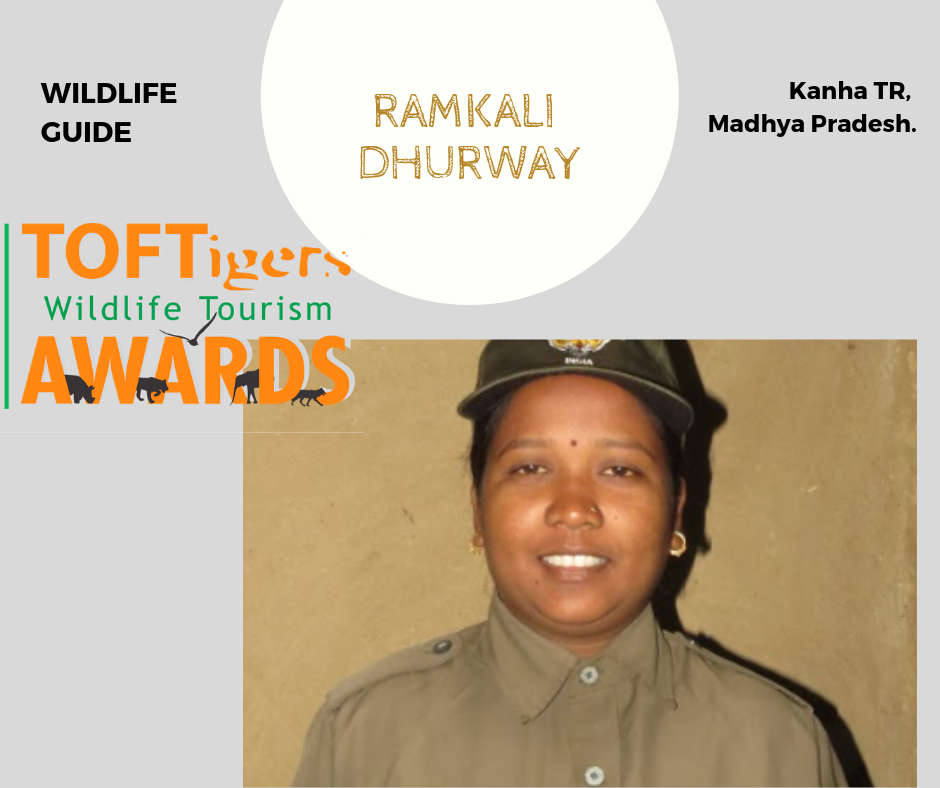
Ramkali Dhurwey Winner 


Podium & Sitting TOFT Award Ceremony


Winner

Award & Winner 

Lodge Naturalist Winner


Uday Patel - Runner Up Lodge Naturalist 
Award Presentation 
The function was attended by two hundred happy guests and was well organized at the residence of the British High Commissioner in New Delhi. The aim of the Award presentation was to encourage conservation, and responsible practices and participants from various backgrounds as well. 

TOFT Tigers is at the forefront of Tourism and Conservation in India promoting ethical and responsible practices. Members are responsible resort owners and tour operators Worldwide. 

More Info:

 www.facebook.com/toft.india/

https://twitter.com/TofTigersIndia


Tiger Conservation: It is Development That Counts

Environmental Overview

India is on the threshold of becoming an economically developed Nation on Earth. One among the few who rule the Earth. The sordid saga of a reckless developmental spree of those already at the helm is narrated without mentioning the large-scale damage done to the local environment and the plundering of crucial natural resources embedded in Mother Earth.

Development in terms of economy and infrastructure is the yardstick that denotes the success of ruling dispensations in India and elsewhere. In the country, the narrative is on the upswing with most of the discussion centered around growth and development.

Do we state the growth indices without keeping an eye on the amount of destruction we are causing? A highly developed India could burden the coming generations to clear the environmental debt that we leave in the wake. Should not we be concerned? 

Development is imperative but not without paying heed to environmental concerns some of which may appear trivial but could have a major negative impact in time to come.

In India, the worry lies in the large-scale destruction of our remaining natural lands and ill-conceived usage of our natural resources.

India is a signatory to the Convention of Biological Diversity a multilateral treaty for the preservation of biological diversity, sustainable use of resources, and sharing of genetic resources in a fair and equitable manner.

Another landmark that was legislated in the year nineteen seventy-two was the Wildlife Protection Act. The creation of protected areas was within the purview of this Act...and so home and protection were accorded to all life forms in the country. The 1988 Forest Policy lays a strong focus on conservation while other acts for Environment Protection were passed in the year 1986 and subsequently the Foreign Act 1992 for regulating International trade in biodiversity elements.   

The country has a number of regulatory bodies that govern actions that oversee future implications of ongoing or planned processes.  The Hon. Supreme Court of India plays an active role in environmental issues by presenting its own interpretation and hence through its directives it influences policies that contain environmental concerns. The aim of the highest courts through intervention in governance area is to redress the failures of the Government and other regulatory bodies in discharging their Constitutional and statutory obligations. There are proponents and critics as regards Hon. Supreme Court's interjection in these matters but albeit this is an entirely different matter the court's interjection is seen in a positive light by many.   

It should be noted that a large number of PILs regarding myriads of environmental issues have been filed by NGOs and individuals thus exhibiting faith in the judiciary as a whole

The Government Ministry MOEF

Ministry of Environment Forest and Climate Change is panned India mother of all institutions that are concerned with the environment, forests, and climate change. It is the prime body that issues statutory orders in case of environmental clearances hence is the most important element that could impact the environment and associated wilderness in multiple ways. 

It is responsible for providing clearances and impact assessment, as well it governs the National Parks of India. It oversees forest policies and programs implemented in the country. It is also a nodal agency for many International conventions and programs affecting India.  The Ministry has multifarious roles but the crux of bringing this into the picture is that it can bar or give a go-ahead to the controversial exploitation of resources through mining, exploitation, and development of remaining natural lands and related issues.

In short MOEF a ministerial body is the face of the ruling dispensation, obviously, through MOEF it can accord direction to actions concerning our environment conservation strategy.

Our Concerns & The Tiger & Human Centric Policies 

The concern that dominates the conservation circles is a quick appraisal of permission granted for mining, land acquisition for developmental projects, dissecting habitats like forests for roads, and other related projects.

This is the crux of conservation practices in India wherein policies that disregard environmental concerns can be hastened through to promote perceived developmental and infrastructure benefits. In many instances whence development projects are seen as imperative clearances are granted without a second thought. Concerns for habitats and the consecutive impact on prevailing ecosystems take a back seat.     

It required that governance should be very cautious towards activities that degrade crucial habitats and eventually are environmental hazards. These habitats support ecosystems or the complex web of life of the critically endangered species Bengal tiger as well as other life forms struggling to survive in the country. This also means the imperatives are looked into from the perspective of the highest offices in India. For developmental projects alternatives present should come into the picture.

Shortage of space for endangered species like tigers is obvious and land use patterns should be looked into. A large chunk of forest, grassland, and river habitats have been lost to reckless ventures into agriculture in earlier times. More productive agrarian practices should be developed and encouraged which utilize fewer expanses of land. This also applies to industrial practices and rapidly expanding settlements, especially in our urban areas.   

It is quite a matter of concern that an increase in the tiger population would also require an increase in inviolate protected areas if we have to preserve the animal that is a matter of our National Pride. This calls for equitable and fair translocation policies. Since certain areas will be required to clear human habitations in order to reduce man-animal conflict (elephant migration) and accord home to locally endangered species. (Similarly, the Lion should be trans-located to suitable habitats which have been developed in recent times.)

Tiger: Pic Uday Patel 
The Great Mahatma 

When Mahatma Gandhi conceived of Ram Rajya he was not being rightist or denying secular credentials as many construed.  With an emphasis on nonviolence and the cottage industry he certainly had an approach toward development that would be been highly concerned about environmental issues. That would have meant a paradigm shift from the Western Style of development we are recklessly emulating.

Perhaps he could have found answers to our woes? He was down to Earth, simple, and would not have been influenced by the vote banks of India. 

Monday, October 1, 2018

TOFT Tiger 2018 An Award That Matters

TOFT Tiger Lodge Naturalist Award 2018
Runner Up - Uday Patel

RUNNER UP: Uday Patel, Courtyard House, Kanha Tiger Reserve, Madhya Pradesh

Uday Patel, Courtyard House, Kanha Tiger Reserve, Madhya Pradesh
Uday Patel has been an active naturalist and writer for more than two decades. His knowledge of birds and mammals is second to none in Kanha; he is also a superb wildlife tracker. In his spare time and during the monsoons, he motivates school and college students to conserve nature through lectures and nature trips. He is also associated with the forest department in Jabalpur and with the CFN Society.
It is exhilarating to receive award from TOFT Tigers based in UK. The award function was superbly organised with speeches given by

Bittu Sahgal - Conservationist and Publisher of Sanctuary Asia Magazine
Dr. Chandawat - Conservationist, Tiger Specialist
Julian Matthews - Chairman TOFT


I work as Naturalist at Courtyard House Kanha in Central India.
My mail: pateluday90@hotmail.com
My Mail
Mobile: 9755089323

Saturday, September 15, 2018

Dissecting The Tiger Reserves

The news is infrequent but the consequences are deadly. Already a large part of our land mass has been stripped of all-natural ingredients and more are being subjected to them. Politicians and bureaucrats do not accord consideration to the land which has been deprived of an ecosystem bearing or is too difficult to be comprehended as of ecological importance.

The dispensation exhibits limits of ill-planned approach, lack of logical thinking, no care for our environment, and declining wilderness. Economic upliftment is an urgency often aimed without proper planning and with total disregard for remaining natural landscapes. Populist governance is a bane of democracies all over the World not only in India, otherwise a time-tested meritorious system of governance.    

Large ecosystems under the ambit of conservation and right under the public eye do survive the rot, but this is not true entirely. Dissecting our tiger reserves, National Parks, and wildlife sanctuaries under the road and rail development programs are considered as a prerequisite since that is imperative to our goal of economic development. 

During the Raj inaccessible lands were ripped apart by road and rail construction leaving the forest lands open for depredation and its wildlife for easy culling. The rulers had only one aim in mind and that was to generate revenue from a usurped Nation. But the land in question belongs to us and certainly does not justify the emulation of policies of our erstwhile masters. But that is what we are doing since independence. 

After all, it is just a strip. Is this well under the limitation of sustained development in green corridors? The impact of the decimation of such strips of forest lands is disastrous, but it does not appear to be so whence the quantum of land destroyed is considered inconsequential, and the imbalance and disturbance caused are considered negligible. Whence the conservationist cries hoarse this is equated with the parable cry wolf!     

The fact is even an ill-planned minimalist approach to urban development in green corridors or protected areas can augur fatal consequences and in some circumstances that negative impact may be futuristic. For example, we have seen the impact of massive deforestation resulting in global warming in recent times. 
Teerath Singh 
Plans are often accepted and implemented by managers and bureaucrats with no insight into how ecosystems or natural lands work. They have no idea about the biodiversity prevailing in those places. They have no knowledge about the sensitivities of other life forms and their survival. Technical and economic viability is the key consideration taken into account, and yes the beneficial political fallout could favor the ruling dispensation. In the hurry to implement the projects, wildlife mitigation is not taken into account while executing the projects or at times they are never placed on the information table for the general public, NGOs and conservationists.  

Teerath Singh


We cannot continue to see development through a single prism, a multifarious approach toward the management of our lands should be accorded priority keeping in mind the health of the environment as a whole. Hence before we lose our natural lands a more circumspect policy should be in place which would mitigate conflict between wildlife managers, NGOs, and conservationists. This would be a sign of less damage being done to our natural lands if not entirely - under the developmental goals.  

Sunday, August 19, 2018

Nauradehi WLS A Lost Paradise

Vanishing Ecosystems

Can humans take over any piece of land in India to acquiesce to our developmental and urbanization goals? Will the highest courts in India and the ministries stamp their foot down to see that development should not hinder? 

Should we repeat after a few decades because development is not contemporary anymore and ravage and ravage till all other lifeforms cannot survive except some in zoos, herbariums, and botanical gardens? 

Are we going to see the naked face of humanity and contend with evolving medical resources, artificial environmental dromes, and organized manicured floral landscapes?    

Yes, humanity will survive till armageddon, and few will escape to another kingdom in celestial oblivion to continue to ravage again and again till the whole Universe is lost. 

Nauradehi Tigers

It started with Nauradehi? Barely aged eleven, I was witness to a huge male tiger being skinned right on my porch. My first tiger sighting was a dead one. I could see the cobbler assiduously collect fat. "This is good for joint pains," he explained to us without any expression on his countenance.

The hero stood around nearby devouring accolades. "I shot him sitting on a bullock cart - point blank. Could see his face lit up by the moonlight, and I aimed right without fear and trepidation." 

He was from Mumbai a rich man who came every year for the hunt to Jabalpur along with the entourage of the Sahibs. They shot sloth bears, and sambars and spotted deer from amongst a fast-depleting lot of wild species in India. For a paltry sum in rupees as my father many times lamented.
Tiger By Uday Patel 

The accolades continued. Brilliant! I too was admiring the brave hunter. He got rid of the vermin - a bloodthirsty beast. It took me a decade to realize what grave error was being committed. This was in independent India, the Sahibs had left, and the barbaric Mughal invaders had been vanquished a long time back. This was us the Brown Sahibs. We took over immaculately from where they had left. 


Fox
The plunder was unprecedented, and forests and grasslands were being destroyed at a rapid pace. The burgeoning population needed food to be cultivated on thousands of acres, and there was no check on plunder and ravage of our ever-depleting ecosystems.     

There were no tigers left in Nauradehi and the surrounding regions. All the remaining big cats had been shot dead not only by the Sahibs but by anyone with clout. Today Nauradehi the kingdom of cats is devoid. No tiger no leopard. The wolf rules the roost! It is the indicator species.   


Waterbody


A few years back a lady DFO had come across a tigress with cubs and recently a tigress was found dead because of old age. It is conjectured that big cats somehow cross over to Nauradehi from the nearby Panna Tiger Reserve at a distance of 250+ km. Well, it is anybody's guess since there are inaccessible quarters in this forest itself for animals to hide and breed. 


Recently a pair of tigers were relocated here in order to kick-start the process. If the predators breed successfully the cats may permanently find heaven in Nauradehi Wildlife Sanctuary again. Situated near Jabalpur City in MP the distance is about 100 km. The area is about 1000 + sq. km and comprises of mixed forests and pockets of the grassland ecosystem. The undulating landscape actually encompasses more than 5000 sq. km of tiger habitat but the crown cover may not be adequate. 


Bengal Tiger - Uday Patel 


Fauna & Cheetah Relocation 


Some of the key fauna found here are the nilgai, chital, sambar, barking and four-horned deer, black buck, tiger, sloth bear, and small predators jackal, fox, civet, porcupine, and mongoose. The leopard is conspicuous by its absence but sooner or later will find a place here thanks to the protection offered. There is a proposal to shift African cheetahs to the grasslands of Nauradehi but this at present is only in the news.


Crocodiles and smooth Indian otters, turtles, and tortoises can be found in the river systems and the water bodies of the sanctuary. The sanctuary is a heaven for avian species and delightful prospects await the birders. No extensive survey has been carried out but the specific number may be more than 200. 


There are more than 60 villages in and around the WLS and plans are to shift them outside...some of them have already been shifted as per the news. Relocation is badly desired here since humans have occupied space reserved for other life forms and some are a big nuisance. Albeit under control, pilferage, and wood logging is still underway. I hope the relocation will solve the problem to a great extent. A lot of constructive work has been done by the forest department here.


For those interested in visiting Nauradehi can contact DFO office at Sagar at a distance of eighty km. There is a permit required for wildlife safaris for a charge. One has to organise the trip usually from Jabalpur airport or railhead. An open jeep is the best recourse on the rough jungle roads. There are two rest houses for accommodation but need prior reservation. It is good to carry lot of provisions as well. 


Marsh Crocodile

Early morning and evening drives could be planned from Jabalpur in Central India. The jungle is worth exploring hence organize at least two or three safaris. Jabalpur is a conduit for other tiger reserves like Kanha and Bandhavgarh hence Nauradehi WLS could be included in a circuit. Jabalpur accommodation is very good so there should be no problem with a stay here.


Tiger Relocated at Nauradehi - News
    

Friday, August 10, 2018

Future of Tigers in India

Some ten thousand years back tiger crossed into India from the cold climes of Siberia. It possibly migrated via IndoChina and entered the country to spread around many dense forest and grassland habitats.  It faced a little challenge since the prime predator preceding its arrival was the Asiatic Lion which incidentally had a different habitat preference. The leopard and other predators were no match for this magnificent beast.     

Tiger in Forest - Uday Patel


The predator spread far and wide in the subcontinent perhaps leaving a few States that did not contain the requisite habitat. The spread was gradual till the population came to more than a hundred thousand animals. The big cat flourished as a tertiary carnivore and settled down in the prevailing ecosystems well. That it could breed and multiply with ease confirmed that it had a strong survival instinct.     

For thousands of years, all went well but not in recent times of history. It faced a greater challenge from humans as they multiplied and spread. But the conflict was not daunting as there was plenty of space for all the species then. 

Tiger Reserve - Teerath Singh


It was the unchecked human populations...ever-expanding for more space and utilization of resources that put wildlife and their habitats under pressure including the tiger. Since the carnivore is an apex predator the impact was worse in its case.

As human settlements increased and resource utilization became unmanageable the negative impact increased tremendously as well. The big cat began to lose its habitat, and the ecosystems were gradually destroyed one by one. In dire need of space, humans began to invade habitats at a fast pace. 

Eventually, the grasslands began to recede and so did the forests. In the period of contemporary history, human populations in India grew at a rapid pace resulting in the unplanned acquisition of lands that were crucial for the tiger’s survival. Agriculture too expanded rapidly in recent times sounding a death knell for the homes of the big cats. Large areas of forests and a wide span of grasslands were taken over for human settlement and agriculture. Many species were lost and many are on the verge of extinction as a result.

After suffering decimation due to organized culling campaigns during the British Raj the remaining tiger populations were further being reduced drastically by modern-day hunters with guns. But the conversion of habitats into agriculture had a major impact on the tiger populations in India, especially during the post-independence period.    

Modern Day Challenges 

The human population in the country continues to grow and continues to acquire land for agriculture or other purposes, especially urbanization. The new threat is from development as perceived by the planners. Much under pressure to create a robust World beating economy the fast-expanding industrialization is threatening the very existence of remaining big cat habitats and other species in the country.  Mining, encroachment, and denudation of forests are slowly but surely suffocating the breath out of the big cats.     

It all depends upon what policies are shaped and executed. A lip service paid to conservation would be disastrous with habitats already decimated and surviving species on the verge of extinction. Conservation should be on the agenda of the governing bodies as well as the planners and executioners such that it evades the threat of rabid industrialization that can take place. We should also reckon that public participation is the need of the hour.

Climate change is being augured by the use of fossil fuels as well as the decimation of natural lands. This poses a certain threat to humans but it threatens the species' survival as well.  Our rivers the only source of drinking water, fresh air, and edible elements all are under severe threat.

Consumerism is posing a big threat to the environment. The frustrating plastic menace has come to note. The use of toxic chemicals like pesticides and toiletries is threatening the health of our environment and increasing the extinction risk of many life forms.    

Poaching is a threat that exists in various quarters where the big cats survive. Local poaching is very much there in some places while organized poaching has completely decimated populations in Panna and Sariska Tiger Reserves.

Demand for tiger parts in the Chinese system of medicine is proving to be an existential threat. This is correlated with the taste of exotic wild species in the cuisine of many countries. Pet keeping as a hobby is an unethical practice that is tolerated by many countries.  Activities like these encourage and help flourish the illegal wildlife trade. 

A large population in the country still considers wild species as inimical to human safety and interest. It is organized awareness campaigns and tourism that will perhaps mitigate these horrendous beliefs. If only the big cat could create equity for itself which it does to some extent due to tourism. But is this enough? Many erudite conservationists regret that the tiger cannot vote. Seriously!  

The Future
. 
It would be unjustified to say that the ruling dispensation does not care for the wilderness. It does and so did the past Governments. What is questioned is the degree of commitment overriding political expediences and hasty development practices.   

Conservation cannot be considered just as a deemed policy matter and ethical or moral obligation. Concrete and sincere efforts have to be made from all quarters to preserve and populate other life forms including the tiger.

The creation of the Project Tiger Program was a shot in the arm for the beleaguered specie. The numbers were precariously low whence this effort was launched. In spite of all the initial hurdles and organized poaching racket the tiger in recent times has gained ground.       

The creation of tiger reserves or inviolate protected areas (critical tiger habitats) accorded much-wanted breathing and breeding space for the other life forms including the big cats. But the preservation of the protected area is subject to many challenges ironically whence there is a dire need to accord greater space and protection to the tigers in India. The biotic pressure on our natural lands threatens the coexistence of other life forms hence the inviolate spaces should be zealously guarded.  

As per the 2014 Census using a new methodology, the figure arrived at was 2226 a rise over the earlier estimates. The 2018 census is going to result in indicating the survival of more tigers in India. But is this enough? 
We have a long way to go...   

2014 Tiger Census

================================
Uday works as a senior naturalist at Kanha National Park in India
He loves blogs on conservation and related issues
Contact: pateluday90@hotmail.com
9755089323

Monday, July 9, 2018

Clive & Ruth's Photographic Expeditions

Clive & Ruth Photographers UK
Tiger Safari
Guests Courtyard House Kanha
Naturalist Uday Patel

Clive is a professional wildlife photographer and keen wildlifer along with Ruth who equals enthusiasm and clicks wonderful images as well. Their enthusiasm for wilderness and local cultures is unmatched. They have visited India many times and are keen travelers from the United Kingdom.

They are our regular guests at Courtyard House Kanha. This season we had some exciting safaris and photographic adventures at Kanha National Park. 

Though the focus was on tigers we came across many other wild animals, and the guests photographed them with vigor. On this tour, they have taken thousands of photographs. They have been kind to send some of their works to Kanha and Panna. 
Changeable Hawk Eagle

Jackal

Tiger

Panther

Sloth Bear

Tiger

More on tiger photo tours with Clive the wildlife photographer.

Tuesday, May 8, 2018

Tiger Conservation - Water Woes - Community Initiative

On safari at the buffer zone in Kanha, we realized that there was hardly any source of water. The summer had peaked and most of the rivulets had dried down completely. Thus the trip was a partial success except for the sighting of four-horned antelope pair, a Nilgai female, and a few spotted deer we could see nothing. The jungle was dry and barren the sole reservoir was completely empty.  Bird life is always good here but not in the late evening!  

Through many of the buffer zone roads, local human traffic continues unchecked. Albeit this is the recourse according to the locals since they have always been using these pathways the problem of intrusion persists.

In most of the buffer areas previous human settlements, agriculture, and small-time commercial activity related to local needs are permitted by law. New laws have been inducted to prevent the large-scale commercialization of this land. I think settlements by outsiders into the buffer also need to be checked.     

Tiger By Mukul Yadav 

While this is good, the incidence of electrocution, poisoning, and poaching does occur to some extent. This is correlated indirectly to water woes, especially in the buffer. Creation of saucers and ponds and bunds is not easy at all since these can easily be poisoned using insecticides that are locally available.

Whereas in the core or the critical tiger habitat patrolling is intense...in the buffer, it is relatively less probably due to priority or lack of resources. 

Importance of Buffer

Why The Buffer? 

After the heavy destruction of forests in India, the habitat available for tigers is much less, and it is further compounded by commercial activities, the presence of livestock, populous settlements, and agriculture resulting in extreme biotic pressure.

The dependence on local wood and on minor forest produce creates more pressure than desired. Wood is used for energy as well as furniture. The availability of gas has to some extent mitigated the demand for wood but not all are implementing the generous availability of  CNG out of sheer habit or lack of purchasing power. The scattered felling of trees continues, and I have found many areas in or near the buffer to be incapable of holding other life forms. Perhaps greater awareness needs to be created among the locals. The forest department does offer properly collected dead wood to locals at an affordable price. 

Conservation in Buffer        

Why does tiger conservation take into account the buffer area whence the core offers complete sanctuary to the big cats? 

Well, the answer is simple. In order to come out of endangerment the big cats and their prey have to multiply. The core area will not be sufficient to hold as many tigers as desired. Hence they have to spread into the buffer which they have already done in the case of Kanha where conservation has been a big success. Tigers need large space to survive, this is one fact that all conservationists are aware of.     

While predator and prey movement into the buffer helps reduce deadly conflicts between tigers inside the core to a good extent, it simultaneously augurs man-animal conflict outside. During the scarcity of water big cats move into the core intensifying territorial conflicts due to the disruption of population dynamics. There is tremendous stress on wildlife during the dry season from March onward. Wildlife from all areas facing a shortage of water congregates in the core.     

Experts - Watershed Management 

In the core area, many water sources remain though many dry out early hence water management is required. Though the management is earnest about preserving the water sources, I think inviting or taking the assistance of experts or watershed management should be thought of. In one incident I noticed a continuous trickle that supported a water hole was erroneously clogged whence efforts to enlarge by drilling proved a failure. This may have been occurring elsewhere? 

In buffer areas most of the water bodies have been taken over by settlements - this is the case everywhere. Creating water holes or saucers is difficult as elucidated earlier in this article. Hence solutions have to be found by human intervention or by extended protection to sources already existing.   

Perhaps forest communities and the tourism industry could be involved in some manner to offer an extended hand in managing the buffer. 

At the moment tiger conservation in India at many places is succeeding thanks to committed management and sound policies. Macro solutions will spell success much faster. We should all assist in some manner to augur success. 

Community Initiatives   

Community initiative is the way forward, the tourism industry already provides jobs to the locals impressively and some partner benefits as well through commerce and sharing. Little more contribution by all will do wonders      

This is where the industry and well-wishers can contribute by helping the local institutions and empowering people (some may already be doing). A small contribution will create greater equity about wildlife and forests in minds of the locals, and about their inheritance. Well, it is a good deed as well.    

Courtyard House Kanha - Community Initiative

As an example, Courtyard House Kanha owned by Neelesh & Kirti Agarwal along with donors has adopted Patpara school. They helped create a boundary wall (fence), painted the walls, and equipped the school with much-needed furniture and accessories. Since its inception, the resort has been donating paraphernalia useful on request from teachers.      

New Fence for Patpara School 

Student Interaction - Donation from Bishop Stratford School UK

Donors Visit George & Norah France


Furniture