Tuesday, March 17, 2020

Central India The Land of The Tiger in Images


Waterbody in Indian Jungle
Astounding as it is the complex web of life is a serene picturesque setting that is salubrious and instills calm and peace among the visitors. Time alone knows the origin of this wonderful land of the tigers but in the contemporary era, we can explore and understand what is now Kanha National Park.    

Situated in Central India Kanha is an ecosystem...the last remaining vestige of an erstwhile contiguous forest among the highlands of Madhya Pradesh, Chhattisgarh, and Maharashtra. Nestled between Satpura and Vidnhyan Ranges the fragrant remains are testimony to India of the past where wilderness ruled over scant urbanity and the tigers ruled over the vast kingdoms. 

White Bellied Drongo
Serpent Eagle
Long Tailed Shrike
Dhol
Fig


Well, not all are lost tiger reserves such as Kanha, Panna, Pench, Satpura, Bandhavgarh and Tadobah albeit isolated offer succor to amazing biodiversity that is preserved for posterity. Often called protected areas or PAs these last remaining ecosystems offer hope to the beleaguered tiger and co-inhabitants. 

In the mind-boggling rabid race for urbanization and development campaigns benefiting India's teeming millions, the tiger reserves are facing an uphill task to preserve themselves as humans invade the fragile web of life what we call the forest ecosystem.     

My work as a naturalist accords a chance to photograph the wonderful biodiversity and present it to the blog readers. 
======================================
Black Buck

Lotus

Brown Headed Barbet

Brook

Spotted Deer

Branderi Swamp Deer

Crimson Tailed Marsh Hawk

Grey Headed Fish Eagle

Crested Hawk Eagle

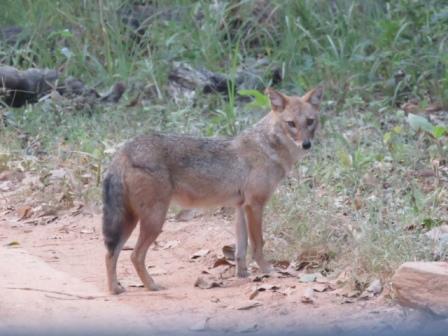
Jackal

Leopard (Andrew)

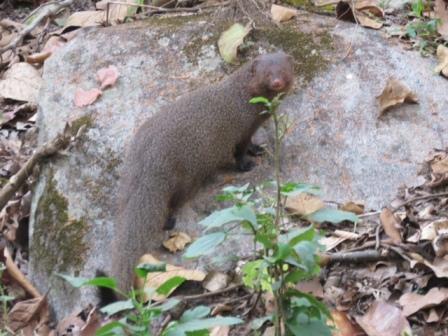
Ruddy Mongoose Pair

Ruddy Mongoose (ANDREW)

scaly breasted munia (Andrew)

Puff ball fungi

India scops owl

Grey breasted munia

rock python

sambar deer stag

Giant Wood Spider

Sunset

Antill
Tiger
Bee Eater


Black Buck

Brown Shrike 

Common Teals


White Eyed Buzzard

Pied Bushchat
Plain Prinia
Pond Heron

Indian Scops Owl

Shikra

Scarlet Minivet

Giant Wood Spider in Web
Sinduri Tree

Lesser Adjutant Stork

Swamp Deer Stag

Tigress

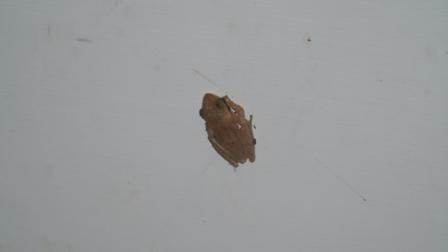
Tree Frog 

Flapshell Turtle

Ultramarine Flycatcher

Grey Capped Pigmy Woodpecker

Wooly Necked Stork

Gadwall
Cotton Pigmy Goose

Langur Monkey

Green Pigeon

Green Sandpiper

Gaur Male

Gray Langur

Crested Hawk Eagle

Jerdon's Baza

Red Jungle Fowl

Common Kingfisher

White Throated Kingfisher

Monitor Lizard

Barking Deer

Monk Vulture

Alexandrine Parakeet

Barred Jungle Owlet

Brown Fish Owl

Richard's Pipit

Through these pictures, I wish to portray a holistic view of our tiger reserves. Under constant human threats, these wonderful islands of hope should be preserved for eternity but an uncertain future remains for the animals, plants, insects, reptiles, flora, and other elements that make up this incredible microcosm of life in India.   
=======================================
Uday works as a naturalist in Central India and also loves to write about tiger reserves and conservation. 
He also provides SEO Services and Website Content in English. He organizes summer classes in Digital Marketing in Jabalpur his hometown. 
Contact: pateluday90@hotmail.com
Mob: 09755089323  

Saturday, January 18, 2020

Tiger in The Rain

Guests Nick, Aaron & Becky UK 
Courtyard House Kanha 


Tigers Enchant! 

These mysterious creatures have lately given us the impression that we have come to know everything about them. Do we?

There is an aura around them and a mystery that deepens more whence you get to know them on your search in the reserve. I have come across the tigress subject of this entry earlier along with her three siblings time and again during their growing up period at Kanha National Park in Central India or the State of Madhya Pradesh.      

Unfortunately of the four siblings, two have been able to survive? Tigress cubs are often killed by rival males that have not sired them. Death can be a brutal mauling at the hand of the intruder. Hence until unless a surviving cub does not carve-outs in its own territory with dominance, its survival is under question. A relief discovery is that rival makes would more likely kill male cubs than females. But all younger cubs are killed if the rival wants to induce estrous in the mother. 

Tiger Cub

So we set out with Aaron and his parents in search of tigers and other animals whence they arrived at Courtyard House as guests on safaris. We did come across a tiger hidden amongst the bush and we could see its back, head, limbs, and body all disjointed by the bush. It was on a kill and we could hear the breaking of the bones as well. Well, that's that!   

Our search for tigers was disrupted by rains now and then and we had given up all hope of seeing another.  We did manage to see lovely creatures of the reserve and photograph them much to our joy!

Aaron had a wish on his birthday to see a tiger on the road. Well, it rained and rained. Huddled under the tarpaulin on the gypsy we had given up all hope for sighting a big cat on the road.   

"Tigers like us are irritated by droplets falling on them." Perhaps their metabolism slows down due to drop in temperature." This was my explanation to rather disappointed Aaron. I had seen a few big cats enjoying the rain during my work as a naturalist. 

While returning back to the camp, I decided to take the route where we had found tiger droppings and heard calls some distance away. "There is a thin chance.......".    "And the road is devoid of traffic that will increase our chance." A path less traversed.  

It was drizzling whence we were surprised by a young tigress peering at us from the bush beside the road.

"Tiger Loooooooooooooook!"

The rain-drenched creature was simply staring at us for a long time awestruck perhaps. Ha!

It then came on the road at a distance crossed over and was gone.

"Aaron Your Birthday Wish, I announced gleefully!"  

Tiger in Rain

Tigers are creatures of purpose and the rain does not hamper them. I made another discovery that day.  

Tuesday, December 3, 2019

Ecosystem Development: Saving The Sink Population of Tigers

Tiger conservation in India has expanded beyond the perspective of protected areas. Though PAs with inviolate space dedicated to other life forms are the best means to protect the source population of the big cats and will remain relevant for a long long time to come, the tiger's realm is an ever-expanding phenomenon. 

With the success of contemporary conservation practices and the increasing population of this tertiary predator, the paradigm is rapidly changing conservation needs and technology employed. This will challenge the approach and capabilities of wildlife managers and planners in our country. 

The recent induction (news) of funds into corridor development is one fine step for our Government. But will it be finely and boldly executed remains to be seen? Hopefully, there will be some curbs on liner development as well which intersect our reserves and natural lands. The creation of wildlife passages or corridors is a must to save and prevent inbreeding among migratory species. But for this purpose relocation of the human population has to take place which requires political will besides facing stiff opposition that will accrue from many quarters.   

Indian Tiger 

The tiger is a territorial animal and in case of the dearth of space or conflict it becomes peripatetic and thanks to recent findings a good one at that. Well, what this means is that the buck does not stop here at the core or in critical tiger habitats. The predator's realm is an ever-expanding one. 

As a naturalist, I have noticed local migration of tigers displaced by territorial conflicts now enhanced by expanding population. Hence in many cases pertaining to the disappearance of tigers, the reason is not internecine fights leading to death or an act of poaching. In order to avoid bloodshed the loser simply migrates to neighboring forests away from the core. 

In the neighboring region forests classified as buffers or reserves offer a stressful ecosystem to survive and mind you many of the displaced animals are not old but are capable of breeding and surviving their full lives. This is where the problems arise thanks to ensuing man-animal conflicts. But this is not the end of the story ....space is. 

Man-animal conflicts that result in a direct attack on humans are less compared to the acrimony generated due to the killing of livestock. The general feeling of insecurity instigated by the predator's presence further compounds the problem where this animal had lost ground earlier.

The vermin concept flouted during the Raj still infects our minds. 

The latter two are responsible for the poisoning of the big cats in the buffer. Electrocuting small games in the periphery of the reserves often leads to the death of this apex species. 

With increasing urbanization and infrastructure development, the metapopulation of big cats in tiger landscape and distant reserve forests are coming under severe stress. In the modern mind space, increased intolerance of carnivores in India is bound to take place unless the conservation ethos is rekindled. This concept of man-animal harmony is at best chimerical in the material world where the beast needs inviolate space and has no equity. 

Unlike in the periphery of tiger reserves where tourism income flows directly to the local populace the survival of dispersing metapopulation is difficult in areas devoid of connected income. Wildlife and ecosystems cannot survive without the sympathy of the local human population. It is difficult to curb the exploitation of reserve forests and killing of other life forms, and yes prevent man-animal conflicts, by implementing the law in isolation.    

If conservation practices result in the increase and spatial expansion of the big cat, problems compounding conservation practices will be enhanced. This gives rise to many questions?

Do we have the will to save this critically endangered species?

Does the country have the required political will to take the right measures to put aside appeasement and developmental urgencies?

Are we willing to further safeguard forests outside protected areas and prevent encroachment and poaching?

Will ecosystem development take place in habitats, not under the purview of protected areas?

Tigers need space and protection. A population increase that will extract the species from the brink will depend upon their survival in both PAs and outside. A comprehensive approach is therefore required from the Center and States not forgetting institutions involved in conservation research and practices.    

And we the people of India should also support it!
=========================
Uday works as a naturalist and loves to write about conservation. 
Contact: pateluday90@hotmail.com
Mobile: 09755089323
  

Thursday, October 24, 2019

Goodbye Munna : Tiger Iconic at Kanha

Munna Imprisoned!

Munna is an epitome of the tiger. His resilience, stamina, sagacity and the spirit of survival is insuperable.  
Munna - Mary & Andrew

The cage was a dreadful sight for us or for any tiger lover. The crowd comprising police and forest officials made evident the sad event about to take place. We were shunned by the officials and we could not witness the capture. But the saddest part was his translocation to Bhopal a faraway land. We expected him to be immortalized here!


The contingency had arrived because of the death of a young girl in her teens. Upon inspection, no pug marks were seen in the vicinity as per some mahouts. Actually, event details are not known accurately to me. But the teen was deep in the forest and could have been a victim of rape or could have been killed by another animal as the goats she was herding could have attracted the killer. 

Anyway, it is unlikely Munna could have done this because even in old age he was still able to kill cattle frequently. He was thus drawing the ire of villagers by becoming a cattle lifter. He could have been poisoned or killed by an irate local. But with locals, no one dares to take a chance, and so the sad incarceration of a majestic and iconic carnivore.      

He is still living, seventeen years plus but now far removed from his home at Bhopal conservancy. Born and brought up in Kanha National Park there was no tiger like this amazing big cat in the World. 

Munna With Bison Kill - Image Gopal Desai 

Red Eye - Paul Fear

I must have seen him earlier on my frequent visits to Kanha National Park as a naturalist but my first memorable meeting was in 2009. He had killed a bison and was fiercely protecting it from the crow nuisance. The place was near Schaller's hide at Kanha and some lucky tourists had seen him making the kill. 

As a freelance naturalist, I was frequently encountering this magnificent beast and learned to track him with ease. He was one tiger that I had seen very often more than others as a naturalist. The study was revealing but the most awe-inspiring was his controlled aggression and sagacity rarely seen in dominant tigers. Another feature was his tolerance for humans whom he knew were not part of his food chain.       


Though he moved from one area to another all were within his dominance. I had seen him tackle red eye whom he managed to subdue using his posture and roars. Red Eye equally huge never ever came close to him, for Munna was more than a match in his prime.  

The iconic tiger made careers of many naturalists in Kanha and brought into prominence the forest guides as well. For us, the awe had turned into an extreme fondness for this mighty predator who made many holidaymakers fulfill their lifetime desire of seeing and photographing this amazing tiger in the wild. 

Munna now far away from Kanha still lives in the park through his genes as he must have made a record of siring many young in his phenomenally extended rule. 

The last I saw him was in the summer of 2016 or was it 2017? I do not remember. He had emerged from the forests after spending time at a waterhole in the canopy. He came to sit beside us, in fact too near for comfort and we had to reverse. He kept on roaring at the top of his voice incessantly probably to attract a tigress that frequented the area. He could share meals with her...a practice which he often did in old age. This he repeated the next day as well continuously roaring on both occasions he was a figure of extreme sadness.

                                                         Aging Munna Video

T2 or Kariaghati Tiger the big beast proved to be his nemesis. He had given way to a larger, younger, and fitter T2 but kept dodging him throughout to escape injuries. After one or two confrontations between the two...the story continued with Munna cleverly avoiding him all the time. The fate of aggressive T2 is not known for more than a year. Both the big cats had moved into the buffer in the vicinity of Courtyard House Resort.   

Munna is in incarceration...if looked after well may live longer than he would have in the wild. Let us hope for the best in conservation history and see a record being made.
====================================
Uday works as a Naturalist at Kanha National Park. He loves to blog on wildlife conservation and tiger safaris. Uday writes content for websites and for search engine optimization.
He can be contacted at: pateluday90@hotmail.com
9755089323

Friday, October 11, 2019

Tiger Conservation: Tourism or Not To?

For more than three decades I have been witness to tourism at the tiger reserves in India...well at some of them. I have seen rules and regulations step into the game rides as time went past. This was for good since regulated tourism meant less disturbance to the wild denizens. This also meant the end of free for all joy rides for the miscreants...those who come just to drink and eat in the luxurious resorts. But thankfully this lot is on the go and more nature-friendly tourists are visiting our National Parks and sanctuaries. 

Most of my experience has been at Kanha which has been one of the best-managed parks in India and is so to this date. I have also worked at Bandhavgarh, Pench, and Corbett tiger reserves as well.

Kanha National Park is the best model to study the impact of tourism on sensitive wildlife, the management inputs, human interventions, and research that has been carried out since its declaration as a sanctuary. 

Contrary to popular belief especially among the extreme right, amidst the management and policymakers, regulated tourism has not been destructive at all. It has helped create public awareness among the general masses, brought focus on endangered tigers, other animals...and of course the issues concerning wildlife conservation and the environment in India. It generates crucial revenue for all participants.    
    
From unhindered to limited vehicular entries as per the capacity by area - this has been a thankful change. The safaris have become more productive and undisturbed and a joyful holistic environment prevails. This has also prevented a conundrum of jeeps gathering around the tiger or other big games.  

Banning of elephant safaris has also come around good since more efforts are made to track the tiger now using skills than disturbing both the elephant and the big cat in a crowded jamboree. The grudge of the mahouts is understandable but they have a greater role to play in patrolling and protection.


Since tourism has a supporting economical angle and is justified hence its significance should never be a matter of doubt...there are many views regarding how it should be conducted. The Government has set up NTCA a conservation authority whose writ runs large as far as excursions in tiger reserves go. The Supreme Court has also stepped in to monitor activities related to tourism in these parks. Hence to bring around any changes regarding the limits and policy is nigh impossible for the Local Governments and the park authorities albeit some aspects are within the purview of the latter. Any leeway given or a way created by the Governments interested in greater revenue generation are thwarted by the higher echelons in the administration as well as by the bodies mentioned in this article.  

Tourism involves economic aspects of a plethora of investors and the local communities are stakeholders too. The curtailing of activities in the park has a direct impact on their incomes. This also has an indirect effect on the revenue generation of the State as well since tourism revenue plays a major role in the economy. 

Many activists and some in the management advocate a total ban on tiger safaris. Some advocate stringent measures to curtail tourism as much as possible and even do away with the protected area concept. This is disastrous, for all aspects of the Nation are dependent on revenue generation be it tourism, manufacturing, or trading.

In absence of PAs, it is not at all difficult to surmise what will happen, the ecosystems will be completely ravaged and become a battleground of interests encouraged by greedy businesses and political entities.  We have already denuded large chunks of forests and other ecosystems, and the biotic pressures, greed, and interference are ever-threatening. Hence more and more remaining ecosystems should be brought around the banner of PAs.  Else we will lose everything. There is no need for human-aligned activists and those with an extreme approach to cause impediments since our wildlife managers are apt and understand all aspects well.

Tigers and many animals sensitive to human presence and activities need inviolate areas this should never be forgotten. Human ways even in remote are affected by greed and their activities like intrusions, farming, livestock rearing, and hunting are not conducive to ecosystems. Anyway, fast-spreading urbanization is now ubiquitous. This idea of human-wildlife coexistence is barely plausible that too in forced circumstances where the poor wild denizens have no choice. Take the case of the buffer in a tiger reserve and you will see how humans are expanding their presence and how the wild animals are living in beleaguered circumstances not forgetting the ever-increasing biotic pressures and commerce. This is not called survival and in the present circumstance, this belief is at best chimerical. Other life forms are certainly surviving under a hostile environment everywhere. We have conditioned ourselves to live in a man-made toxic environment other life forms have not that is why a large-scale species extinction is taking place on our beloved Earth.                  
In case of tourism ban, the survival of the entity would be at stake. This idea of banning tiger excursions is at best romantic and disastrous...at the same time in absence of alternate income for the locals who would turn into poachers...at least many would.  Another nightmare would be absence of public pressure and roving eyes that aid in saving our wild species for the subject would move out of the public sphere.
However naturalists, wildlife enthusiasts, some environmentalist and thinkers feel public participation is essential in all sphere of National Activities.  Therefore in an area out of bound for the public at least reporters and wildlife enthusiasts should be allowed. This is imperative because advocates of  safaris should understand that a large area cannot be allowed for tourist excursions due to security issues and infrastructure management therefore only few should be allowed to visit non tourist areas. 
Hence regulated tourism is the best option, both for revenue generation and the preservation of the heritage. Without this activity, the equity would be zeroed, and conservation efforts and the participation of people would come to an end. This would be disastrous for saving the endangered species and the ecosystems as well...which are equally threatened. Those who negate the value of public participation in a suitable manner are not being honest with their task and wish to work in isolation.       

A sea change has been brought about by tourism in the reserves and State economy...and its overall impact on National income. Hence a balance should prevail without hampering conservation and thus tourism should be optimized for better revenue generation.

The hotel industry has been the most impacted by the induction of new rules but this is an open economy and no protection can be accorded to the industry. They have to reduce their capacity. It is conservation first in these units and takes what you get. Hence many resorts are on the verge of closure or running on ever-decreasing revenue. This would also mean the loss of local jobs and the empowerment of communities. The carrying capacity of this sector may be limited but there are many alternate venues for income generation. Training locals in hospitality is possible with the help of resorts nearby.         

Although on the right track a paradigm shift has to take place as per our approach to regulations and rules that impact revenue generation. Finding a middle ground with an open mind would be fruitful.
=========================
Uday is a naturalist and freelancer at Kanha National Park. He writes on wildlife and conservation.

Contact: pateluday90@hotmail.com
Mo: 9755089323 

Friday, September 6, 2019

Tiger Conservation:Habitat in Himalayas

High Altitudes Himalayan Region comprising of tiger landscape in India, Nepal, and Bhutan could prove viable habitat and conservation unit for the beleaguered species. This has been pointed out in a report by NTCA or National Tiger Conservation Authority. Tigers have been found at 3600 MSL in Kedarnath in Sikkim at 3000 MSL and at 4000 MSL in Bhutan. This is encouraging for high-altitude areas to have fewer human footprints and fewer commercial activities due to the sheer scale of height. 

Tiger
While the presence of predators in the Indian part of the Eastern and Western Himalayas, Nepal, and Bhutan have been confirmed so far there might be several other pockets with the presence of these carnivores. Also what is not known is that the tiger presence noted in the high altitude region is that of resident animals or those who have moved in from other territories or have followed the livestock. 

According to Minister of Environment(MOEFCC) Mr. Prakash Javedkar, a masterplan is being initiated by the Government for the conservation of this critically endangered species at high altitudes mentioned here with the cooperation of the Government of Nepal and Bhutan. In such areas, big cats have been found in West Bengal Northern Areas, Uttrakhand, Sikkim, and the Arunachal Pradesh States of India.    

Tigers survive only in habitats with good cover and prey bases since they are ambush hunters. They have been found in dense forests, swampy mangroves, tall grasslands, and arid and semi-arid regions. 

A study led by GTF or Global Tiger Forum, WWF, and Integrated Tiger Conservation Program (IUCN) along with the Governments of India, Nepal, and Bhutan for appraisal of tigers' presence and prey densities is being initiated. With the involvement of neighboring countries, the conservation mechanism will change too perhaps auguring new monitoring and conservation paradigm. 

This masterplan would provide active conservation measures in the high altitude regions and may lead to the big cats finding homes in less inhabited and secluded areas. 

Read Mongabay Article

===================
Uday works as a naturalist in Kanha National Park in India.
He loves to blog/write on tiger conservation and the environment.
Contact: pateluday90@hotmail.com
9755089323