Showing posts with label areas. Show all posts

Thursday, December 8, 2022

Tiger Conservation : Tiger Tourism Good or Bad - Pertinent Questions & Answers on Non Tourism Area

 Why Tiger Tourism?

                                                            What Pays Stays
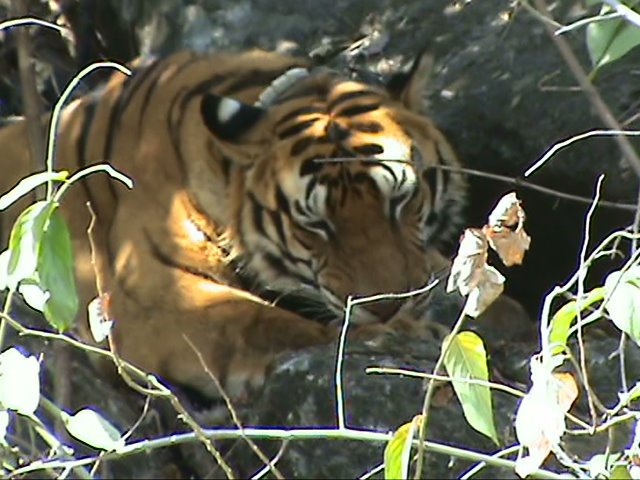
Tiger Uday Patel
Tiger tourism has taken a much more organized form in recent years. For a long time, visitors to the tiger reserves were limited, but the uptake was experienced when documentaries on Indian wildlife flooded the TV Screens in the late 90s. Documentaries are educational, besides being recreational they are the best form of the virtual classroom on nature and our environment as a whole. 

I am visiting Kanha and Bandhavgarh National Parks, since the seventies, and have experienced the evolution of tourism for many years. After the extensive court battle to ban tiger tourism completely, a few years back, tourism in the core was restricted to 20% and that too has been divided into zones. This stops cluttering of the tourist vehicles and prevents intrusion into the lives of wild animals. 

Sustainable, regulated, responsible, and eco-friendly, tourism has been a big boon in India. It has not resulted in ecosystem damage, nor impacted breeding, on the contrary, it has led to creating awareness about our precious inheritance and how nature works. It plays a role in inspiring people at the helm of conservation management and practices in India.    

A visit to a National Park or a tiger reserve has been like an open classroom. Observing animals closely creates awareness and attachment with other life forms, this augurs conservation among the common man, and those who are responsible for our country's frameworks pertaining to development, conservation and tourism. Tourism is the best open-air classroom on the environment in the World. 

Moreover relegated tourism in our reserves generates crucial revenue that is ploughed back into conservation and improvement of the protection infrastructure around the park. This aspect raises another question!  

A major contributor to the recent success of tiger conservation has been the establishment of inviolate areas reserved entirely for other life forms. The PAs should remain for eternity.

Tiger Breeding Tourism Areas

Tigers have been breeding successfully in spite of tourism, and their survival rate has not suffered beyond natural causes and internal conflicts. Regulated tourism does not impact breeding at all. I have seen numbers rise in Pench, Bandhavgarh, Corbett and Kanha. They will surely rise in Nauradehi Tiger Reserve....they already are!   

Will The Tiger Survive Outside the Tourism Area

Public Pressure is the Key

Public eye pressure is vital for ascertaining the protection mechanism and conservation initiatives in the parks. Unfortunately, access to tourists in 80% of the non-tourism zone is completely banned. I do not know if the press has access to that area? 

Restricted tourism outside twenty per cent has become a grey area, and nothing is known about what is happening there. The growth in tiger numbers is one significant means of assessment that the management and infrastructure upkeep is on the mark in the grey area.  But not all reserves are experiencing growth, and this could be due to neglect and bad management practices.  

While our foot sentinels are performing well, there are black sheep, and in absence of any pressure, they can be inimical to conservation in these parks. This is human and not hard to understand. I have seen a few of the park bosses with a complete lackadaisical attitude with extreme indulgence in photography and the use of amenities for personal or family gains.  

Most of the top management have other roles besides supervision of the protection management and conservation activities, they have to stick to the desk considerably for justified reasons answering queries raised by the dispensation, working on reports, meeting staff for planning, and receiving VIP Guests or dignitaries.  Well, and good, and they do make a field visit as much as possible. 

Tiger Shri Navneet Maheshwari

For public knowledge, the most crucial role is played by the field managers and staff down the line. Misappropriation of authority and corruption in the staff has led to the complete poaching of the tigers at Panna and Sariska Tiger Reserves and this is public knowledge.  These are the reasons I am advocating enhanced public visits since the reserves are our inheritance of one and all and not the prerogative of the department alone. 

The Rise in Tiger Numbers & Wildlife Managers 

The rise in tiger numbers has been due to their breeding and survival capacity but as far as management impact is considered it has been crucial in the success factor, we have had some of the finest wildlife managers and staff in the last few decades whence the wildlife protection act came into the picture. 

Like the buffer, the non-tourism areas can be subject to outside intrusion for illegal purposes some with the connivance of the staff.  Way back before the pandemic ultras/villagers have been seen by tourists in the core area of the Kanha National Park. There are frequent talks of the presence of ultras in the buffer as well? This is not verified news but was mentioned by guides during my visits with guests, as I freelance as a nature guide. 

It is not all hunky dory on the edge of the parks including the buffer. There are vest interests, mafias, poachers, wood loggers and forest encroachers and maybe those with connections with organized poaching networks. Political goons included. They can easily dominate or corrupt some of the staff on the field, thankfully the field staff is honest and dedicated, but there can be black sheep. Mind You!  

Kudos to Park Management

We must rightly praise the park management pan India, for the great work they are doing. This is not a criticism article nor does it press upon tourism in the non-tourism areas. I am purely discussing issues. 

I write for the general public.   

Advocating Tourism in Non-Tourism Areas

Let's consider a few aspects of tourism in the park. The activity is managed by the local staff under the policy framework guided by NTCA and the State Governments.  The policy framework has to conform to the Wildlife Protection Act 1972 and the court perhaps.

Managing tourism in the park is difficult keeping in mind animal welfare, tourist safety, infrastructure requirements and the environmental impact. Hence regulated tourism in the non-tourism areas is ruled out. Well not completely. 

Regulated visits in organized groups can be conducted in Canter, this will take care of safety factors. Access can be provided on good jungle roads. All parks comprise rest houses that can be points for rest.   

The benefit of organizing tourism in the non-tourism areas is;

  • Enhanced Public Pressure
  • Enhanced Tourism Revenue
  • Discouragement to Intrusions 
Though the possibility is limited due to issues mentioned in the blog above, nevertheless a few wildlife-watching tours will generate enhanced revenue for conservation. It will also result in extra employment for the locals and the hospitality industry as well. Remember inbound ecotourism is contributing significantly to the exchequer all over the World. 


================================================================================
Uday worked as a freelance naturalist for many years. He provides content, SEO and digital marketing to wildlife resorts, travel, and tour operators and on diverse topics as a versatile writer. He has many years of experience. He writes for the general public on environment and wildlife conservation. 


Thursday, October 14, 2021

Tiger Tourism A Rethink

Breeding Trouble Skeptics at Work

Those skeptical about tiger tourism being an elitist indulgence need a rethink. The skeptical included are a few of those in the service who wish to do away with the men on the jeep entering into the tiger's domain for recreation. 

Atithi Devo Bhava!

Absolute inexpressive continence and no respect for senior and foreign tourists on safari is a very sorrowful saga that degrades our cultural inheritance. A more condescending approach is expected from the department, and I believe no inculcation of values takes place here unlike the respected sentinels at the borders.  

Restrictive Conservation Initiatives 

The attitude is restrictive and conservative in spite of seventy years of independence. Banning regulated tourism in the park will not enhance the big cats breeding, albeit some are hell-bent upon this belief that regulated tourism impacts breeding. This is a lame excuse since there is ample evidence of robust breeding and cub survival in the tourism zones.  Kanha National Park is a fine example. 

Tigers are dying in our reserves due to poaching by snares, electrocution, poisoning, and whatnot. There are no solutions in place and obsession with well-regulated tourism is not going to help either. Remember the infrastructure burden on the forest department as regards tourism is minimal and even those involved in the field supervision of tourist jeeps are able to conduct their conservative initiatives without much hindrance. 

Forest Guides Inadvertent Sentinels 

The burden of day-to-day management is reduced by the ever-vigilant forest guides who are anyway temporary employees and their remuneration comes from tourism. Few department employees committed at the gate are totally involved, and infrastructure buildup inside the tourism zone is often on a contract basis with an official designated for supervision. Anyway, any official movement in the park is much warranted since that helps keep an eye! The revenue earned from tourism is plowed back into the parks and this reduces the burden on the state exchequer. 

Organizational Dilemma 

There are a few organizations that have no faith in the protected area concept they believe that intrusion into inviolate zones is for the survival of the locals. Paradoxically, on the other hand, increased inviolate breeding grounds are a  must for other life forms. Such a pathetic approach denouncing the PAs may prevent other life forms from securing their safe heavens. There is immense biotic pressure on these badly exploited resources and there is no relenting. 

Wild animals as coinhabitants of the Earth need greater space, and the increasing man-animal conflict is a clear sign of ingression by humans. Humans have literally all the places on Earth to migrate, settle and live, wild animals have no such privilege they are constricted in small corners of this Earth and face immense biotic pressure, space constraint, and extreme threat to their survival. Waves of extinction are not a new phenomenon and more are impending perhaps till complete exhaustion. 


The only ban required - well short of - is to limit tourist vehicular movements so there is no crowding. Hesitation in enlarging tourism areas is encouraging the crunch. Limited tourist vehicle entry into a larger area is not going to impede tiger breeding nor is it going to impact the survival rate. This is applicable to all life forms in the core area. Following a conservative approach towards tiger tourism is not going to dramatically increase the population nor it will help stop poaching that is taking place in almost all our tiger reserves. Sporadic cases of poaching are being reported the sad state could be due to administrative neglect or advantage taken of areas in isolation. Tourist vehicle movement will help mitigate this problem. There are immense benefits to expanding regulated tourism in our reserves without threats to the big cat. This is obvious, I repeat since ongoing tourism at Kanha National Park has not adversely impacted the breeding of wild animals in any manner.   If we are restricting tourism to a certain limit there should be a rationale behind it. There should be adequate proof of the benefits that accrue from restrictions that are being advocated. This is managed tourism and optimum expansion is advocated.  

Enhancing the Buffer for Survival 

A large portion of most of the tiger reserves comprises the outer ring with tree cover and some small grasslands, aquatic bodies, settlements, cultivations, livestock movement in the forests, and small commercial establishments. Ousted big cats and mammals move here for succor and this is where they are most susceptible to inconsiderate humans and many are killed.  

Tigers and other animals need this area now more than ever as populations in the natal rise. The answer is to translocate populations and rewild the area. Now, this idea may seem highly improbable since uprooting is not just but then these are precisely the grounds that belonged to the wilderness and minuscule population of tribal. With the large-scale incursion of humanity into the sink, the burgeoning human population cannot be accommodated here anymore.  Another solution is to delink the forests and grasslands and make them completely inviolate with trespass being punishable. But even in this rare case adequate compensation to those somehow affected by delinking should be made.  

A just solution is to translocate and connect with the mainstream with appreciable compensation and jobs as well. This will also discourage ultra movements in these domains. This area can then be developed into time to come for tiger tourism and thus reduce pressure on the core. This is literarily increasing the core not only for the survival of the species but for tourism as well. An increase in tourism will lead to increased employment for the locals and boost small trade.   This could be a win-win solution?

Creating robust employment and small-time trade are the futuristic conservation initiatives though quite obvious these have never been accounted for except in a few write-ups.  Locals impact tourism and this is nothing. If they make living they will be all for inheritance. 

What Sells Live Survives! 

This seems to be a bit off the cuff saying but then in life, there is a commercial angle to everything. If the wilderness has to survive it has to pay back and create equity. 

Even those who resent the idea of translocation of settlements should understand that the young generation is already migrating to larger towns in search of jobs and business opportunities.  Keeping tribes in isolation because of historical empathy is a purely emotional concept and impractical. These places are away from the mainstream with no adequate infrastructure for survival in modern times.  Let us be thoughtful and create more and more inviolate space for other life forms including the tiger. 

============================================================
Uday Freelances as Naturalist in Central India. He is an avid birder and tiger enthusiast. He blogs on tigers, wildlife, and birds. He also writes on the environment and conservation.

Uday also provides SEO Services and Website Content in English. He teaches Digital Marketing in Jabalpur during Summer Holidays.
--------
Contact: pateluday90@hotmail.com
09755089323 
====================================================  


Sunday, February 7, 2021

Buffer Zone Transition to Eco Sensitive Zone

 Eco-Sensitive Zone or Ecologically Fragile Areas - EFAs

This new concept is being developed, implemented, and regulated by MOEF in India.  I believe the eco-development committee with public participation will play a vital role in the management of our ring or the buffer zone of National Parks, tiger reserves and wildlife sanctuaries ((WLS) all notified as such but deemed to be considered as Protected Areas.   

Practically renaming the buffer zone as an eco-sensitive zone has very few consequences for the resident public mostly tribal farmers. But this whole exercise would not have been considered without some changes being brought about.  


Farming as usual by the locals will continue outside the limits of reserve forests. The certain industry will be banned as they are already banned but the notification would mean more will fall under the purview.  

The declaration is under the purview of the Environmental Protection Act 1986 in which sub-section 3 (2) (v) empowers the Central Government to manage or notify certain commercial activities in such zones as banned or permissible or to be regulated.  The effort is to provide greater protection and a smooth transition to outer areas which do not face such restrictions.  

Biodiversity, biotic and abiotic pressures, environmentally friendly land use limits, pollutants, and other factors have to be considered whence framing guidelines in these areas which are specific to each Protected Area.  The criteria would be nearly the same as that in declaring a No Development Zone by the Government of India.

The guidelines, restrictions, etc may be reviewed by the Central Government whenever it decides. The ESZ could be notified keeping ecological sensitivity into account based on species rarity,  ecosystem-based, and also based Geo Morphological Features.  

This strategy was formulated in a 2002 meeting of the National Board for Wildlife  India. The area designated was ten kilometers in the periphery of the core or in the case of tiger reserves the critical tiger habitat.            

Albeit this concept stands as highly important for conservation and the environment in India there are many problems faced by the PAs in different states which are creating hesitancy. The outer rings around many PAs are ill-defined due to the prevalence of a high population density, heavy industries, and even major urban settlements. All this will certainly create a state of conflict and make implementation difficult. In around such PAs the die has already been cast. Uprooting established activities would hamper development as many State bodies say.  

We are certainly at crossroads either we give two hoots to wildlife conservation and protection or face upheaval in order to rectify all anomalies made in the past whence the concept of proper land use pattern was not a consideration.  

Besides sustaining the sink populations due to active breeding since conservation initiatives were implemented these are vital wildlife corridors for migrant species in India. Migration is important for cross-breeding and thus the transfer of genes from one distant area to another. If this is not allowed to happen inbreeding will lead to near extinction possibly hampering all conservation initiatives in the country. Though the need for creating viable corridors is without any doubt, the implementation of political dispensations is difficult as a large number of human settlement translocations would be required. 

This is being penned for amateur enthusiasts interested in conservation. In the past few centuries, humans have encroached upon sensitive ecosystems and destroyed them. Those remaining or are partially viable are the subject of this policy. Many species find coexistence in close vicinity with humans impossible and furthered by indiscriminate land use mostly for agriculture the sensitive species lose ground quickly. This tragedy has occurred in our country extensively.  Swamp deer is a tangent example of this duress imposed by humans in India.

For greater clarity read the article of Wikipedia EFAs          

Further Read: Our Urban Footprints         

===========================

Uday Works as Freelance Naturalist and Blogs on conservation, tigers, environmental issues.

He also provides SEO and Website Contents in English. He teaches Digital Marketing in Jabalpur in Summers.

He can be contacted at:

Mail: pateluday90@hotmail.com
 Mob: 09755089323


Thursday, April 30, 2020

Post Pandemic Tiger Tourism An Imperative & Brutal Reality

NO Conservation in Isolation 

"If It Pays It Stays"

Well at some wildlife destinations in Africa as I was reading during the lockdown, the saying goes that if it pays it stays. In extremely poverty-stricken circumstances this holds to be true. Unfortunately, the activity does not appear to be egalitarian to many and yes to some in the bureaucracy as well. This view stands for India as well. 

After the hunting season which thankfully was banned in 1972...than tourism was seen as a recreation of elites. Not anymore, the local communities even those bereft take pride in their heritage or their heritance.  Those who get their bread from the park and tourism consider conservation as an essential tool for their survival. In absence of the reserve, their livelihood would have been nonexistent. We must understand the overall upliftment of a region benefits even those who are not direct participants in the conservation and recreational activities of PAs.      

Even if conservation was in place sans tourism a large community of dwellers with no employment in the department would have turned to wood logging and poaching. This number would have been enough to bring protection and preservation efforts to naught. So would have the empowerment of the locals. There would have been a big dent in local institutions and infrastructure which is somehow empowered due to the tourist arrivals and their activities. Also, a lot of community initiatives have come into the picture due to the tour operators and the hotel industry around the PAs.  

In spite of millions invested in saving our endangered ecosystems and species without the empowerment and participation of local communities, the Conservation Projects and Programs would have performed poorly. 

Another aspect that warrants attention is the revenue that parks generate from tourism, this supports many activities which enable the participation of locals especially the labor class the poorest working section of society. The revenue generated also mitigates the burden of the State Governments, otherwise, contingency funds would have been a major issue, especially those required for core conservation initiatives. We will also have to add income generation from inbound tourism overall which I believe would be substantial.  

Post Pandemic 

For the planners, not only the manufacturing sector but tourism as well has to be looked into in the post-pandemic period in India. Albeit manufacturing has been allowed in remote and rural confines this is not the case with wildlife tourism. Most of our PAs are situated in remote confines. I hope this activity is seen as an imperative by the Government else the industry will have to collectively press upon it.  

In the opening season (October) if the lockdown in a few states and major towns still prevails, organizing tourist activity in the tiger reserves would require new regulations in place but certainly possible. The major tiger reserves are dependent upon visitors from all over India, and equally impressive numbers from overseas. Hence interstate and International transportation has to be facilitated with new norms...as it will be. 

The post-Covid-19 period will not be without blemishes and bottlenecks as the pandemic is not going to go away as a seasonal intrusion as most people still believe. Even if the peak passes off, the pandemic might linger on as local eruptions from time to time or even as a periodic epidemic. So little do we know about this coronavirus?   In spite, we should be planning ahead in order to conduct tourism in our tiger reserves with a new paradigm in place.  

Extension of Activities
Thankfully the buffer zone has become center of activities and it is paying by organizing safaris. In future the buffer zone forest will experience greater protection and preservation efforts.
There is a possibility of organizing regulated tourism in areas where tourism is not permitted in our PAs at present - however minimal. We should look into this with an open mind. 
Many among us, unfortunately, consider tiger tourism as destructive in spite of it being in place for decades with no apparent harm. Until we change our perspective we will not be able to fully exploit the tourism potential of our PAs.

The lockdown has brought many safeguards and protective measures in place and the public has learned the etiquette to keep safe. Things will move on...

Uday Works as Freelance Naturalist and Blogs on conservation, tigers, environmental issues. 
He also provides SEO and Website Content in English.
Uday Teaches Internet Marketing Classes in his home town in Jabalpur in Summer.  
He can be contacted at: 
pateluday90@hotmail.com

Friday, December 30, 2011

Sentinels of the Wild

Recently the Karnataka Government has instituted a special task force to protect the tigers in the reserves. The need for specialized and highly trained task force has become imperative in order to deliver physical protection to tigers and other animals in their natural home. 

I emphasize on the words training and hence acclimatization. I have heard of an incident in Kanha whence a force constituting retired soldiers lost their wits whence accosted by a tiger. Some firing out of fear is also said to have taken place.  I do not know how far this is true but nevertheless such a situation can be visualized easily. 

Since the inception of protected areas protection has been the biggest farce. On my recent visit to Nauradehi WLS I could see intrusion at number of places, and there are fearless wood smugglers involved in felling and smuggling teak.    

The present infrastructure at our tiger reserves is weak the forest guard is a helpless entity and easily succumbs to local pressure or lucrative liaisons. In absence of higher support he merely does his duty without any intervention. I have rarely seen presence of high officials in neighboring reserve forests, same may apply to many protected areas in India. The forest guard are easily overpowered by poaching mafia and wood smugglers in protected areas hence a more supportive mechanism has to come into picture.     

The delay in relocation process is another disabling factor since intrusion and illegal activities in the forests  are done at the behest of criminals from neighboring communities. There are some gangs based in neighboring districts and states who regularly poach in nearby protected areas. These groups are more professional and armed and ruthless towards their objective.

An armed force with war front capability is the need of the day if debacle like Sariska and Panna have to be avoided.